

Will Germany Take Space Seriously?
A war beginning with a cyber attack on an American company to disrupt foreign military satellite communications, activities aboard the International Space Station following a satellite being shot down, and a billionaire controlling over half of all active satellites illustrate recent changes in the use of space.
The dependence of digitally networked societies and modern militaries on space-based services is growing, increasing the potential for conflict and escalation. However, international regulations on space usage are lagging behind political and technological developments. As space becomes increasingly crucial for multi-domain operations and geopolitical competition, conflicts are extending beyond Earth.
With more countries and commercial entities venturing into space and an increasing number of satellites, states are competing to achieve milestones in civil space, promoting their national space industries, and expanding military space programs along with counterspace capabilities such as weapons designed to deny adversaries the use of space-based data and services. Counterspace technologies range from jamming communications or GPS signals to destructive measures like anti-satellite weapons, demonstrated by Russia in November 2021 when it destroyed one of its satellites, generating debris. High-powered microwaves or lasers aim to disrupt or destroy satellites, and co-orbital weapons systems have become a concern for NATO allies, including inspector satellites and plans for nuclear-armed anti-satellite weapons. There is currently no comprehensive international consensus to curb the arms race in space.
In this contested environment, Germany should position itself to address the changing security landscape in outer space and the importance of space-based capabilities for security and defense. The post-Ukraine watershed in Germany’s strategic thinking has led to significant changes in Berlin's security and defense policy, but this has yet to truly extent to include space. If Germany aims to be a "guarantor of European security" with the "best-equipped force in Europe," greater recognition of the integral security dimension of space is essential.
Germany has a promising scientific and industrial base, including leading research institutions like the Fraunhofer Institute for High-Frequency Physics and Radar Techniques, which developed the GESTRA radar system for monitoring low Earth orbit objects. While the United States dominates the global space industry, Germany's space sector, consisting of companies like Airbus Defense and Space and start-ups specializing in microlaunchers, is relatively internationally competitive.
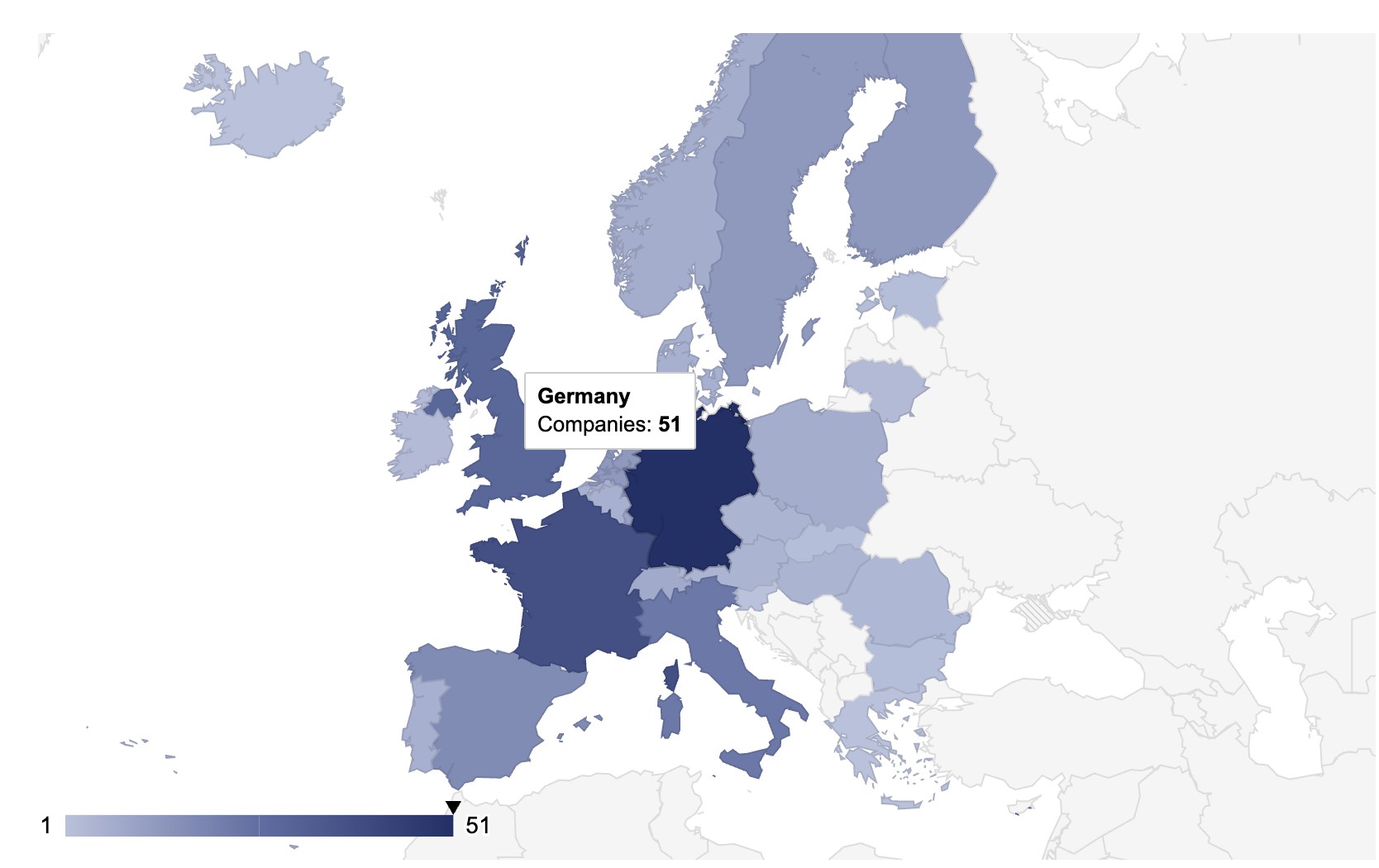
Germany is recognized among military space powers due to its participation in cooperation formats and exercises. It takes part in the Schriever Wargame, joined the U.S.-led Combined Space Operations Initiative, and has been invited to join the U.S. Space Command’s Operation Olympic Defender. Given Germany’s civilian, economic, and military dependence on space, the Bundeswehr views space use as a permanent operational task, supporting missions with space-based capabilities, conducting space operations, providing space situational awareness, and protecting critical space infrastructure. The Bundeswehr operates the SATCOMBw for communications and SARah for radar reconnaissance.
Despite progress, Germany has yet to fully grasp the strategic and security dimensions of space, compared to partners like the United States, France, or the United Kingdom. Factors hampering Germany’s approach to space security include limited understanding of space's importance, dominant focus on scientific and economic aspects, and disagreements between federal ministries.
Germany committed to emphasizing space as a strategic dimension in its 2022 National Security Strategy and adopted its first space security strategy in 2023, following in the footsteps of France, the United States, the United Kingdom, NATO, and the European Union in recognizing space's significance for security.
Germany’s Space Strategy is designed to reflect the growing significance of space systems: space-based infrastructure is increasingly important part of critical infrastructure. This means that space infrastructure and related aerospace technology are integral to the ability of Germany and Europe to respond to future security challenges. Germany’s space strategy calls for more intense cooperation at European and international levels, and to step up national activities to contribute to this collective security approach. The strategy does note that Germany and Europe need their own powers in areas related to sovereignty, including space launch, in-space communications, satellite communications, and space situational awareness.
National approaches to space security vary based on threat assessments and capabilities, particularly regarding offensive space capabilities. The U.S. Defense Space Strategy views space as a "warfighting domain" critical in the Great Power rivalry with China and Russia, seeking superiority through diplomatic, economic, and military means. Similar assessments can be found in British and French strategies, with France defending its space systems with offensive capabilities if necessary.
Germany's position, according to former Federal Minister of Defense Annegret Kramp-Karrenbauer, is that military space operations should be defensively oriented, and the government is committed to norms and responsible behavior to prevent conflict. However, unbiased examination of Bundeswehr's needed capabilities and clear positioning in the geopolitical space race alongside the United States and allies is necessary.
Instead of viewing space as an isolated domain, Germany’s space strategy should integrate space's security relevance into overarching political and strategic considerations and should aim for interoperability across all five domains. A new strategy should also include a clear implementation plan to create the conditions needed to achieve Germany’s objectives in space.
Challenges in other policy areas are evident in space security, such as limited whole-of-government approaches, lack of cross-agency funding, and modernization challenges. More funding, broader expertise, and technology-driven procurement concepts are essential. All of this ultimately boils down to political will.
As of 2024, twelve Germans have been in space. Recruiting and training qualified personnel for the space domain is crucial. Promoting engineering sciences focused on space technology, space law, and security policy should be prioritized. Integrating space domain into training and cooperative formats with allies should be expanded, along with attractive career models within the armed forces.
Elon Musk’s Starlink's role in the Ukraine war highlights commercial actors' relevance in national security due to dual-use nature of space technology. Enhancing public-private cooperation and aligning development of space capabilities with military needs is essential. A space innovation hub announced in the National Space Strategy should involve the German Armed Forces.
Strengthening resilience of critical space infrastructure requires effective public-private cooperation. The space security strategy should identify conditions for practical implementation, including anchor contracts, fewer bureaucratic hurdles, and faster procurement processes. Adopting a revised and updated German space law can create legal and investment security.
Promoting responsible use of space aligns with Germany’s integrated security approach. Space debris prevention measures should be promoted within the European Union and NATO, and through operational formats like the Combined Space Operations Initiative.
Germany’s space security strategy should initiate broader debate about the strategic relevance of space, raise awareness of vulnerabilities and threats, and expand space-specific expertise. Strategic thinking adapted to new geopolitical realities and sufficient political will are necessary to address challenges and be a reliable partner in space. Germany must engage more actively in building its national space capabilities for its own security as well as to effectively contribute to and ensure that of the EU.