

Weather Modification in the 21st Century: Technologies, Benefits, and Unintended Consequences
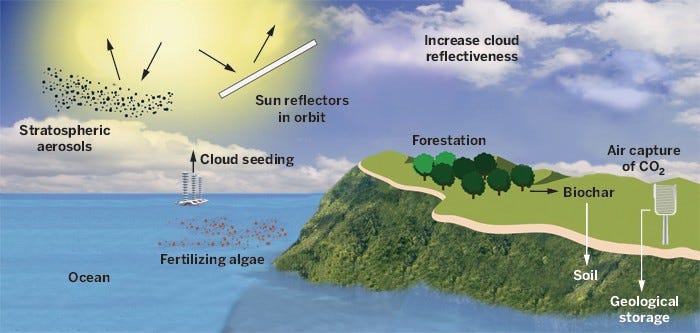
Weather modification, broadly defined as the intentional manipulation of atmospheric processes to alter local or regional weather conditions, has evolved from military experimentation to a suite of civilian applications, ranging from enhancing precipitation to mitigating extreme weather impacts. This paper explores the primary technologies employed in the United States, their known and projected benefits, and the growing body of scientific literature warning of ecological, ethical, and geopolitical risks.
Introduction
Human interest in controlling weather dates back centuries, but it was only in the 20th century that technological advances made intentional weather modification plausible. The modern era of weather modification began in earnest during the 1940s, when General Electric scientists developed cloud seeding techniques using silver iodide and dry ice. These experiments laid the foundation for both civilian and military applications, most notably the U.S. military’s Operation Popeye during the Vietnam War, which aimed to extend monsoon seasons as a tactical weapon. Civilian interest grew in the decades that followed, particularly in the western United States, where water scarcity prompted state governments and irrigation districts to adopt cloud seeding and snowpack enhancement programs. Over time, private contractors emerged to implement these technologies on behalf of states and municipalities. As climate volatility and water scarcity intensify, the stakes of weather control are rising. However, as the science behind these interventions advances, so too do concerns over their unintended climatic, ecological, and social impacts.
Overview of Weather Modification Technologies
Weather modification encompasses several different technologies, each with distinct objectives, mechanisms, and regional applications. Cloud seeding, for instance, aims to enhance precipitation or suppress hail by dispersing silver iodide, dry ice, or salts into clouds. This technique is commonly used in states such as California, Colorado, and Utah, and is executed by companies like Weather Modification Inc. and North American Weather Consultants. Hail suppression, typically employed in states like North Dakota, Texas, and Colorado, uses cloud seeding to alter storm dynamics and reduce hailstone size. Fog dispersal, which improves visibility in airports and military bases, utilizes dry ice, liquid propane, or jet engines and is implemented by agencies like the Federal Aviation Administration and the U.S. Air Force. Hygroscopic seeding attempts to increase rainfall by releasing salt particles into the cloud base and is used experimentally in states such as California and Texas. Geoengineering, particularly solar radiation management (SRM), is still in the research phase and involves techniques such as marine cloud brightening and stratospheric aerosol injection, with institutions like Harvard and NOAA conducting studies. Artificial snowmaking, used primarily in ski resorts, relies on pressurized air and water systems and is prevalent in states like Colorado, Utah, and Vermont. Lastly, space-based experiments conducted by NASA and NOAA use balloons, lidar, and satellites to observe atmospheric processes and are regulated at the federal level.
The following table summarizes key characteristics of these technologies:

Documented Benefits
Proponents of weather modification highlight its potential to address pressing environmental and infrastructural challenges. In arid regions, cloud seeding has been credited with increasing precipitation by 10 to 15 percent, which can be critical for water security. Agricultural protection is another commonly cited benefit; hail suppression programs in Texas and North Dakota have reportedly mitigated crop losses by modifying storm behavior. Fog dispersal has enhanced airfield safety, reducing flight delays and accidents since the mid-20th century. Additionally, in states like Colorado and Utah, weather modification contributes to snowpack accumulation, which is vital for downstream water supply. In the realm of climate science, experimental geoengineering research offers insights into how deliberate atmospheric interventions might help manage temperature extremes or serve as emergency measures in the face of catastrophic climate change.
Scientific Concerns and Unintended Consequences
The scientific community has expressed a range of concerns regarding the unintended consequences of weather modification. One major area of concern involves ecotoxicology. Chronic use of silver iodide in cloud seeding has the potential to lead to trace accumulation in soils and aquatic ecosystems, posing a moderate ecological risk, as noted in studies published by Bruintjes (1999) and later research on ScienceDirect in 2016. Climatic uncertainty is another significant issue. The National Research Council’s 2003 review concluded that many cloud seeding studies lacked replicable and statistically significant results, raising doubts about their efficacy. Moreover, modifying precipitation in one area can result in reductions elsewhere, potentially leading to disputes between jurisdictions or neighboring states. The American Meteorological Society highlighted this risk in its 2021 statement on cloud seeding.
Geoengineering strategies such as marine cloud brightening have also raised alarms. A recent modeling study published in Nature Climate Change and reported by The Guardian in 2024 found that deploying marine cloud brightening off the U.S. West Coast could inadvertently intensify heatwaves in Europe. Other studies have shown that solar radiation management techniques might disrupt tropical rainfall zones, affecting agriculture and water supplies in vulnerable regions of the Global South. Beyond environmental risks, weather modification also poses governance and ethical challenges. Interventions can affect large populations without their consent, raising issues of equity and democratic oversight, as discussed by the Oxford Geoengineering Programme. The concept of moral hazard is also relevant; some scholars argue that an overreliance on geoengineering could diminish political and economic incentives to reduce greenhouse gas emissions. Furthermore, while the United States maintains some state and federal regulations, the global governance landscape for geoengineering remains fragmented and underdeveloped.
Policy Landscape
In the United States, weather modification is regulated at both federal and state levels. The Weather Modification Reporting Act of 1972 mandates that all federally sponsored weather modification activities be reported to the National Oceanic and Atmospheric Administration (NOAA). Internationally, the Environmental Modification Convention (ENMOD Treaty) of 1978 prohibits the hostile use of environmental modification techniques, although it lacks enforcement mechanisms for civilian or research activities. At the state level, jurisdictions such as Texas and North Dakota require permits for weather modification projects, reflecting a patchwork approach to oversight that may not be sufficient in the face of growing experimentation and cross-border implications.
Conclusion
Weather modification presents an intriguing frontier in the ongoing effort to adapt to and mitigate the effects of climate change. It offers promising tools for enhancing precipitation, protecting agricultural interests, and exploring climate intervention. However, the potential for unintended consequences, ranging from ecological disruption to international geopolitical tensions, necessitates a cautious and scientifically grounded approach. Moving forward, efforts to regulate and guide weather modification must be transparent, interdisciplinary, and globally coordinated to ensure these technologies serve the public good without compromising environmental integrity or social equity.
References:
AMS. (2021). Statement on Planned Weather Modification Through Cloud Seeding. American Meteorological Society.
Bruintjes, R. T. (1999). A review of cloud seeding experiments to enhance precipitation and some new prospects. Bulletin of the American Meteorological Society.
Guardian. (2024). Climate Engineering off US Coast Could Increase Heatwaves in Europe.
Harvard SRM Governance Initiative. https://geoengineering.environment.harvard.edu
National Research Council. (2003). Critical Issues in Weather Modification Research.
Nature Climate Change. (2022). Modeling Global Impacts of Stratospheric Aerosol Injection.
ScienceDirect. (2016). Ecotoxicological risks of repeated silver iodide cloud seeding.
U.S. Bureau of Reclamation. (2020). Cloud Seeding Efficacy Review.
U.S. Geological Survey. (2023). Environmental Effects of Weather Modification.
Oxford Geoengineering Programme. https://www.geoengineering.ox.ac.uk
ENMOD Treaty. (1978). United Nations.