

Voyager Announces IPO with $1.6 Billion Valuation Target
Six-year-old defense and space tech company, Voyager Technologies (Voyager), initiated its public offering (IPO) of shares on June 2, seeking a valuation of $1.6 billion. The Denver, Colorado-based company proposes to sell 11 million shares, aiming to raise $319 million if priced at the top of its $26 to $29 range.
Companies like Voyager are now seeing opportunities to list on U.S. exchanges after uncertainties tied to President Trump's trade policies delayed the IPO market recovery. Voyager’s filing follows recent public offering plans by digital banking startup Chime and stablecoin giant Circle.
Voyager has raised nearly $178 million from investors including Scout Ventures, Seraphim Space, Jackson Moses, Industrious Ventures, and NewSpace Capital. The company aims to benefit from expected increasing funding for defense and space under the Trump administration, including predictions that Trump will advance efforts related to lunar and possibly Martian exploration.
Additionally, last month, Trump chose a design for the $175 billion Golden Dome missile defense shield, which aims to create a satellite network for detecting, tracking, and potentially intercepting incoming missiles.
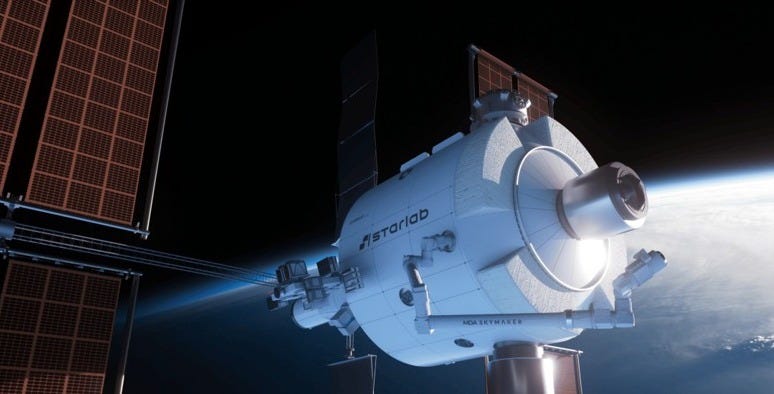
Founded in 2019, Voyager has completed over 2,000 missions from approximately 35 countries. The company is organized into three business divisions: Defense & National Security, Space Solutions, and Starlab Space Stations. Starlab is a potential commercial successor to the International Space Station (ISS), which Voyager is developing through an international joint venture with Palantir, Airbus, Mitsubishi, and MDA Space. Hilton and Northrop Grumman are non-equity "strategic" partners in the venture. The space station, which will function as a research laboratory for weightlessness, with a particular focus on the pharmaceutical industry, is expected to launch aboard SpaceX’s Starship in 2028. Notably, while the ISS cost $100 billion to build, Voyager plans to build and launch Starlab for $2.8 to $3.3 billion.
Voyager reported $34.5 million in net sales for the quarter ending March 31, an increase of 14.2% from the previous year. Losses attributable to Voyager nearly doubled to $26.9 million during this period.
Voyager's shares will be listed on the New York Stock Exchange under the symbol "VOYG". Morgan Stanley and J.P. Morgan are leading the underwriting of the listing. The company announced that the proceeds from the offering will support various strategic initiatives, including increased research and development, capital investments for sustained innovation, and potential acquisitions in key areas of defense and aerospace technology.
If Voyager’s transition to the public markets is successful, it could positively impact the sector. In recent years, space-industry listings have primarily involved SPAC mergers, favored by early-stage companies focused on developing advanced technologies. Similar to other SPAC trends, space stocks experienced significant declines in 2022, as investors moved away from early-stage companies with high valuations. Karman Holdings Inc.’s (operating as Karman Space & Defense) IPO in February this year and Voyager’s upcoming IPO offering are the only traditional IPOs in the space industry since 2021. Karman’s stock, trading on the New York Stock Exchange under the ticker symbol “KRMN,” has appreciated by over 46% this year.
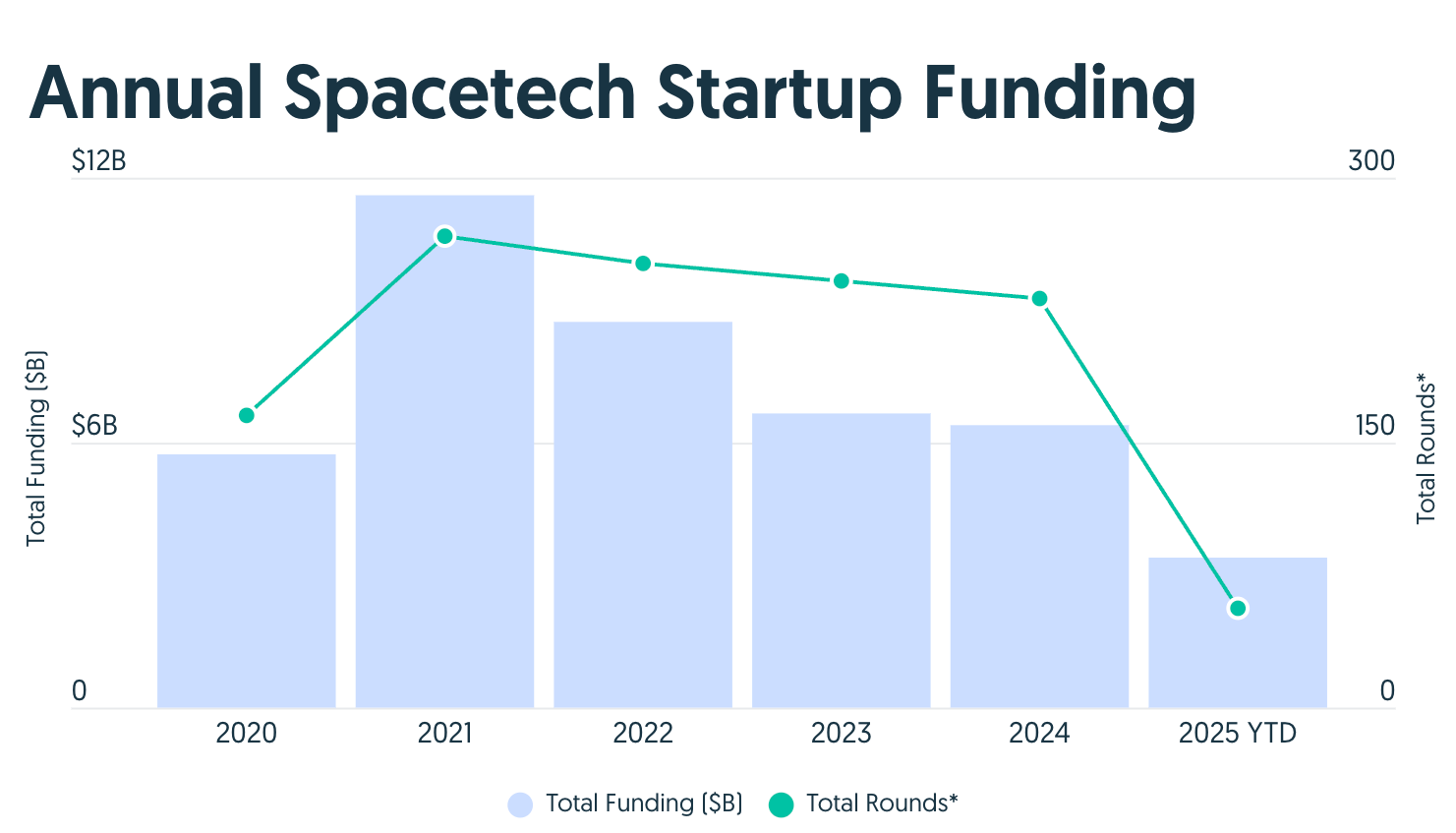
According to data from Crunchbase, global investment in space tech has remained stable at over $6 billion annually for two years, with similar results expected in 2025.
Related:
Voyager Technologies IPO Prospectus (S-1)
Private Starlab space station moves into 'full-scale development' ahead of 2028 launch
Elon Musk says SpaceX will launch its biggest Starship yet this year, but Mars in 2026 is '50/50'