

USV Manufacturer Seasats Launches High-Speed Interceptor, Quickfish
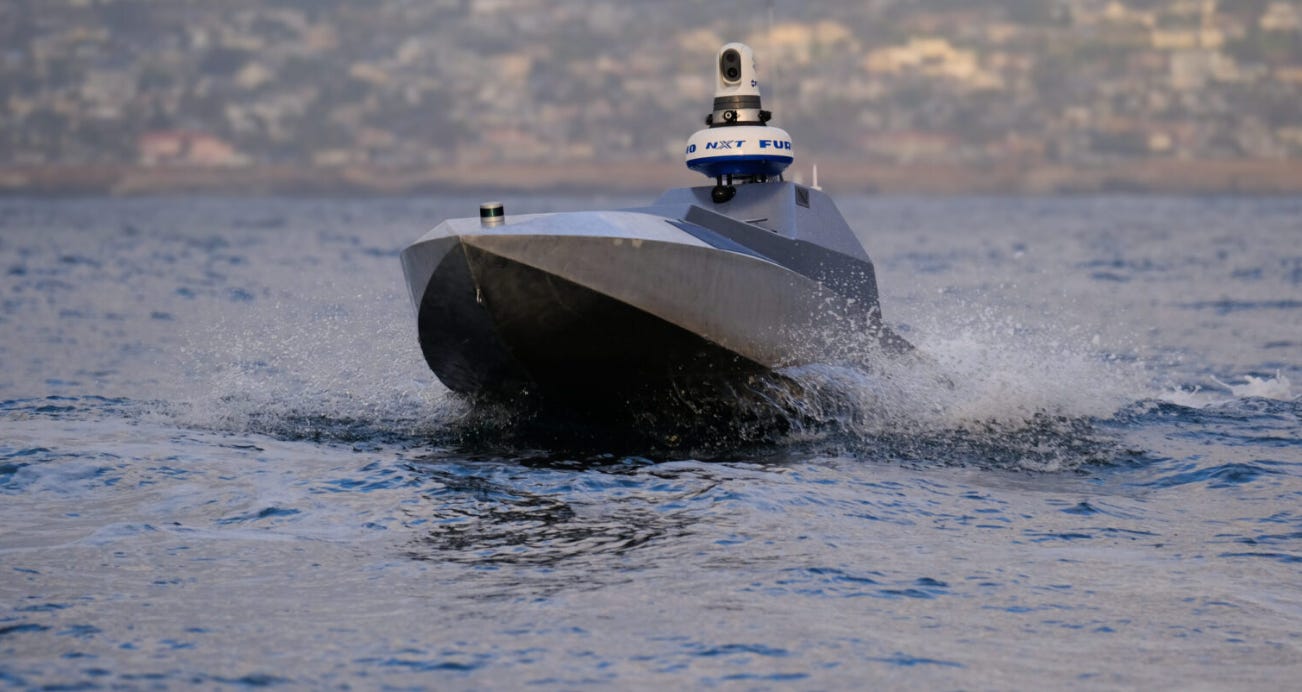
San Diego-based small autonomous surface vessel (sASV) startup, Seasats, introduced its Quickfish model during a multi-day U.S. Navy exercise off the coast of California. Backed by L3Harris and Shield Capital, Seasats’ systems have been deployed globally by leading naval, research, and security organizations to extend maritime domain awareness with minimal logistics and maximum flexibility.
Throughout the exercise, Quickfish showcased several capabilities: it reached speeds exceeding 35 knots, offered modular payload options, operated reliably, and featured user-friendly autonomy interfaces. Quickfish is also notable for exceptional features uncommon among interceptor unmanned surface vehicles (USVs), such as multi-week endurance at sea, a concealed aerial vehicle launch bay, and a distinctive hull construction method that allows for nearly tool-free manufacturing.
Seasats is recognized for its reliability as a USV provider. The company’s flagship Lightfish is a 12-ft, 350-lb solar powered vehicle, combining multi-month endurance, advanced sensor integration, and modular payloads in a compact, cost-effective form factor. Seaseats’ Lightfish USV notably made a journey across the Pacific Ocean, covering over 7,500 miles. This track record contributed to Seasats securing an $89 million SBIR Phase III IDIQ contract to support NIWC Atlantic and USMC USV initiatives.
The combination of Seasats’ reputation and Quickfish’s innovative attributes has generated substantial early interest. A major U.S. defense contractor has already acquired a Quickfish to advance maritime autonomy projects, while partners in Australia, the Philippines, and Japan have signed agreements to locally manufacture and distribute Seasats’ platforms. The scalable hull design facilitates on-site production, allowing allied nations to quickly strengthen their own maritime security capabilities.
Mike Flanigan, CEO of Seasats, stated, “Our customers appreciate the extended sensing abilities of the Lightfish USVs, but still require manned responses to emerging threats. Creating the Quickfish to deliver intercept capability was a logical progression from the Lightfish mission. Reliability and endurance are the primary concerns we hear about from interceptor USV operators, these are areas in which Seasats excels, and we’re eager to continue building our reputation with Quickfish.”