

U.S. Space Companies Entering EU Market
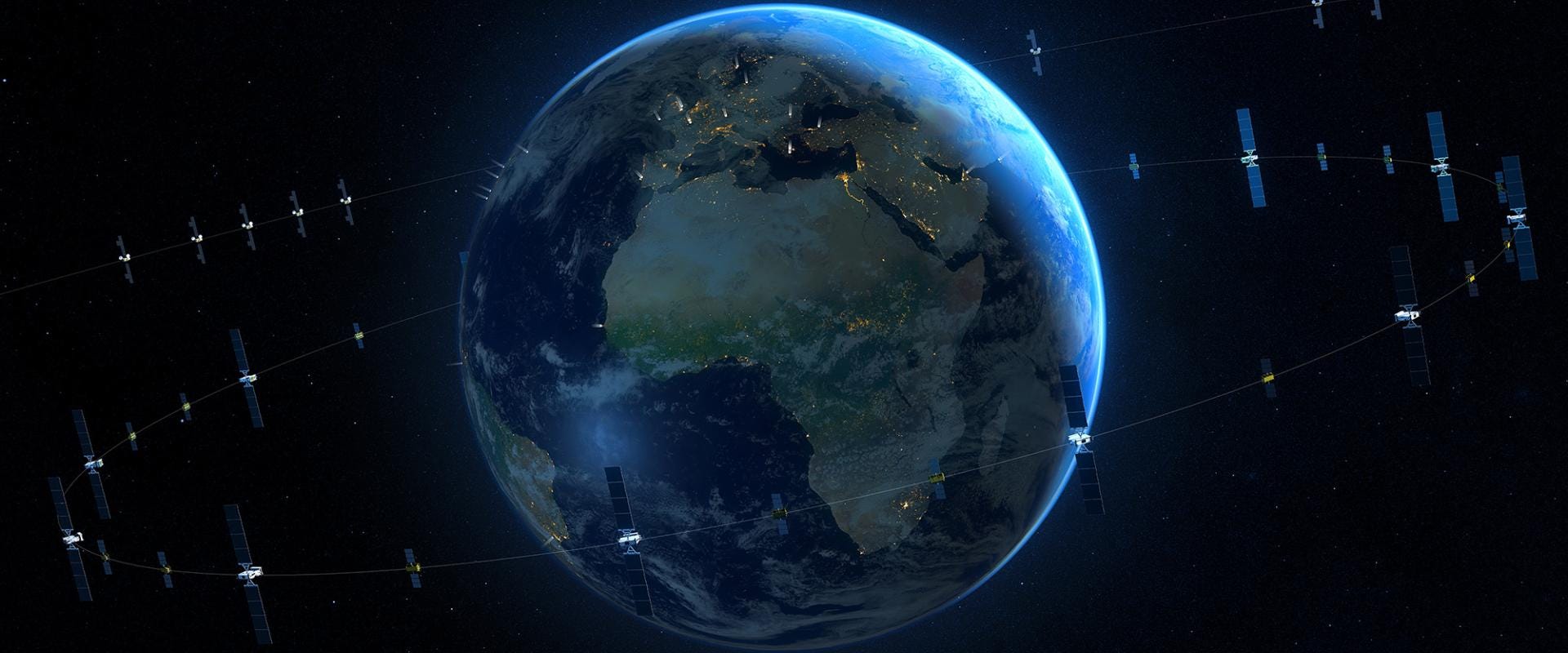
Last week, SES announced an investment and strategic partnership with direct-to-device startup Lynk Global. This collaboration will enable Lynk to utilize SES’s MEO relays for routing traffic from its LEO satellites, integrate with SES’s ground systems, and expand its manufacturing footprint into Europe.
SES views Lynk as a strategic entry point into the direct-to-device market, while Lynk perceives Europe as an opportunity to access a large market and mitigate upfront capital costs.
Recent Developments:
This announcement follows a series of US space companies expanding into the EU:
· On March 3, AST SpaceMobile formed a joint venture with Vodafone and plans to open a satellite manufacturing facility in Barcelona.
· On March 11, Rocket Lab revealed plans to acquire German laser communications terminal provider Mynaric, marking its first entry into Europe.
European Investment Surge:
After years of investor skepticism, investing in the EU has become more favorable. The STOXX Europe 600 index has risen by 8.5% this year, while the S&P 500 has decreased by 4.3%. European defense stocks have surged, with Thales and Rheinmetall up by 95.4% and 154.2%, respectively. Additionally, share prices of European satcom providers SES and Eutelsat have increased by 89% and 150%, respectively. Eutelsat has been collaborating with the EU to deploy additional terminals for critical missions, such as communication support for Ukraine, in efforts to reduce reliance on Starlink.
Underlying Trends:
The recent surge in European investment is due to a shift away from risk-prone US businesses, the prospect of increased defense spending, and a belief in bolstering sovereign capabilities as EU countries reassess their reliance on US support. This push for independent space capabilities creates new opportunities for US-based space firms, offering access to substantial government contracts and a growing commercial market. Europe also provides a highly skilled workforce at lower labor costs than the US, making it an attractive destination for expansion.
Historical Context:
Although the enthusiasm for EU space investment is not entirely new, significant strides have been made recently. In the wake of OneWeb's bankruptcy in 2020, the UK government acquired the company to strengthen its commercial space sector post-Brexit. OneWeb later merged with French GEO operator Eutelsat in 2023. Last year, the EU awarded a concession contract for its sovereign satellite communications system IRIS², involving 290 satellites across multiple orbits. The €10.6B ($11.6B) project, developed in collaboration with the SpaceRISE consortium (SES, Eutelsat, and Hispasat), includes substantial commercial revenue opportunities.
Investment in space startups has surged as Europe shifts towards a more commercially driven model. Europe accounted for four of the 15 largest global space funding deals last year, matching the US count.
“The European space industry has been regaining momentum over the last couple of years,” Filip Kocian, an investor at Expansion Ventures, stated. Initiatives like the Cassini programme, which invested hundreds of millions of EUR to co-anchor space and adjacent VCs funds, and post-COVID recovery funding aimed at boosting domestic space industries have contributed to this growth.
Despite positive trends, challenges remain. Airbus's space program faced difficulties in 2024, incurring $300M in charges in the fourth quarter alone. Similar financial issues were observed with US aerospace primes, such as Boeing.
Sovereignty Focus:
Recently, the European Commission introduced ReArm Europe, an €800B ($876B) investment in strengthening Europe’s sovereign defense capabilities. This initiative aims to accelerate implementation due to shifts in US foreign policy, potentially opening new opportunities for European and US space companies. However, one critical piece remains missing—a reliable European launcher. The transition from Ariane 5 to Ariane 6 has forced Europe to rely on SpaceX for orbital access. European launch startups are now racing to bring new capabilities online, with ISAR Space preparing to launch its first rocket from Andøya, Norway.
Bidirectional Influence:
There is an increasing exchange between European and US space industries. European companies have historically expanded into the US to secure Department of Defense contracts and attract investment, with notable examples including D-Orbit, AerospaceLab, and EnduroSat. Conversely, US companies like Lynk, AST SpaceMobile, and Rocket Lab are now exploring European opportunities, drawn by potential government contracts and market leadership prospects.