

US, Australia Agree on Rare Earths Deal to Challenge China's Dominance
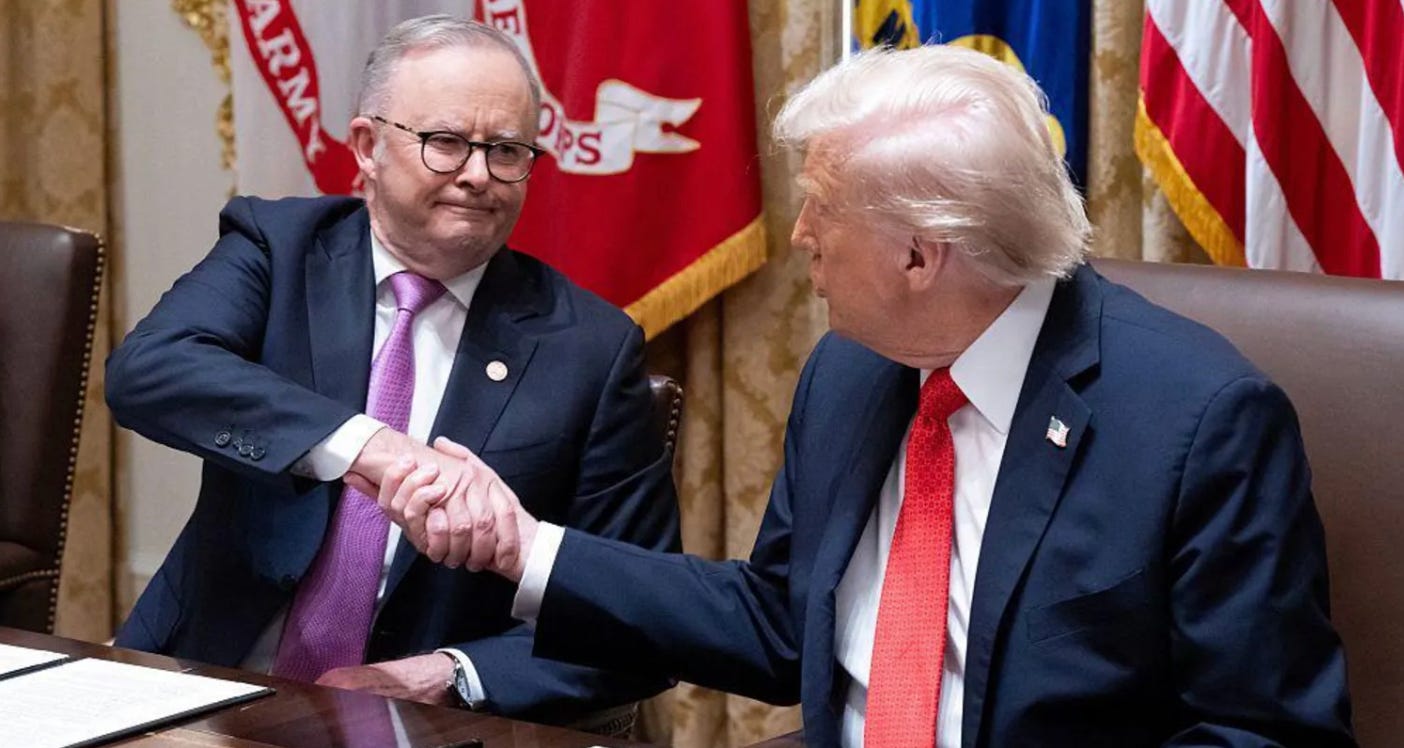
The United States and Australia have signed a deal aimed at increasing the supply of rare earths and other critical minerals, as the Trump administration seeks to challenge China’s stronghold on the market. Australian Prime Minister Anthony Albanese said the deal would support a pipeline of $8.5 billion in projects to boost the country’s mining and processing capacity.
During his announcement in Washington on Monday, October 20th, Albanese described it as a “significant milestone” that would advance the bilateral relationship. President Trump projected that within a year, the United States would possess such an abundance of critical minerals and rare earths that managing them could become a challenge: “In about a year from now we’ll have so much critical mineral and rare earth that you won’t know what to do with them.”
The level of investment specified in the agreement shows how serious the two nations are about addressing the issue. “The U.S. and Australia will invest over $3 billion in joint critical minerals projects within six months. That’s a somewhat unprecedented speed of capital injection,” said Gracelin Baskaran, director of the Critical Minerals Security Program at the Center for Strategic and International Studies in Washington.
Rare earths are embedded in numerous aspects of daily life. Materials such as gallium or neodymium-praseodymium oxide are essential for advanced manufacturing, consumer electronics, modern defense equipment, and the clean energy transition. Rare earth elements are integral components in electric vehicles, batteries, solar panels, wind turbines, personal electronic devices, and defense technologies.
The timing of the critical minerals agreement, underscores the profound shifts in global economic priorities. Previously, free trade and cost competitiveness often took precedence, sometimes at the expense of workers and environmental concerns. Today, security and supply chain reliability have become paramount, with Australia recognized as a leading producer of lithium, manganese, nickel-cobalt, rare earths, and titanium.
Efforts to diversify global supply chains and reduce China’s dominance underlie the recent agreement between Albanese and Trump. As Ambassador Kevin Rudd noted, Australia’s strategy focuses on providing long-term, secure supplies to allied nations, provided there is willingness among buyers to prioritize reliability over minimum cost.
Bridging the gap with China will require sustained investment of time, capital, and governmental support, given China’s decades-long leadership in rare earth mining and processing. Currently, China is responsible for approximately 70% of global rare earth extraction and 90% of processing operations.
This level of market concentration was previously deemed acceptable by Western nations content to import low-cost products rather than develop local industries. However, China’s increased use of its dominant position as leverage in trade disputes, notably following US tariff measures, has heightened concerns. Recent actions, such as China’s restriction of exports of rare earth magnets vital to US defense, underscore these vulnerabilities, and necessitate substantial intervention from the US, Australia, and others to achieve a more balanced market.
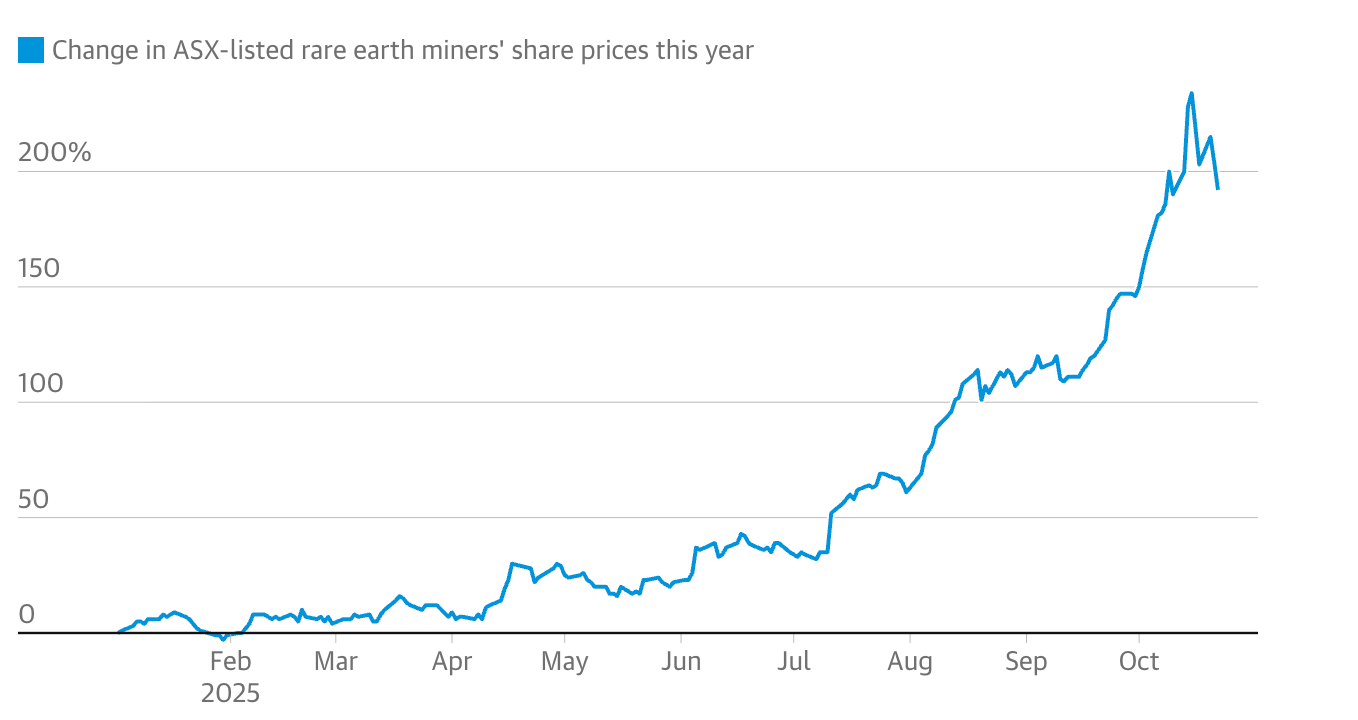
While tangible results from these investments may take a decade or longer to materialize, Australian rare-earth mining stocks have already seen significant appreciation, fueled by government commitments and the recent announcement.
Among the first initiatives under the new agreement is the development of Alcoa’s project in Western Australia, which aims to produce gallium by 2026, a significant development given China’s 98% share of global supply. Additionally, the government has committed a $100 million equity stake in Arafura’s Nolans neodymium-praseodymium oxide project, situated north of Alice Springs, supported by $1.2 billion in public funding. By 2032, Arafura aspires to fulfill 4% of global NdPr oxide demand, a field currently dominated by China.
While geologically abundant, rare earths have not been developed elsewhere at the same scale as in China. Past lack of profitability and environmental concerns led the US to cede leadership in the sector, while China pursued aggressive investment strategies that included environmentally sensitive refining practices, a reality that suited other nations until recently. As Australia pursues its goal of becoming a global leader in rare earth production, it must also address the environmental and health impacts associated with mining and processing, which can involve hazardous substances.
Robert Walker of the Lowy Institute anticipates that a transparent critical minerals market may not fully emerge until the 2030s. In the interim, government intervention, as guaranteed buyers and through price supports. will likely be necessary to ensure project viability. Sustaining growth in this sector will depend on ongoing public and private investment. The dramatic rise in mining stock values has raised concerns regarding returns to Australia, particularly given high levels of foreign ownership in the sector.
Recently, the Trump administration announced investments in MP Materials, Trilogy Metals, and Lithium Americas to support US-based mining projects. Anticipation of more backing drove up shares in Australian companies, like Lynas Rare Earths, which holds a US Defense Department contract and is developing a project in Texas. While Australia supplies key minerals, like the US, it too is dependent on China for processing these materials into usable products.