

U.S. Army, Energy Department to Install Small Nuclear Reactors on Bases
A plan to deploy a nuclear energy source at a U.S. military base is moving forward, aiming to have an operational reactor by September 30, 2028. Announced at the Association of the United States Army’s (AUSA) annual meeting, the Janus Program, led by the Energy Department and Defense Innovation Unit, will award milestone-based contracts to companies developing commercial power systems.
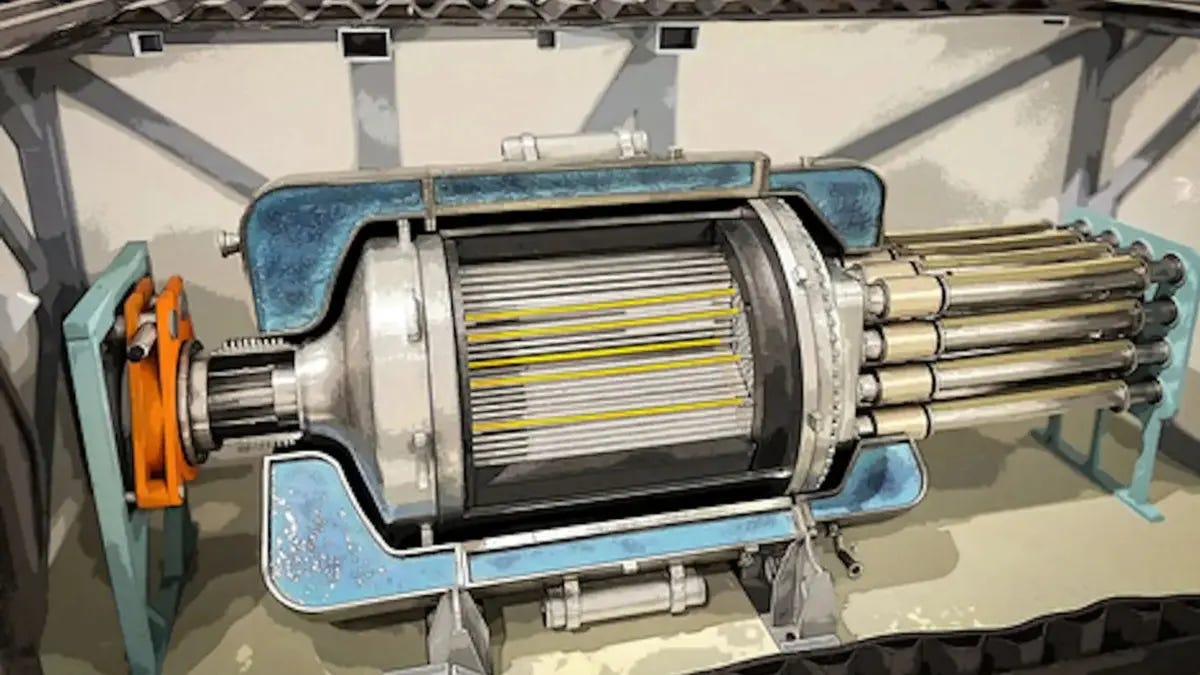
Small nuclear reactors, known as microreactors, are compact enough to be transported by truck and can operate for years without refueling. For military installations, they offer greater energy independence from civilian grids and diesel generators for forward-deployed troops. According to Christopher Wright, Secretary of the Energy Department, the objective is to operate up to 12 small reactors within the next couple of years; the long-term plan involves deploying small reactors on military installations.
Nuclear energy “is an energy source that’s dense and works 24/7,” said Secretary of the Army, Dan Driscoll. Politics and fear have smothered it over the last few decades, but “stronger, bolder leadership” will bring “very rapid growth in nuclear energy in the 5, 10, 15 years.”
“If you think about our engagement in a conflict in the Indo-Pacific, it is not going to be like a war we’ve had in the last 40 or 50 years,” Driscoll added. “We’re going to need to be able to access power like we have never needed it before. And so, Project Janus and this announcement is our first big step toward having the United States Army work with the private sector, work with other verticals of government and, under President Trump’s leadership, push forward nuclear energy for our country.”
All existing Department of Defense initiatives advancing advanced nuclear deployment, notably Project Pele and the DIU’s Advanced Nuclear Power for Installations (ANPI) program, will be integrated into this new program. “By leveraging the Army’s program management and oversight expertise alongside the advancements realized through Project Pele, the U.S. Army is positioned to advance next-generation nuclear power rapidly,” stated Jeff Waksman, the Army’s lead for energy installation programs, in an official release.
Several advanced nuclear firms have been preparing to participate in this program since President Donald Trump signed an executive order in May called “Deploying Advanced Nuclear Reactor Technologies for National Security,” which charged the Secretary of Defense and Secretary of the Army to establish a program of record for the utilization of nuclear energy and commence the operation of a nuclear reactor on a military base no later than Sept. 30, 2028.
The leading candidates in the advanced nuclear sector include: Radiant Industries, X-energy, BWXT, and Westinghouse Electric Company.
Radiant Industries, founded by former SpaceX engineers, is developing a modular nuclear power plant compact enough to fit inside a standard shipping container, with the goal of providing clean power to remote areas as a replacement for diesel generators. The company has secured an ANPI contract with the Air Force to deliver a microreactor by 2028.
X-energy focuses on the development of TRISO pellet fuel for its innovative microreactor design and was awarded a contract in August by the Defense Innovation Unit (DIU) and the Air Force to advance its reactor technology.
BWXT, another key player, is not only eligible for the ANPI program, but also is actively building a reactor as part of the Department of Defense’s Project Pele initiative at the Idaho National Laboratory.
Westinghouse Electric Company, a longstanding leader in nuclear technology, is recognized for designing the AP1000 large-scale light water reactor, which currently has six operational units and another six under construction worldwide; Westinghouse is also a participant in Project Pele.
Other participants in the ANPI program include: Oklo, Antares Nuclear, General Atomics, and Kairos Power.
The Janus Program is designed to assist companies developing critical microreactor technologies in navigating research and development, as well as regulatory processes, with the goal of achieving full-scale commercialization. The Army will provide additional technical oversight and support for managing the nuclear fuel cycle.