

United Kingdom and Germany Accelerate Military Modernization Initiatives
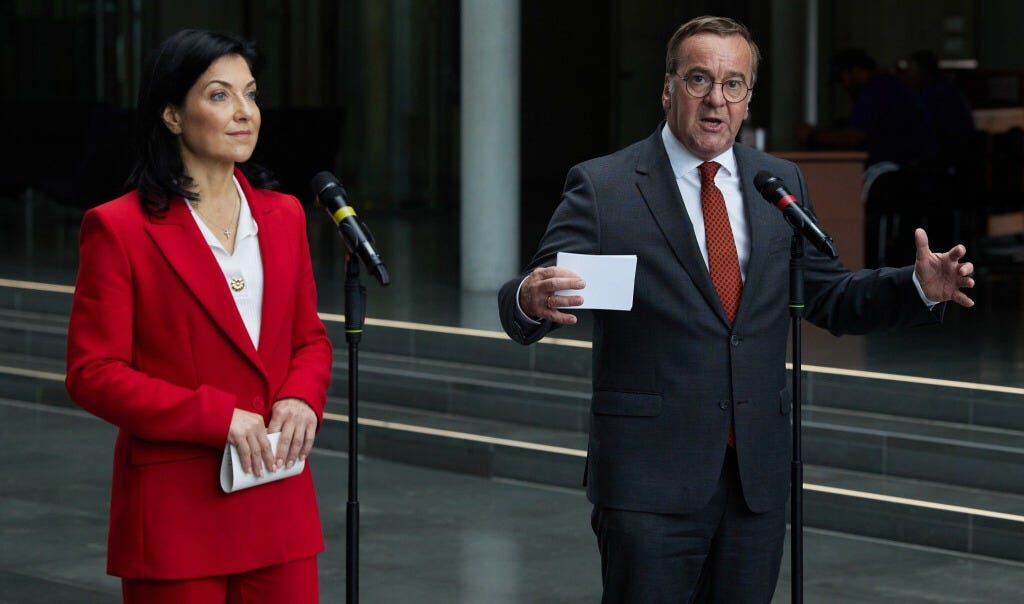
Both the United Kingdom and Germany have recently announced initiatives aimed at fast-tracking military modernization. In the UK, authorities unveiled their new digital targeting system, ASGARD, whereas the German parliament passed the "Bundeswehrbeschaffungsbeschleunigungsgesetz” or Bundeswehr Procurement Acceleration Act (BwPBBG), to enhance weapons procurement efficiency. The act, which marks one of the most significant changes to Germany’s defense procurement since the end of the Cold War, goes far beyond the temporary measures introduced in 2022, following Russia’s invasion of Ukraine. Both developments reflect the urgency of shoring up Europe’s military capabilities amidst heightened geopolitical tensions.
ASGARD, short for Autonomous Strike Guidance and Reconnaissance Device, was first announced in October 2024. ASGARD utilizes artificial intelligence and secure communications to accelerate decision-making, enabling soldiers to rapidly find and strike enemy targets at greater distances than ever before. ASGARD was prototyped and tested during NATO’s Exercise Hedgehog in Estonia. The system draws inspiration from Ukraine’s Kropyva command platform, which leverages high-speed targeting networks. Industry partners such as Anduril and Helsing contributed to the project, utilizing technologies including Anduril’s Lattice-powered Edge Data Mesh and Helsing’s Altra reconnaissance-strike software and HX-2 strike drone system.
Chief of the General Staff Gen. Roly Walker highlighted ASGARD's impact, stating that it “doubles our lethality and exponentially reduces the time to see, decide, and strike,” describing the program as transformative in the application and acquisition of advanced capabilities. “We are particularly proud of the collaboration between tacticians and technicians, between Defense and Industry, and the support of and to small and medium enterprises and jobs across the UK.”
ASGARD is part of an initiative to establish a broader digital targeting network, or “Digital Targeting Web”, across the UK Armed Forces by 2027, supported by over £1 billion in allocated funding. This new digital battlefield system will enhance integration across all domains through a secure, AI-managed cloud-based data system and a unified synthetic environment. Its goal is to link any sensor, regardless of location, to a full range of effectors.
In Germany, efforts to streamline defense procurement have culminated in the passage of the Bundeswehr Procurement Acceleration Act. Prompted by delays in major programs, especially frigates and armored vehicles, and concerns regarding bureaucratic inefficiency hampering rearmament plans, the legislation seeks to expedite contracting processes for defense firms and broaden access for startups, especially those involved in drone development. Interoperability, a new criterion in awarding contracts, aims to facilitate collaborative procurement with EU member states, aligning with the goals of the European Commission’s ReArm Europe initiative. However, urgent contracts will be able to bypass EU tender rules entirely, restricting competition to national or European suppliers. The draft law also formally recognizes software as military equipment.
The draft law raises the value threshold of direct awards and will speed up relevant procurements, which, according to Defense Minister Pistorius, will occur more frequently in the future. “We are also strengthening start-up companies by providing more opportunities for advance payments in the future, so that even smaller companies can increase their production capacities,” Pistorius said. “For this undertaking, we need close cooperation with the security and defense industry.”
Unlike its 2022 predecessor, which focused on military equipment and was due to expire in 2026, the law would cover all Bundeswehr needs, including civilian goods and services. The draft law now moves to the Bundestag for parliamentary approval. If accepted by Germany’s parliament, the new law will become active in 2026 and would extend until 2035. German Minister of Defense, Boris Pistorius, called the draft law a “quantum leap” for the country.