

Ukrainian Startup, The Fourth Law, Secures Funding for Scalable Drone Autonomy
Defense Tech startup, The Fourth Law, established in Ukraine following Russia’s invasion, has achieved notable progress for its drone and AI technologies. The company recently announced its inaugural external funding round, drawing investment from the US, Canada, Switzerland, Finland, and Spain.
Led by founder and CEO Yaroslav Azhnyuk, a serial entrepreneur whose previous ventures include fintech companies and consumer hardware solutions, The Fourth Law represents a significant shift toward military technology development under wartime conditions. While details regarding the amount raised and specific investors remain undisclosed, public information indicates that The Fourth Law's products are being deployed by units in Ukraine’s Land Forces, Marine Corps, and Air Assault Forces. The latest investment will be utilized to advance existing product lines, support ongoing sales efforts, and explore dual-use enterprise applications.
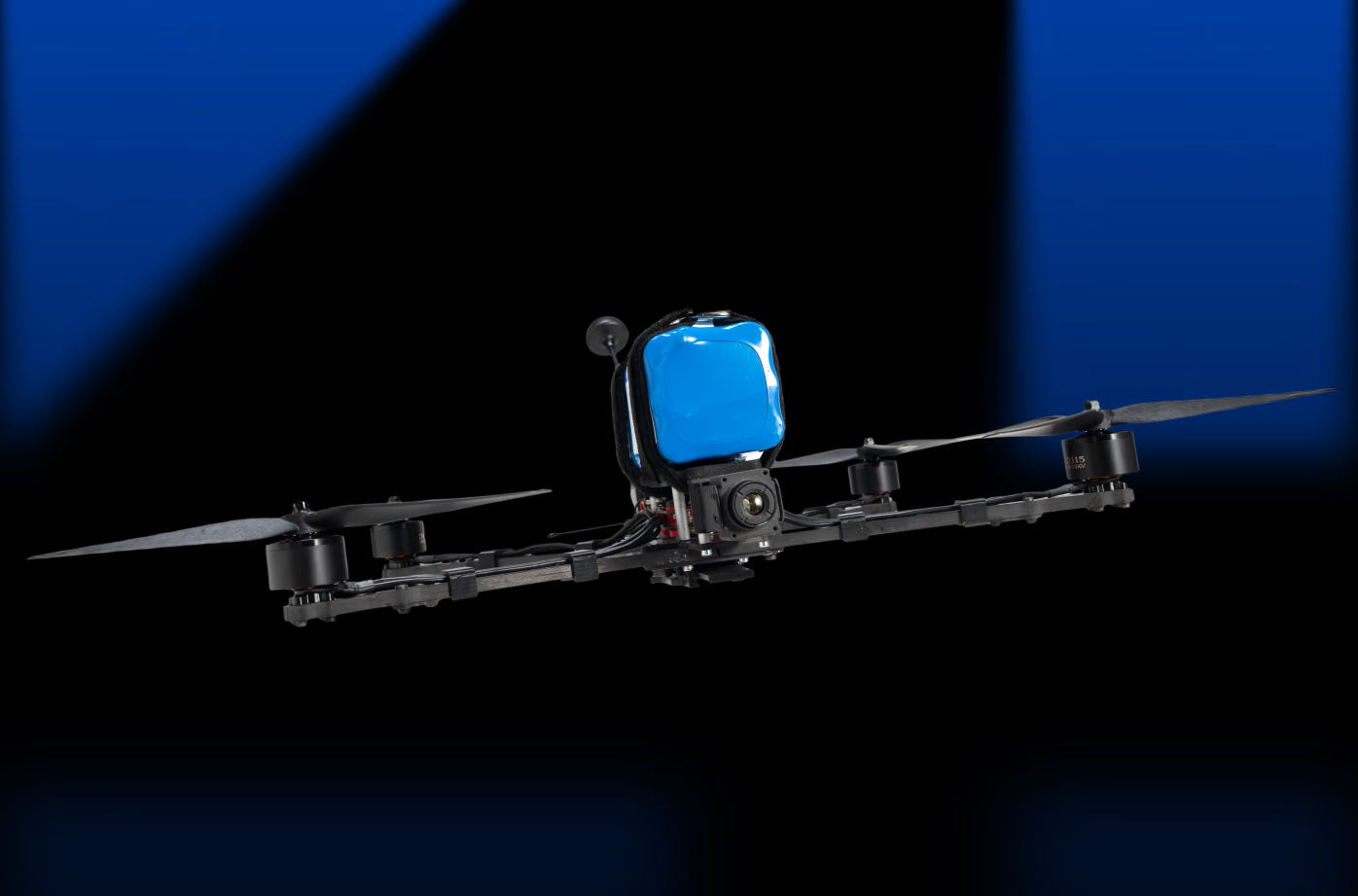
The Fourth Laws portfolio includes several products, notably the Lupynis-10-TFL 1 unmanned aircraft system (UAS) drone and the TFL-1 autonomy module, which can be integrated into third-party aircraft. These flagship devices have demonstrated effectiveness in first-person vision (FPV) drone operations, reportedly enhancing mission success rates while maintaining a moderate increase in costs. Specific figures on costs and typical mission outcomes are not disclosed. According to Colonel Ruslan Shevchuk of the Ukrainian Armed Forces, the technology enables drones to overcome electronic warfare (EW) jamming and execute target acquisition and strikes under challenging conditions. Integration of TFL-1 technology is underway across dozens of third-party platforms.
In an interview earlier this year, Azhnyuk discussed the company’s origins on the front line and its approach to addressing critical challenges in unmanned warfare, particularly electronic jamming. Russian investment in electronic warfare since the Cold War has posed considerable obstacles for Ukrainian forces, necessitating ongoing innovation. The complexity and sensitivity of electronic warfare means the problem remains dynamic, analogous to evolving cybersecurity threats - complete immunity from jamming is unattainable, only incremental advancements.
The Fourth Law’s focus, reflected in its name, refers to Isaac Asimov’s Three Laws of Robotics. The company pursues a ‘fourth law’ aimed at increased autonomy for drones. The TFL-1 module autonomously guides FPV drones during the final 500 meters of flight, a critical phase where EW devices often disrupt communications. Employing artificial intelligence to direct drones in this segment eliminates dependence on pilot control. Additionally, the Lupynis-10 drone is capable of traveling 30 kilometers with a one-kilogram payload, featuring built-in TFL-1 functionality.
Drawing from Azhnyuk’s prior experience in consumer technology, such as Petcube, a pet-tech firm that secured $24 million in venture capital, The Fourth Law emphasizes intuitive, user-friendly designs alongside urgent operational needs. Azhnyuk notes that current market dynamics in Ukraine prioritize engineering and product development over investor outreach.
Future product enhancements include enabling drones to deploy payloads and return for subsequent missions. Upcoming investments may support advanced target acquisition capabilities and adaptation for fixed-wing platforms, missile systems, or land-to-air and air-to-air scenarios.
Anticipating growth beyond Ukraine, The Fourth Law has established offices in the US, UK, and EU to prepare for expansion, pending regulatory approval for exports. However, Azhnyuk acknowledges the continued challenges facing Ukrainian defense startups, remarking that overall foreign investment remains limited despite significant opportunities. Hopefully, as export controls are relaxed, experienced technologists will attract substantial international capital required to build globally competitive businesses. The Fourth Law aspires to contribute to this emerging sector and foster ongoing innovation in defense technology.