

Ukrainian Drone Startup Swarmer Has Secured $17.9 Million in Total Funding
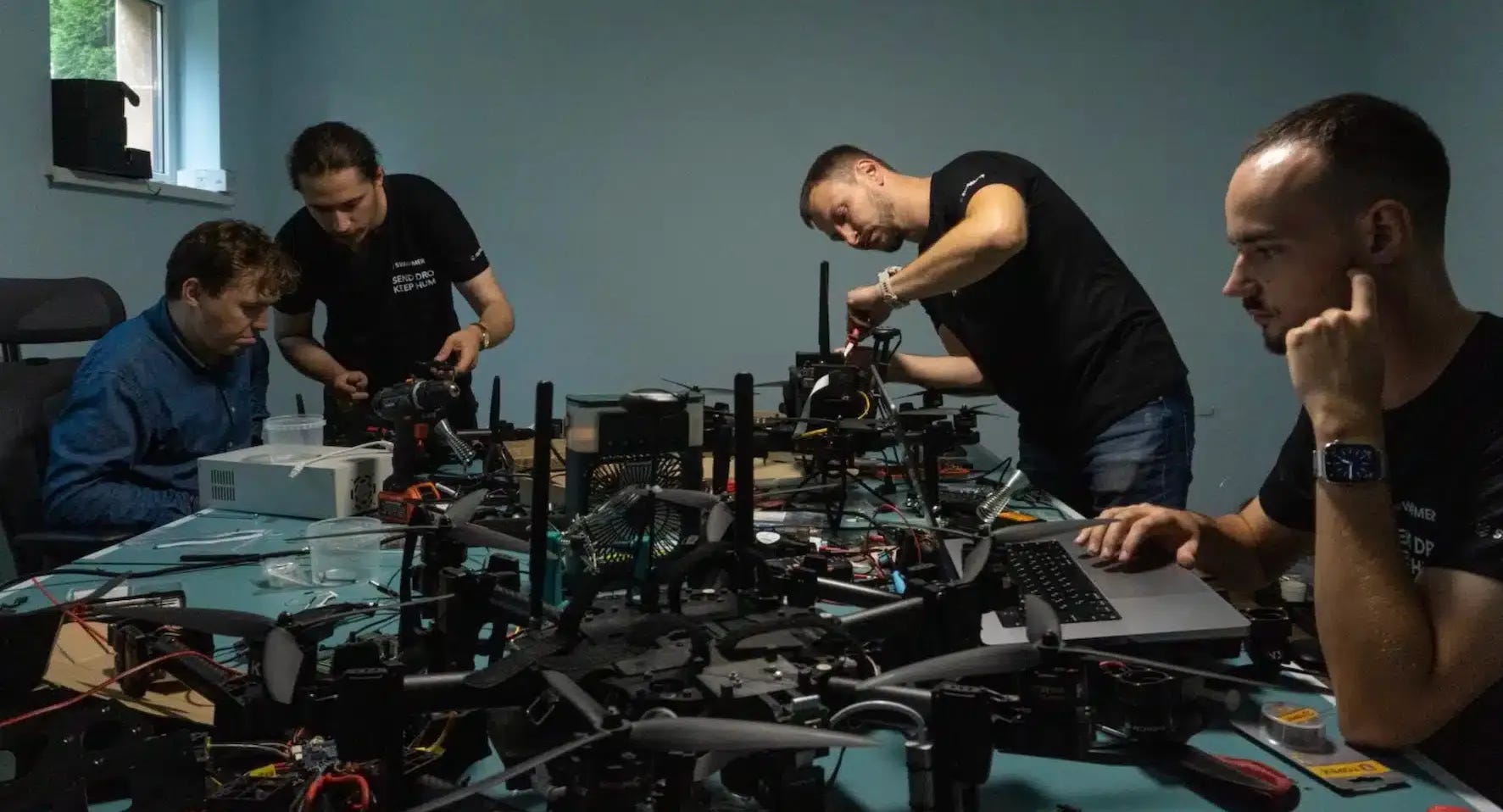
Ukrainian drone startup, Swarmer, established by Serhiy Kuprienko and Alex Fink in May 2023, has raised $15 million in Series A funding, led by Broadband Capital Investments, with participation from R-G.AI, D3 Ventures, Green Flag Ventures, Radius Capital, Network VC, and UA1 VC. The Series A round, which closed in September, is one of the largest publicly announced investment in a Ukrainian defense technology company since Russia’s full-scale invasion began in 2022. The Series A capital will be allocated toward advancing research and development, scaling operations, forming partnerships, and conducting combat testing.
Swarmer’s recent funding follows a $2.9 million seed round in 2023, backed by the D3 fund, which is supported by former Google CEO Eric Schmidt. Kuprienko noted that product development commenced in 2020, starting with $70,000 in initial financing. Forbes estimates the company’s valuation today at between $35 million and $70 million.
Swarmer develops AI-powered technologies that enable a single operator to manage multiple drones simultaneously. Swarmer’s core product, the Swarmer Platform powered by Styx AI system, addresses what Kupriienko calls the “key problem on the front - a shortage of qualified pilots” by synchronizing drone operations and allowing one operator to potentially control up to 20 or more drones. The primary limitation isn’t software but physical logistics. “Each drone requires a team that will carry it, prepare it, check it. This is what limits the scale,” Kupriienko noted.
Human-in-the-loop decision-making remains crucial as drone technology grows more autonomous. Swarmer’s policy of requiring human approval for strikes demonstrates responsible AI use, even in wartime: operators maintain ultimate authority over target engagement, ensuring human oversight despite automated coordination systems.
Another key advantage of Swarmer’s technology is the system’s intuitive design, which enables rapid operator training. “Someone who just finished school can master the system in half an hour,” Kupriienko explained.
Swarmer’s technology has been tested in more than 82,000 real-world missions. The platform has also demonstrated the successful coordination of up to 25 drones operating collaboratively in GPS-denied environments, with plans underway to scale operations to include integrated missions involving over 100 drones of different types.
Initially specializing in fixed-wing drones, Swarmer has broadened its scope to include large drones and a range of robotic platforms though approximately 90% of ongoing projects focus on aerial drones. The organization’s team of 45 works in close collaboration with Ukrainian military units. “No complex system will work until you assemble a team and test everything together on the battlefield,” Kupriienko said.
Kuprienko highlighted Ukraine’s leadership in drone innovation, emphasizing that while Russian resources are more substantial, Swarmer’s speed and agility offer a strategic advantage. The startup’s objective is to expedite development to keep pace with advances in battlefield technology. “I am pleased we secured investment in a major round,” Kuprienko stated. “Significant resources are required to accelerate our development efforts. As a Ukrainian defense sector startup, we must innovate and evolve at an exceptionally rapid rate.”
The $17.9 million total raised by Swarmer demonstrates that direct collaboration with Ukrainian manufacturers can yield more effective and timely outcomes compared to channeling funds through conventional Western contractors. These firms iterate on drone warfare technologies daily, responding directly to combat feedback and establishing a development cycle that is difficult for traditional Western defense companies to replicate.
Swarmer exemplifies the future of the drone industry: utilizing AI-driven coordination to achieve force multiplication without requiring a proportional increase in trained personnel. The potential civilian applications, including infrastructure inspection, border security, and precision agriculture, have the capacity to redefine the standards and practices of commercial drone operations.