

Tycho AI Secures $10M to Boost UAV Autonomy
Cambridge, MA-based, Tycho AI, a startup focused on developing navigation and artificial intelligence systems for unmanned vehicles, announced the completion of its $10 million Series A funding round. The round was led by FirstMark, with additional support from seed partner Pillar VC.
Tycho AI produces software and hardware designed to enable drones and other unmanned platforms to function in challenging environments, including those where GPS or communications are restricted. The Series A investment will be used to expand Tycho AI’s engineering and capture teams, increase flight testing and system integration, and develop its edge-AI autonomy capabilities. Although defense remains a central focus, the technology is also applicable to commercial sectors, such as agricultural drone operations.
Thom Kenney, CEO of Tycho AI, stated that the company’s aim is to establish methods for interaction between humans and machines in real-world settings. The company’s priority is creating autonomous systems that maintain reliability under complex and unpredictable conditions, such as contested urban areas or denied battlefields.
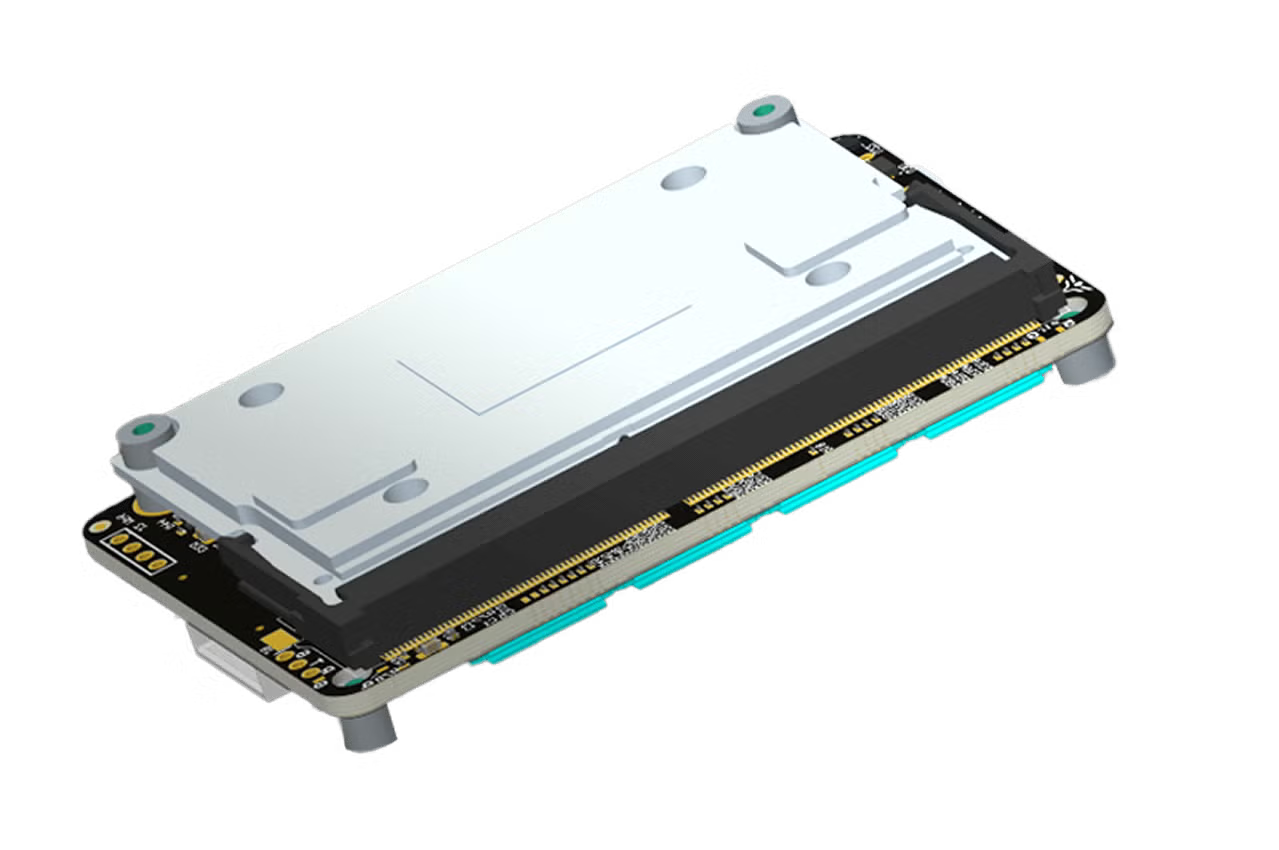
Tycho AI’s systems differ from those based on large-scale AI models that require continuous connectivity and high computational power. Instead, its modular platform operates on low-SWaP hardware like FPGAs and ASICs, allowing for practical edge deployment on compact aerial and ground platforms.
According to Professor Sertac Karaman, founder and advisor at Tycho AI, the principal challenge for autonomy has been ensuring system functionality in adverse conditions. He highlighted the company’s integration of multi-modal sensing and advanced machine learning to enhance autonomous performance.
Addressing contested environments is considered an increasing priority in defense planning globally. Tycho’s systems use visual-inertial odometry, sensor fusion, and machine learning for reliable operation without relying on GPS or remote control.
Tycho AI also announced that retired General Richard D. Clarke has joined its Board of Directors. Clarke previously served as Commander of U.S. Special Operations Command (SOCOM). Clarke commented that many autonomy technologies do not perform optimally in the environments they are intended for, whereas Tycho AI is addressing this issue by concentrating on edge-executable autonomy for demanding missions.
The company continues to secure defense contracts and has received over $5 million in Small Business Innovation Research (SBIR) awards, including a Direct to Phase II from AFWERX, a Phase II award from the Strategic Capabilities Office, and a TACFI contract with the Air Force Research Laboratory.