

Trump Stops Defense Contractor Dividends and Buybacks
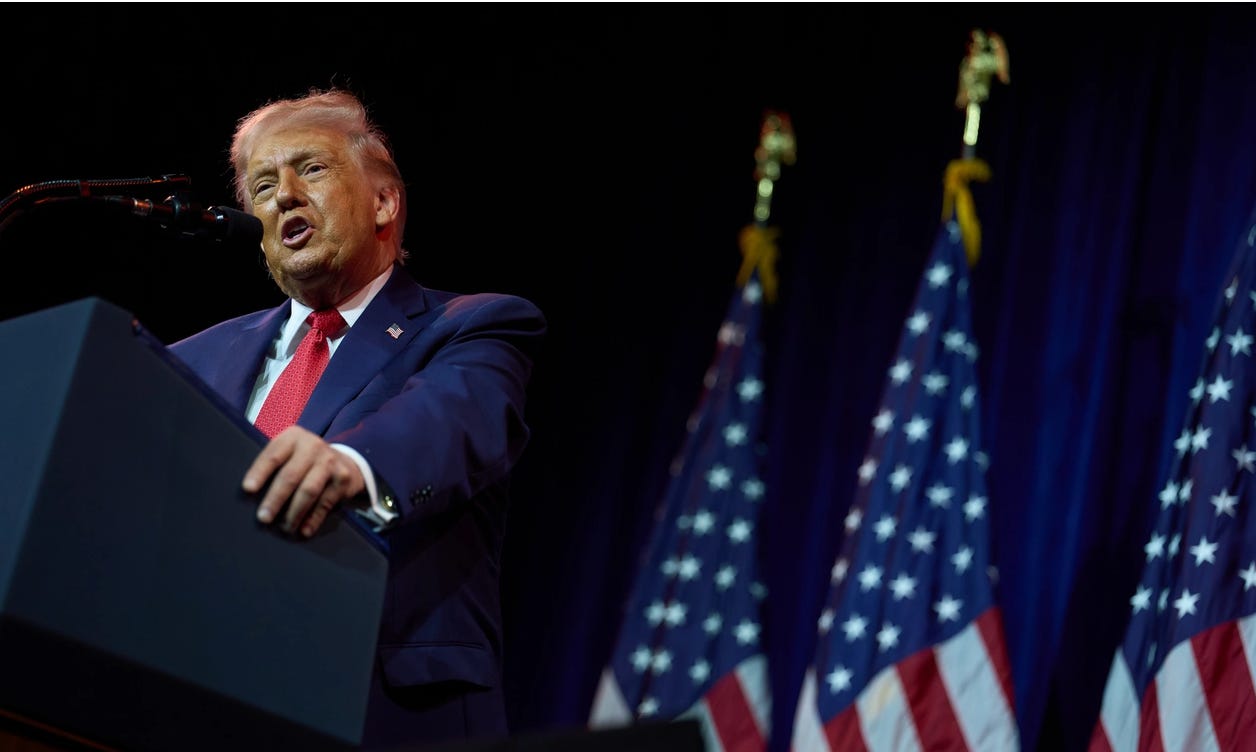
President Donald Trump announced on Wednesday, January 7th, that he would prohibit defense companies from buying back their own shares, issuing large executive compensation packages, or paying dividends to shareholders, especially calling out one of the nation’s leading missile manufacturers. On Truth Social, Trump criticized the defense industry for being slow to produce “Great Military Equipment” and failing to maintain it quickly and properly. According to Trump, executive pay in the sector is “exorbitant and unjustifiable” considering the delays in delivering critical equipment to the U.S. military and its allies.
Trump also stated that RTX Corp. (formerly Raytheon) would be ineligible for government contracts unless it invested significantly in expanding manufacturing capacity and stopped stock buybacks. RTX is a major supplier of aircraft engines and missiles to the Pentagon. Trump did not specify who might replace the company if it lost contracts.
These measures are part of broader efforts by the Trump administration to increase regulatory control over certain U.S. companies, including past actions such as taking stakes in private firms like Intel. Earlier on Wednesday, Trump also proposed barring large investors from purchasing more single-family homes to address housing costs. Details on how these restrictions would be enforced remain unclear, and the White House has not commented further.
Trump wrote, “From this point forward, these Executives must build new and modern production plants, both to deliver and maintain this important Equipment, and to build the latest Models of future Military Equipment.” He went on to say that funding these projects should come from diverted dividends, stock buybacks, and excessive executive compensation, rather than loans or government funds. He added, “no Executive should be allowed to make in excess of $5 Million Dollars.”
Through an executive order, Trump tasked Secretary Pete Hegseth with identifying underperforming defense contractors engaging in stock buybacks and providing them with opportunities to correct these issues. If improvements aren’t made, the order allows action under existing laws, like the Defense Production Act or acquisition regulations, to boost performance or penalize companies through payment withholding or contract suspension.
Trump’s dissatisfaction with military contractors has grown recently, even as he considers increasing the Pentagon’s annual budget to $1.5 trillion - nearly 60% more than the current level. On Tuesday, he expressed frustration about rising industry profits amid ongoing delays in delivering advanced weapons systems. “The defense contractors are making more,” he said. “That’s why I’m gonna say, you’re making $45 million a year and you can’t produce a frickin’ helicopter for 7 years? We’re gonna talk to them.”
Reports show that, between 2021 and 2024, major defense contractors like Lockheed Martin, RTX, General Dynamics, and Northrop Grumman distributed roughly $89 billion through stock buybacks and dividends. After Trump’s statements, defense stocks fell sharply, with these four contractors seeing notable declines—Northrop lost over 5%, while Lockheed and General Dynamics dropped over 4%. Trump’s remarks about RTX came after markets closed.
Trump’s stance contrasts with recent outreach by the Pentagon to defense firms. For example, Defense Secretary Pete Hegseth spoke to executives at Ft. McNair, and on Tuesday, the Pentagon struck a deal with Lockheed Martin to triple Patriot missile interceptor production, a top military priority.
Industry analysts remain skeptical about Trump’s ability to enforce these changes, as executive pay is typically set by corporate boards and influenced by shareholders. Many insiders are hesitant to invest in new factories without firm Department of Defense contracts. Byron Callan, a defense industry analyst, questioned the feasibility of Trump’s approach, noting that board decisions and shareholder interests ultimately guide compensation and investment.
Ann Lipton, a University of Colorado law professor, suggested one lever of influence could be making compliance a requirement for government contracts. Meanwhile, a defense industry official compared Trump’s proposals to socialist policies, remarking, “I thought we grabbed Maduro to stem socialism in the Americas, not to turn D.C. into Caracas on the Potomac.”