

Trump Signs Reconciliation Bill Allocating $150 Billion for Defense into Law on July 4th, a Day After House Passes
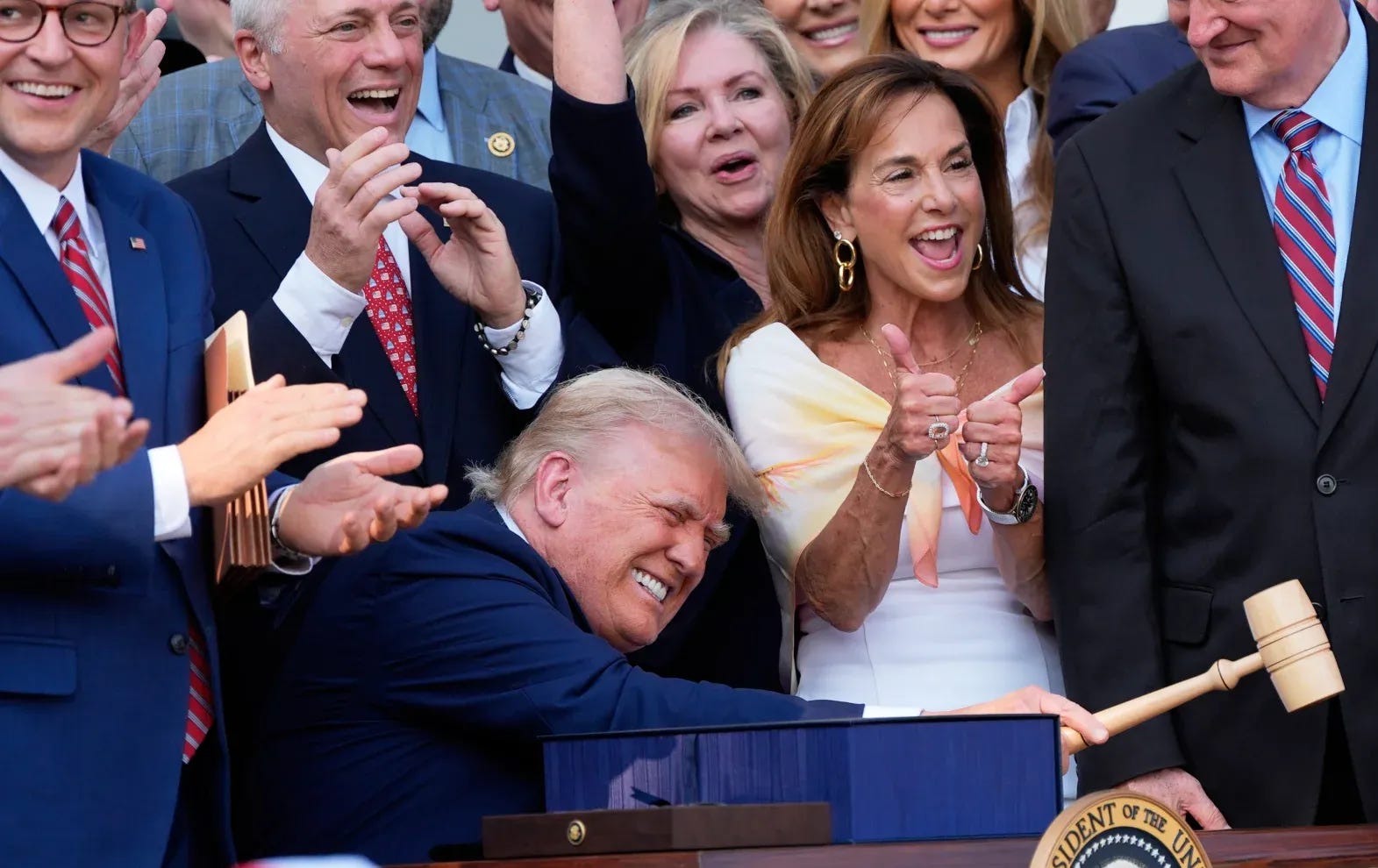
House Passes Reconciliation Bill With $150 Billion for Defense
On July 3, the House of Representatives narrowly passed President Donald Trump’s sweeping “One Big Beautiful Bill,” a comprehensive legislative package addressing tax policy, health care, immigration, and defense. The measure was approved by a 218-214 vote, largely along party lines, and was signed into law by President Trump on July 4, meeting his self-imposed deadline.
Historic Boost to Defense Funding
The legislation allocates an additional $150 billion to the Department of Defense, marking a significant supplement to the Pentagon’s regular budget request of $848 billion for fiscal year 2026. This brings overall defense spending close to $1 trillion, the highest level in recent history when accounting for both the base budget and supplemental funds.
Major Allocations in the Defense Package
Shipbuilding and Maritime Investments: $29 billion is directed to expand the naval fleet, supporting the procurement of 16 ships, including Arleigh Burke-class destroyers and a Virginia-class submarine. This funding aims to revitalize the maritime industrial base and address fleet modernization goals.
Golden Dome Homeland Defense Initiative: $25 billion is set aside for the Golden Dome, a proposed nationwide missile defense shield. The initiative, inspired by Israel’s Iron Dome and Reagan’s Strategic Defense Initiative, envisions a layered system of space-based sensors, interceptors, and directed energy weapons to protect the U.S. from advanced missile threats. Although still in early development, this is one of the most ambitious and costly homeland defense projects ever proposed.
Munitions and Critical Minerals: $25 billion is allocated for replenishing and expanding the nation’s precision munitions stockpile, with an additional $5 billion dedicated to securing critical minerals supply chains essential for modern weapons manufacturing.
Advanced Technologies: $16 billion will accelerate the deployment of innovative technologies, including drones, artificial intelligence, and low-cost weapons. Funding for the Strategic Capabilities Office was increased to foster rapid technological advancement.
Nuclear Modernization: $15 billion is provided to modernize the U.S. nuclear arsenal, including accelerated development of new delivery systems.
Quality of Life Improvements: $9 billion targets improvements in service member housing, health care, child care, education, and special pay bonuses. This includes support for barracks privatization, military health programs, and expanded allowances.
Border Operations: $1 billion is allocated for military operations at the U.S.-Mexico border, a reduction from previous proposals.
Recent developments clarify that the Department of Defense’s total fiscal year 2026 budget now stands at $961.6 billion, with $113.3 billion of the $150 billion reconciliation supplement earmarked for Pentagon use. The reconciliation bill’s passage was essential, as the base budget alone would have represented a real-terms cut after inflation.
Notably, the Golden Dome missile defense initiative remains in its infancy, with $25 billion allocated for early-stage work on what could become the most expensive homeland defense project in U.S. history.
The budget also reflects shifts in procurement, with reduced buys for programs like the F-35 and a heavy reliance on supplemental funding for shipbuilding and new technologies. Immigration and border security funding saw significant increases, with new federal support for state-level enforcement.
The reconciliation process, used to bypass the filibuster, resulted in a narrowly passed, highly partisan bill that has left defense planners and contractors uncertain about the sustainability of these funding levels in future years. Finally, the rapid spending deadlines and broad agency discretion attached to reconciliation funds have raised questions about oversight and long-term accountability.
A Break from Budget Tradition
This year’s reliance on a party-line reconciliation bill, rather than the traditional bipartisan budget process, reflects both political strategy and fiscal necessity. The Trump administration’s base defense budget was delayed and, when released, offered only flat funding that did not keep pace with inflation or modernization needs. To secure the additional $150 billion required for priorities such as shipbuilding, missile defense, and advanced technology, the administration turned to the reconciliation process. This legislative maneuver allowed the majority party to bypass the Senate filibuster and pass the bill with a simple majority, sidestepping the need for Democratic support. While this approach broke with longstanding precedent and introduced significant risk, it was seen as the only viable way to provide the Pentagon with immediate access to supplemental funds, particularly given concerns that the fiscal year might begin under a continuing resolution, which would restrict spending and delay new initiatives.
Unprecedented Budget Process
This year’s defense funding process was highly unorthodox. The Trump administration chose to separate core appropriations into two bills, relying on passage of the party-line reconciliation measure to meet the Pentagon’s full funding requirements. This departure from tradition introduced significant risk, as failure would have left the Department of Defense with a substantial budget shortfall.
The reconciliation process allowed the majority party to bypass the Senate filibuster, advancing the bill with a simple majority in both chambers. Only two Republican members voted against the final measure, despite earlier opposition from a larger bloc concerned about deficit spending.
Implications and Outlook
The additional $150 billion in defense spending will be immediately accessible for fiscal year 2026. However, lawmakers anticipate that the fiscal year may begin under a continuing resolution, which would temporarily restrict government spending to current levels. In such a scenario, the Pentagon could access supplemental funds while operating under the constraints of an unapproved base budget, a situation that complicates long-term planning and procurement.
The passage of this bill marks a pivotal moment in U.S. defense policy, enabling historic investments in military modernization, homeland missile defense, and service member quality of life, while also highlighting the political and procedural complexities of contemporary budget-making. As the Pentagon adapts to this new funding landscape, questions remain about the sustainability of these investments and the oversight of rapidly allocated supplemental funds.