

Trump Relocates SPACECOM HQ from Colorado to Alabama
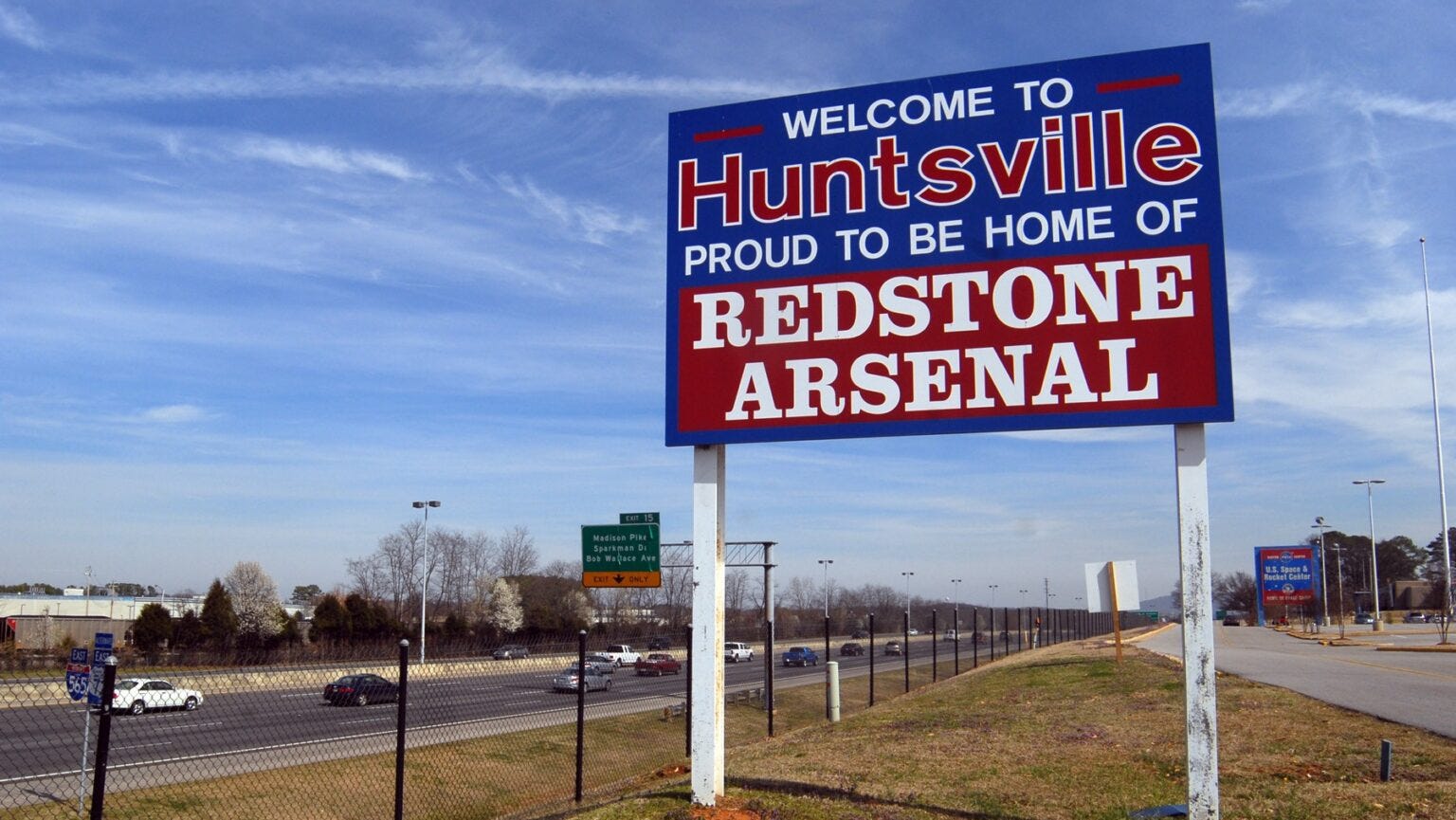
President Donald Trump officially announced on September 2, 2025, that U.S. Space Command (SPACECOM) will be relocated from Colorado Springs to Redstone Arsenal in Huntsville, Alabama, overturning the 2023 decision under the Biden administration to keep the headquarters in Colorado Spring. “The U.S. Space Command headquarters will move to the beautiful locale of a place called Huntsville, Alabama, forever to be known from this point forward as Rocket City,” said Trump during a press conference. Approximately 60 acres of land near Redstone Arsenal have been identified for the new headquarters facility.
The selection of Space Command’s headquarters has been under consideration within the Defense Department and Congress since its reestablishment in 2019. This process included investigations by the Pentagon’s Office of the Inspector General (OIG) and the Government Accountability Office (GAO). Lawmakers from Colorado and Alabama advocated for their respective districts as suitable sites for the command.
For the past six years, Peterson Space Force Base in Colorado Springs, Colorado, has served as the interim headquarters. The command oversees military activities in the space domain, including satellite communications, defensive measures, and missile warning and defense.
In 2021, the president at that time selected Huntsville, home to the Army’s Redstone Arsenal and Missile Defense Command, as the preferred site for the headquarters. In 2023, that decision was reversed when the new administration announced that Space Command’s permanent headquarters would remain in Colorado Springs.
Both the Pentagon’s OIG and GAO reviewed the Defense Department’s basing process in 2022, finding that initial studies by the Department of the Air Force considered Alabama the most cost-effective option. However, subsequent reports noted concerns from DOD officials about potential negative impacts on readiness due to the time required for relocation.
A second OIG report released in April reiterated previous findings: while the Department of the Air Force favored Huntsville based primarily on cost considerations, Space Command leadership preferred to remain in Colorado due to concerns regarding personnel relocation and the time needed to establish new facilities and secure communications. The report highlighted that the Air Force cited taxpayer cost as the main factor, whereas Space Command prioritized minimizing risks to operational readiness.
The Pentagon’s decision to relocate U.S. Space Command (SPACECOM) headquarters from Colorado Springs to Huntsville, Alabama carries sweeping economic, political, and strategic implications. The decision is inevitably seen by some as political, as Alabama is a Republican-leaning state, while Colorado typically supports Democrats. For Alabama, the move represents a major win, with projections of thousands of new jobs and hundreds of millions of dollars in economic impact. Huntsville’s Redstone Arsenal already houses significant aerospace and defense assets, including NASA’s Marshall Space Flight Center and the Army’s Space and Missile Defense Command, giving the region a strong foundation to support SPACECOM. President Trump noted during his announcement that the move will help push forward his Golden Dome plan for a comprehensive air and missile defense shield: “A big factor also, in Huntsville, SPACECOM will play a key role in building the Golden Dome. As you know, that’s going to be a big thing.” The Department of Defense also estimates the move could save more than $400 million in construction and personnel costs due to Alabama’s lower operating expenses.
Yet critics warn the relocation poses operational risks: the transition could take several years, potentially delay readiness, and prompt personnel losses if staff decline to relocate. Colorado officials argue the decision undermines their state’s deep aerospace expertise and may have been driven by political calculations rather than strategic necessity. Supporters, including Alabama’s congressional delegation, counter that the move strengthens national security while correcting a decision they viewed as flawed. Ultimately, the headquarters shift underscores the tension between cost-efficiency, political influence, and military readiness in shaping U.S. defense posture.