

Trump Issues Executive Orders Enhancing Drone Defenses and Advance Supersonic Flight
On Friday, June 6th, President Donald Trump signed aviation-focused executive orders directing the FAA to lift a ban imposed in 1973 on supersonic air transport over land. The White House aims to make the U.S. a leader in high-speed aviation by repealing the ban and addressing other regulatory barriers. The Executive Order follows proposed legislation introduced in Congress last month that would permit supersonic civil aircraft to fly as long as no sonic boom reaches the ground in the United States.
Supersonic travel faced noise concerns since its inception, leading to tens of thousands of complaints and eventual bans. Supersonic aircraft have also been criticized by environmentalists for burning more fuel per passenger than comparable subsonic planes. The Federal Aviation Administration will create a noise certification standard considering community acceptability, economic reasonableness, and technological feasibility to address noise concerns. NASA's "low-boom" supersonic jet, the X-59, expected to begin flight testing in 2025, and Colorado-based Boom Supersonic’s quieter aircraft, Overture, show progress toward resolving these issues.
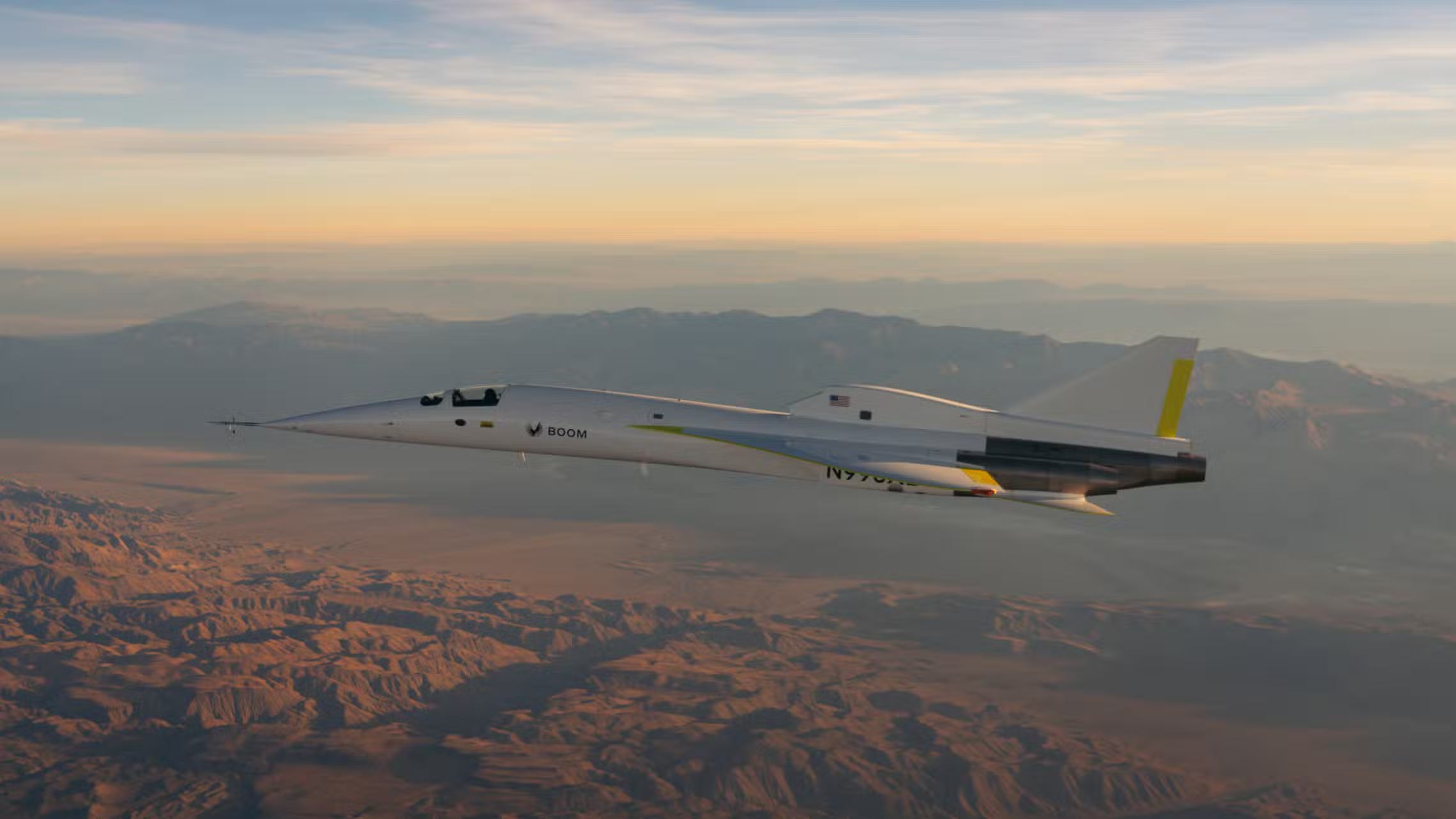
Boom’s XB-1 demonstrator aircraft successfully broke the sound barrier in January and February 2025. It achieved this feat without producing a detectable sonic boom by utilizing “boomless cruise” or “Mach cutoff,” which causes sound to refract away from the ground at speeds close to the sound barrier under specific atmospheric conditions.
Boom plans to build the first prototype Overture engine by the end of the year. If the company’s ambitious timeline proceeds as planned, American Airlines, Japan Airlines (JAL), and United Airlines may receive their first Overture deliveries by the end of the decade.
For more than 50 years, regulations have limited the development of supersonic flight, affecting American innovation and competitiveness in aviation. The era of regular commercial supersonic flights ended in 2003 when Concorde, flown by Air France and British Airways, was retired after 27 years of service. The change should boost aerospace jobs and production, strengthening the U.S. economy and security. Legal supersonic travel could revolutionize aviation by cutting city-to-city travel times in half.
President Trump also issued executive orders aimed at allowing drones to operate beyond the visual sight of operators, reducing U.S. dependency on Chinese drone companies, and advancing testing of electric vertical takeoff and landing aircraft. This should benefit eVTOL firms like Joby Aviation (JOBY.N) and Archer Aviation (ACHR.N).
Additionally, Trump established a federal task force is to ensure U.S. control over American skies, expand restrictions over sensitive sites, increase federal use of technology to detect drones in real-time, and assist state and local law enforcement.
Michael Kratsios, director of the White House Office of Science and Technology Policy, stated that the initiative aims to address the growing threat posed by criminal activities and foreign misuse of drones in U.S. airspace. Additionally, the orders aim to enhance air security, especially for large-scale public events, such as the upcoming Olympics and the World Cup.
The issue of suspicious drones gained significant attention last year after a flurry of drone sightings in New Jersey. The Federal Aviation Administration (FAA) receives more than 100 drone-sighting reports near airports each month. Drone sightings have at times disrupted flights and sporting events.
Notably, the orders do not ban any Chinese drone companies. Last year, former President Joe Biden signed legislation that could ban China-based DJI and Autel Robotics from selling new drone models in the U.S. DJI, the world's largest drone manufacturer, sells more than half of all U.S. commercial drones.
Related:
America’s skies may soon open up to supersonic travel. But there’s still a big problem
Trump Moves to Bolster US Drone Industry, Stops Short of Banning DJI
Trump’s Executive Orders Cast Shadow Over DJI Drones in the U.S.