

Trump Insists US Needs Greenland, Appoints Special Envoy
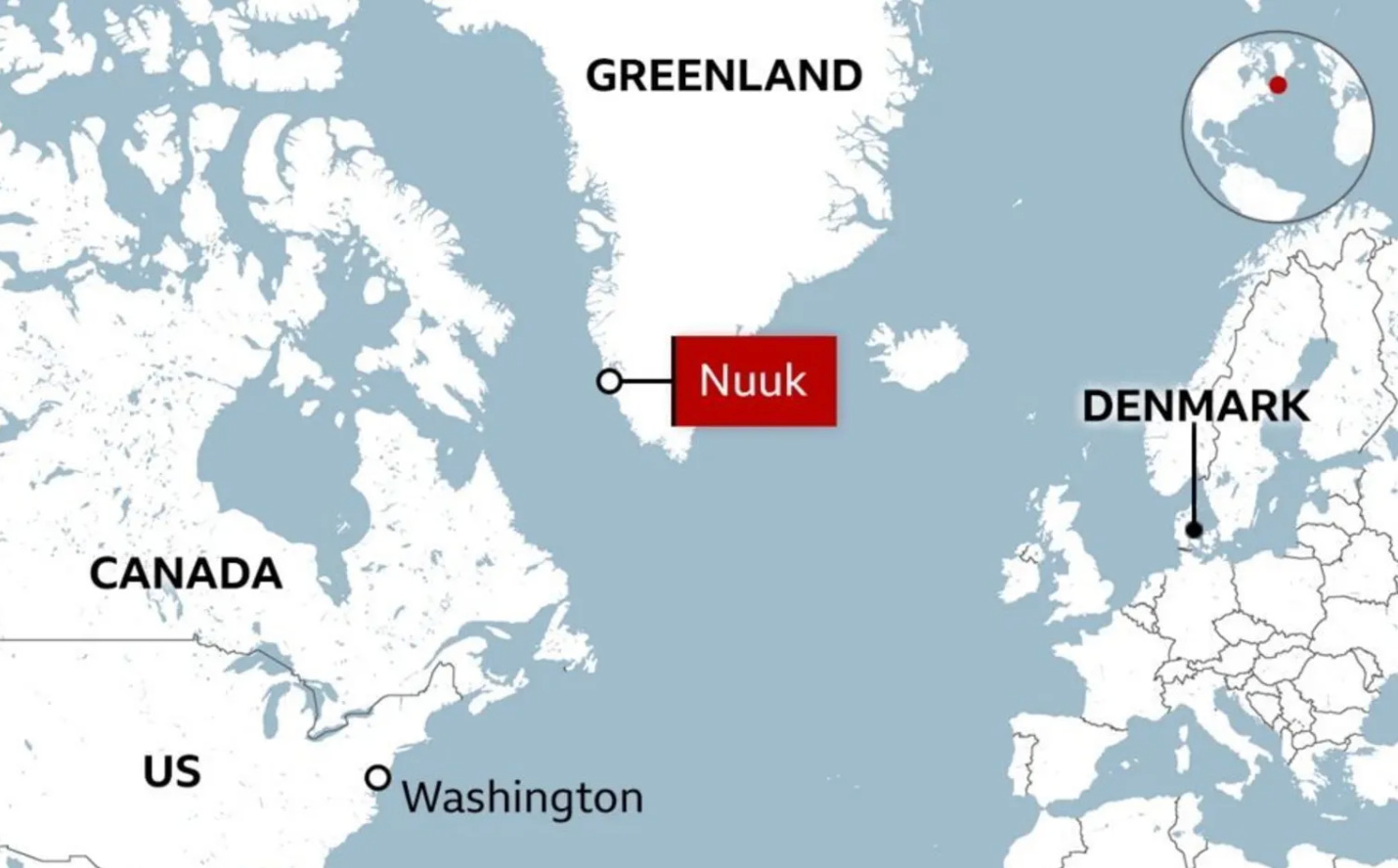
Former U.S. President Donald Trump has appointed Louisiana Governor Jeff Landry as a special envoy to Greenland, saying the Republican governor will “lead the charge” on renewed U.S. efforts involving the Arctic territory. The announcement has drawn sharp criticism from both Denmark and Greenland, amid concerns over Washington’s growing strategic and economic interest in the mineral rich island.
Former U.S. President Donald Trump has appointed Louisiana Governor Jeff Landry as a special envoy to Greenland, saying the Republican governor will “lead the charge” on renewed U.S. efforts involving the Arctic territory. The announcement has drawn sharp criticism from both Denmark and Greenland, amid concerns over Washington’s growing strategic and economic interest in the mineral rich island.
Trump has previously advocated for the incorporation of Greenland, an autonomous territory within the Kingdom of Denmark, into the United States, citing its strategic location and natural resources. During his first presidential term, Trump floated the idea of purchasing Greenland, a proposal rejected outright in 2019 by both Danish and Greenlandic leaders, who responded that “Greenland is not for sale.”
Speaking to reporters in Palm Beach, Florida, Trump reiterated his position, framing Greenland as a national security necessity. “We need Greenland for national security, not for minerals. If you take a look at Greenland, you look up and down the coast, you have Russian and Chinese ships all over the place. We need it for national security. We have to have it,” Trump said, adding that Landry was prepared to “lead the charge.”
Landry acknowledged the appointment in a social media post, writing, “It’s an honor to serve in this volunteer position to make Greenland a part of the U.S. This in no way affects my position as Governor of Louisiana.”
Danish Prime Minister Mette Frederiksen and Greenlandic Prime Minister Jens Frederik Nielsen swiftly rejected the move in a joint statement. “Greenland belongs to Greenlanders,” they said. “You cannot annex another country, not even with an argument about international security. Greenland belongs to the Greenlanders and the U.S. shall not take over Greenland.”
Tensions intensified further after the Trump administration suspended leases for five major offshore wind projects off the U.S. East Coast, including two under development by Orsted, a Danish state controlled energy company. The move was widely interpreted in Copenhagen as a form of political pressure.
Greenland, a former Danish colony with a population of approximately 57,000, retains the right to declare independence under a 2009 self rule agreement. Despite this autonomy, it remains heavily dependent on fishing and annual subsidies from Denmark. Its location between Europe and North America has long made it strategically important for U.S. and NATO defense planning, particularly for ballistic missile defense systems. Melting Arctic ice has opened new shipping routes and increased access to rare earth minerals, intensifying geopolitical competition in the region.
The United States has maintained a military presence in Greenland since World War II, originally established after Nazi Germany occupied Denmark. Vice President JD Vance visited the U.S. base in March, encouraging Greenland’s population to consider a broader agreement with Washington. The U.S. reopened its consulate in Nuuk in 2020, having closed it in 1953. Several European nations and Canada also maintain honorary consulates in Greenland.
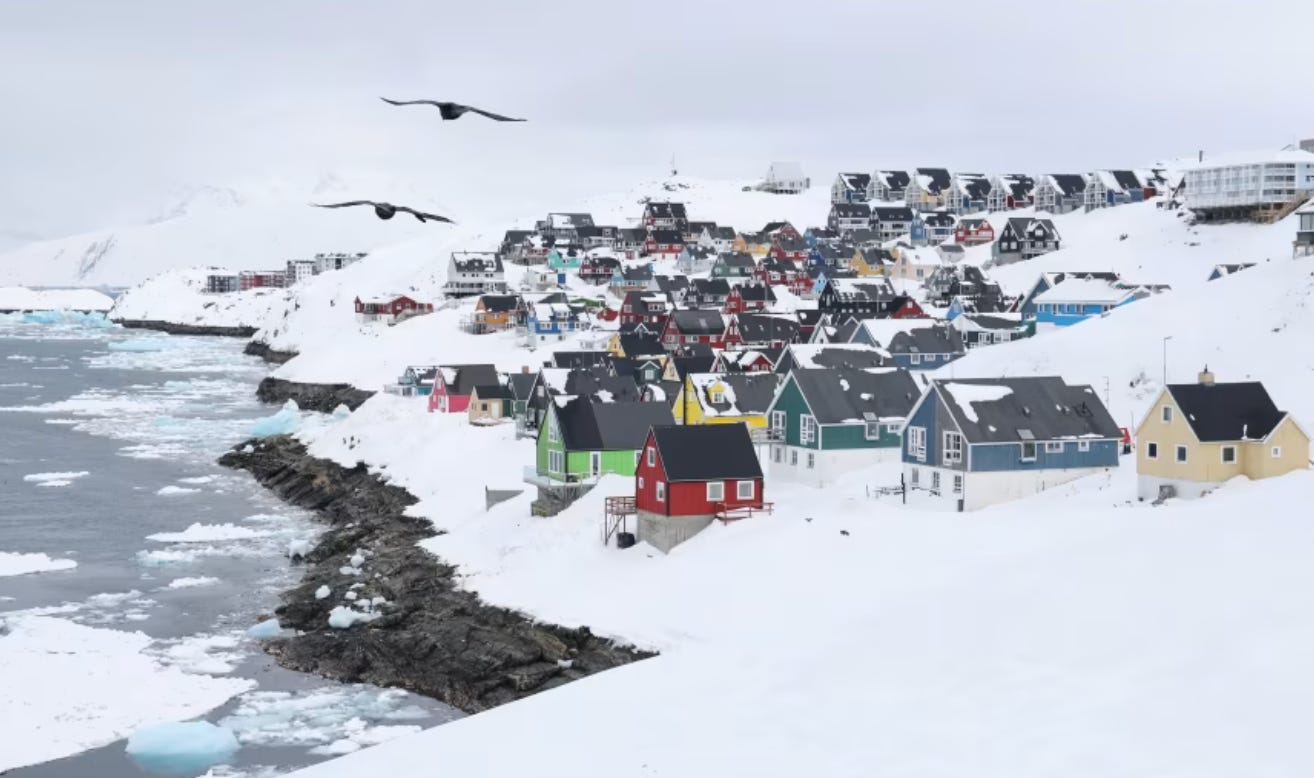
Following Trump’s announcement, Prime Minister Nielsen sought to downplay its significance. “We have woken up again to a new announcement from the U.S. president,” he said. “This may sound big, but it does not change anything for us. We decide our own future.”
Danish Foreign Minister Lars Lokke Rasmussen said he would summon U.S. Ambassador Kenneth Howery, who had recently pledged “mutual respect” during a visit to Greenland. “Out of nowhere, there is now a special U.S. presidential representative who, according to himself, is tasked with taking over Greenland,” Rasmussen said. “This is, of course, completely unacceptable.”
Denmark has moved to strengthen ties with Greenland while addressing U.S. concerns over Arctic security through increased defense investment. Still, Frederiksen described the situation as deeply troubling. “It is a difficult situation when allies of a lifetime put us under this kind of pressure.”
The renewed focus on Greenland reflects Trump’s broader foreign policy style, which is transactional, unilateral and highly personalized. Rather than working through multilateral institutions or behind the scenes diplomacy, Trump has repeatedly favored public pressure and deal making rhetoric, even when engaging close allies. Appointing a political ally as special envoy and framing the issue in confrontational terms mirrors a pattern from his first term, during which alliances were often treated as negotiable arrangements rather than strategic partnerships.
The episode also signals Trump’s willingness to challenge established norms around sovereignty and alliance management in pursuit of perceived U.S. interests. By revisiting the idea of incorporating Greenland, Trump risks blurring the line between strategic competition and diplomatic provocation, potentially straining NATO unity at a time of heightened global instability.
Despite the rhetoric, the likelihood of Greenland becoming part of the United States remains extremely low. Greenland’s government has consistently rejected annexation, Denmark has declared sovereignty non negotiable, and international law strongly protects the principle of self determination. Any change in status would require the consent of Greenland’s population, an outcome that currently lacks political or public support.
Nevertheless, the controversy carries broader implications. It highlights the Arctic’s growing importance as climate change accelerates access to critical minerals and shipping routes, and as competition intensifies among the United States, China and Russia. Trump’s statements may function less as a literal policy proposal than as a pressure tactic aimed at reshaping negotiations over Arctic security, investment and influence.
In that sense, Greenland appears less the objective than the arena, one where climate change, great power rivalry, and alliance politics are increasingly converging.