

Trump Continues to Feud with Musk, Threatens Tesla and SpaceX Support, Meanwhile "Megabill" Passes in Senate
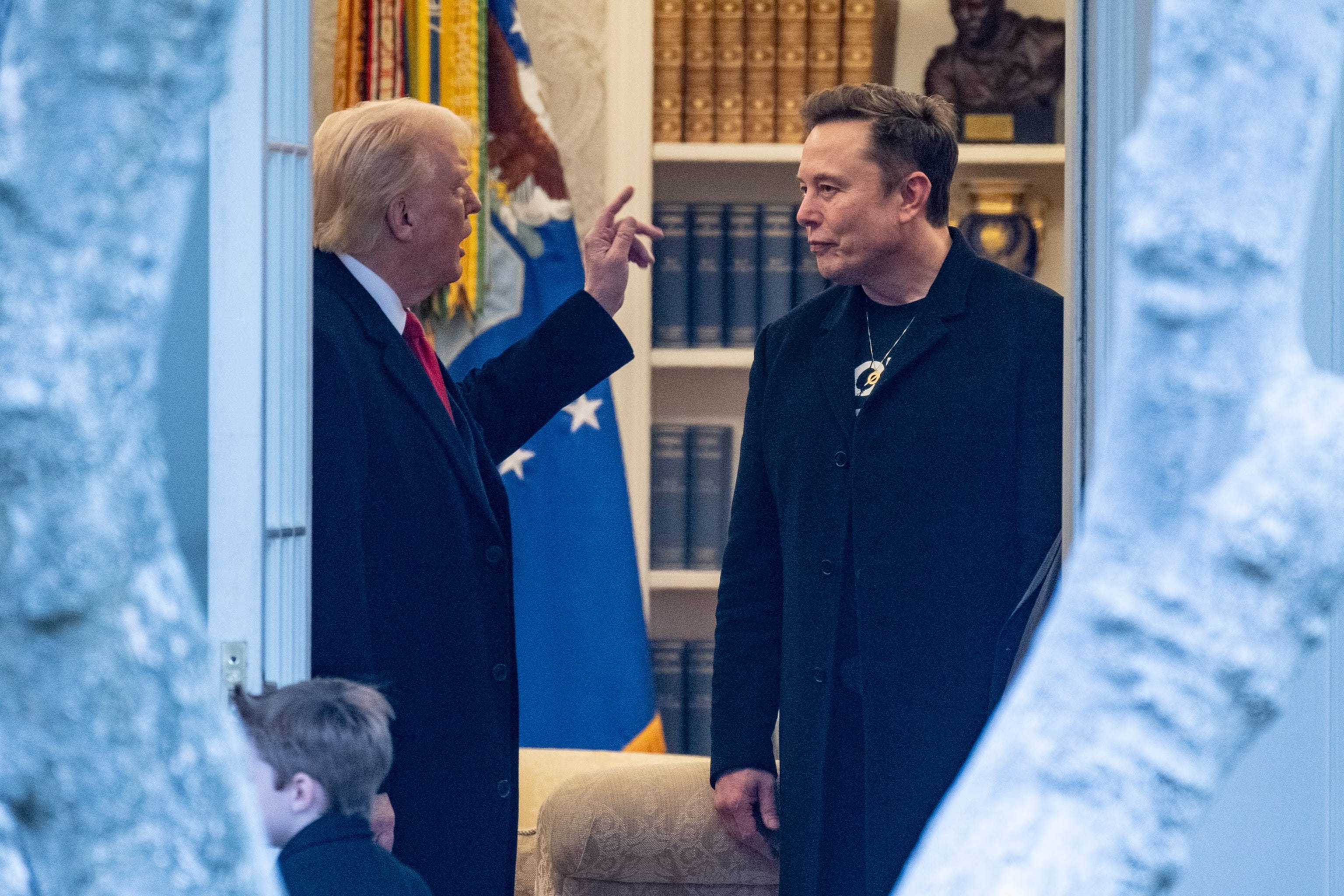
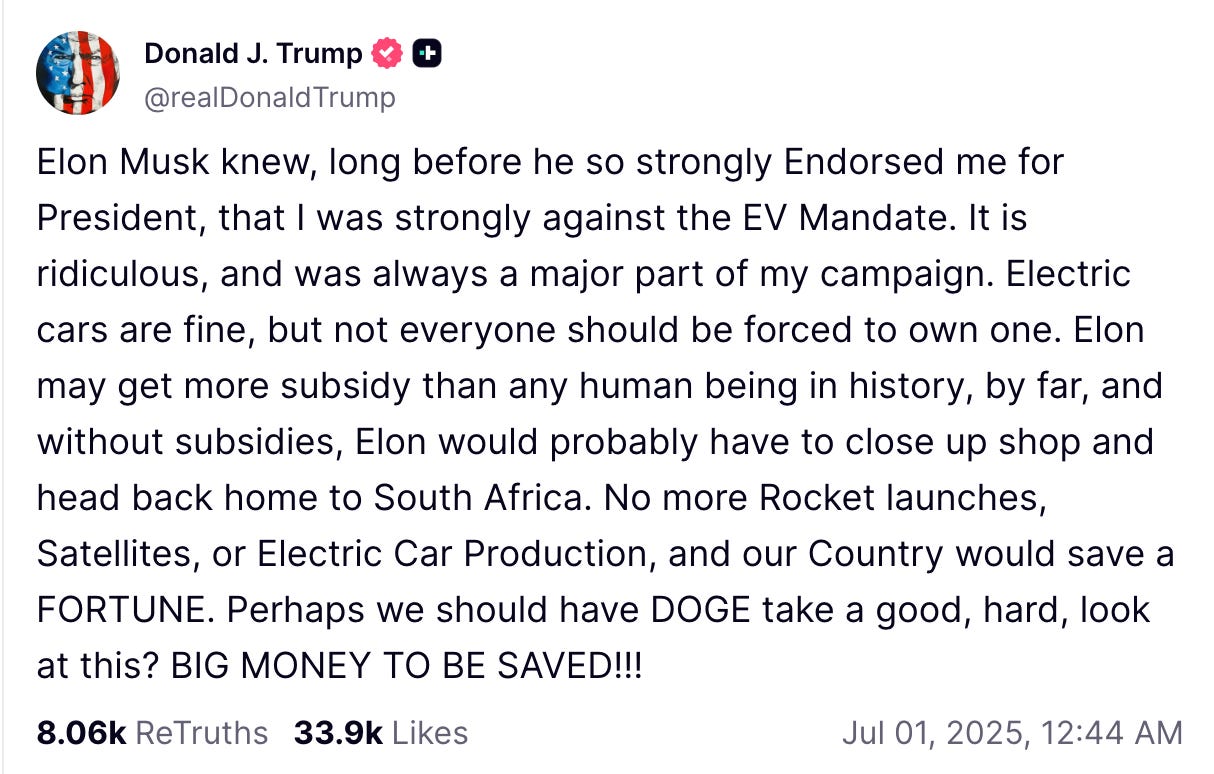
President Donald Trump has indicated that he may instruct the Department of Government Efficiency (DOGE) to reassess governmental support for Elon Musk's enterprises, citing potential savings. In a post on Truth Social shortly after midnight, President Trump suggested there could be significant financial benefits to reevaluating these subsidies.
"Elon may receive more subsidies than any individual in history, and without these subsidies, he might have to shut down operations and return to South Africa," Trump stated. "This would mean no more rocket launches, satellites, or electric vehicle production, which would result in substantial savings for our country." President Trump further proposed that DOGE should thoroughly investigate this matter.
Neither Musk nor a representative from his political action committee, America PAC, immediately responded to requests for comments. Following President Trump's post, Musk shared several graphics on X depicting the rising national debt, which currently exceeds $36 trillion, according to government data

This latest statement adds to the ongoing conflict between the president and Musk, who previously led government cost-reduction initiatives at DOGE before stepping down from his role in May. Despite their once close relationship, marked by Musk's significant financial contributions towards President Trump's election campaign, tensions have clearly escalated.
Speaking to reporters upon departing the White House on Tuesday morning, President Trump remarked that Musk was displeased about losing the electric vehicle mandate. "He could lose much more than just the EV mandate," Trump commented. "We might need to assign DOGE to look into his dealings, which could lead to considerable savings." President Trump humorously added that DOGE could potentially "devour" Musk, underscoring the severity with which he views the situation.
It is noteworthy that while there is no nationwide electric vehicle mandate, President Trump recently blocked such a mandate in California. NBC News reported that Musk had advocated for maintaining electric vehicle tax credits, though the current Senate bill seeks to limit these credits for vehicles utilizing clean energy.
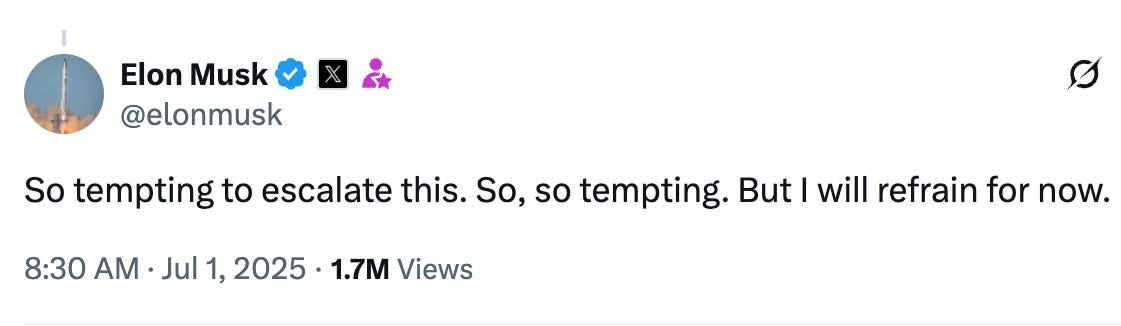
In response to the president's comments, Musk posted on X, indicating a temptation to escalate the situation but choosing to refrain for the moment. He later criticized the GOP-backed bill, warning that it could enable presidential abuses of power if passed as originally drafted. This provision was subsequently removed from the Senate bill
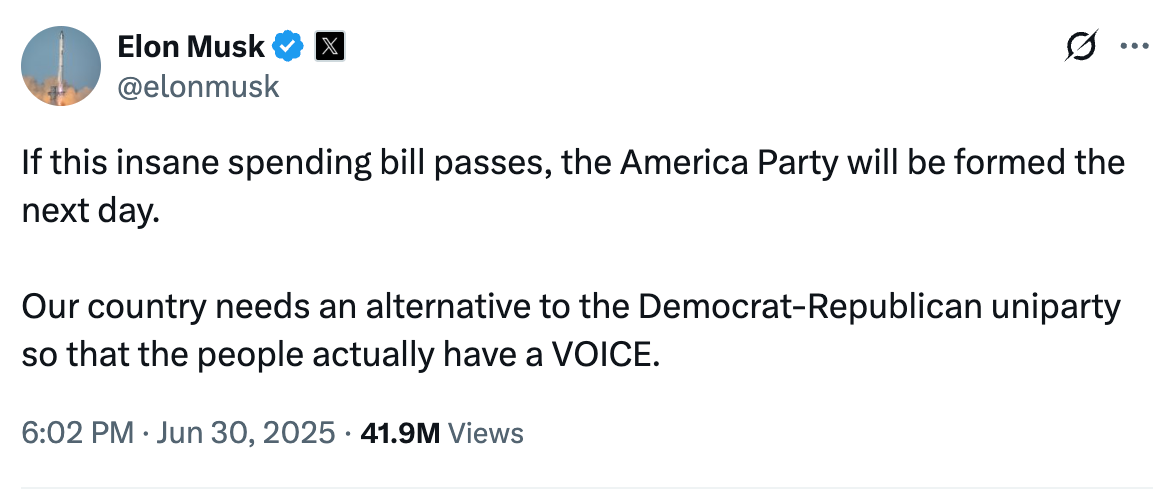
Continuing his criticism, Musk threatened that lawmakers supporting the bill would face consequences in future elections. He expressed his intent to form a new political party, the America Party, should the legislation pass, advocating for an alternative to the two major parties.
Two of Musk's companies, SpaceX and Tesla, currently benefit from U.S. government contracts and subsidies. The exact value of these benefits remains unclear, though estimates suggest they exceed $38 billion. The market reacted swiftly, with Tesla shares dropping 6% prior to Tuesday's opening bell. Despite a 21% decline year-to-date, the stock has shown significant recovery alongside broader market trends.
Musk has previously characterized the Congressional spending bill as excessive and detrimental to the federal deficit. His recent criticisms come at a crucial time, as congressional Republicans aim to pass the bill by July 4. Today, the Senate voted to advance the $3.3 billion bill with near-total GOP unity - Vice President JD Vance cast the tie-breaking vote after three Republicans broke ranks and joined Democrats in opposition.
The House must still approve the bill before it reaches President Trump for signing. It could face some issues there, especially among GOP fiscal hawks, given that the Senate version reportedly added approximately $1 trillion more to the deficit than what the House had passed back in May. An analysis by the Congressional Budget Office projects that the Senate bill would increase the national debt by $3.3 trillion over the next decade and result in nearly 12 million people losing health insurance due to Medicaid cuts.