

Touchwaves Secures €1.5 Million to Advance Wearable Haptics for NATO Air Forces
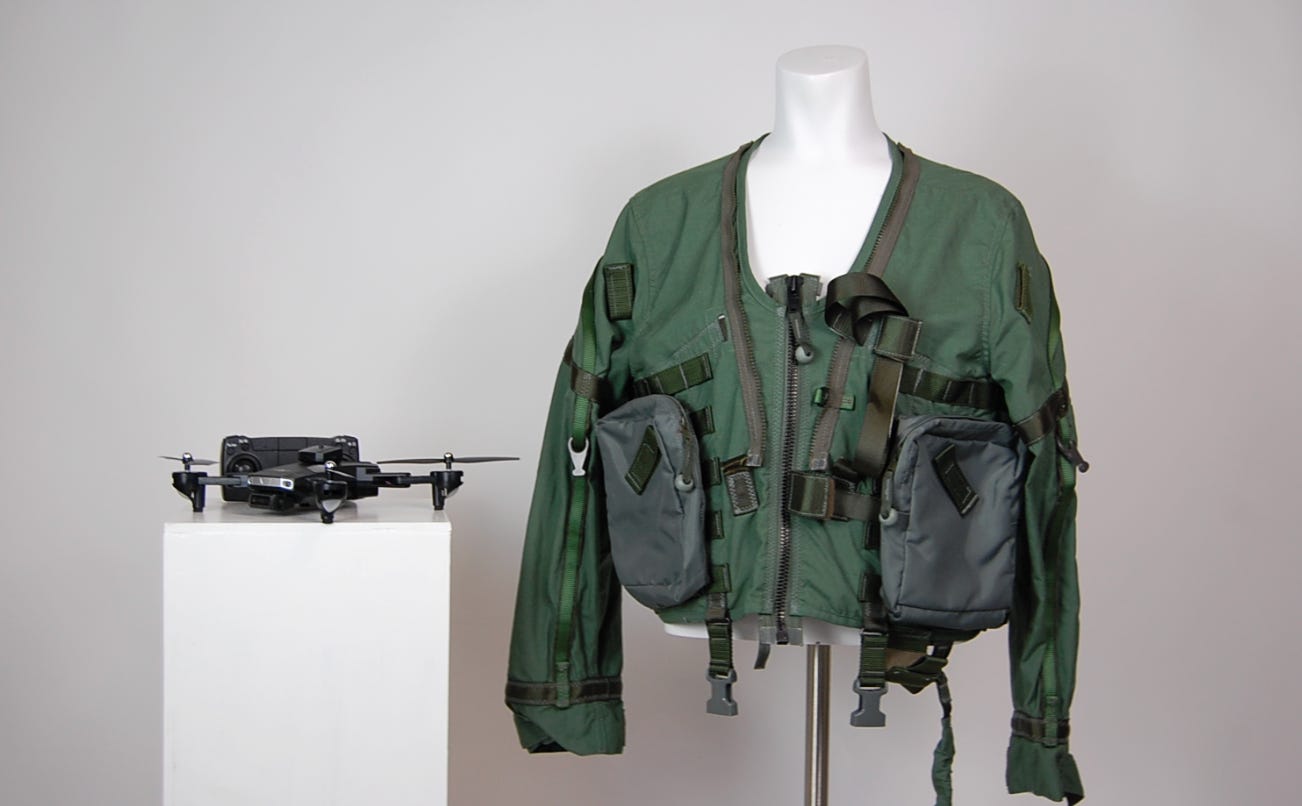
Touchwaves, a Dutch deep tech start up and TNO spin off, has secured €1.5 million in pre-seed funding to advance the development of next generation, dual-use wearable haptics technologies designed to enhance human performance and situational awareness in high pressure operational environments. The company focuses on applications across defense, aerospace, and mobility sectors within NATO countries.
The funding round was led by SecFund, which supports innovative startups, scale-ups, and SMEs addressing the Dutch Ministry of Defence’s innovation needs, in collaboration with the Ministry of Economic Affairs and the Regional Development Agencies associated with ROM Nederland. Additional investors included TNO Ventures, Brabant Startup Fonds, imec istart (the accelerator program operated by imec), and Joanna Invests (a network empowering women led companies with global ambitions). The round also benefited from support from NWO Take off Phase 2, the Dutch Research Council’s initiative aimed at accelerating promising research driven innovations.
Founded by Charlotte Kjellander and Martin Romero, Touchwaves develops wearable haptics solutions designed to support human performance and improve situational awareness by enabling more intuitive interaction with complex systems in demanding environments. Kjellander, who holds a PhD in Materials Science, previously led the Wearables division at TNO Holst Centre and brings more than a decade of experience directing advanced research for defense and medical technology applications. Romero contributes expertise in finance and business development, having managed and scaled software companies across Europe and Latin America, including two successful exits.
Touchwaves is currently collaborating with the Dutch Ministry of Defence, including the Royal Netherlands Air and Space Forces and the Center for Man in Aviation, to develop wearable haptic systems aimed at optimizing pilot performance during fighter jet missions. Building on earlier exploratory work, these efforts increasingly emphasize integration with existing flight equipment and operational workflows, reflecting a shift from experimental prototypes toward solutions designed for real world deployment.
Human factors remain a critical concern in aviation safety, with studies indicating that approximately eighty percent of non combat aviation incidents are attributable to human error. In military aviation, such incidents can lead to the annual loss of two to three F 35 aircraft and their pilots, underscoring the urgency of human centered innovation in system design. “While advancements in military aviation have largely focused on aircraft technology, our goal is to prioritize human performance,” said Kjellander. “By providing intuitive, non invasive haptic feedback, we enable pilots to perform optimally in highly challenging scenarios.” Romero added that despite the technological sophistication of modern aircraft, human operators remain decisive. “Our solution complements onboard systems by enhancing situational awareness and resilience under intense workload and stress.”
Although Touchwaves initially focused on military aviation, its wearable haptic technology demonstrates significant dual-use potential across a range of high stress environments beyond fighter pilots. Potential applications include: elite sports, where haptics can support breathing regulation, body awareness, and recovery; ground forces, who may benefit from tactile cues to manage fatigue and workload; and healthcare and wellbeing, where guided tactile feedback can help foster focus, awareness, and resilience. These use cases reflect Touchwaves’ broader vision to position haptics as a foundational interface for advancing human performance in cognitively and physically demanding contexts.
Touchwaves’ progress also aligns with strong structural tailwinds in both haptics and defense oriented wearables. The global haptic technology market, encompassing tactile feedback systems used in wearables, training, simulation, and human machine interfaces is expected to grow at double digit compound annual growth rates over the next decade as demand increases for intuitive, non visual interaction in complex operational environments. Within this landscape, wearable haptics represents one of the fastest growing segments, as applications extend beyond consumer electronics into aerospace, defense, healthcare, and performance optimization.
At the same time, the military and defense wearables market, covering soldier and pilot centric technologies, such as performance monitoring, situational awareness systems, and smart textiles, already accounts for several billion euros in annual global spending and is projected to expand steadily through 2030 as NATO countries increase defense budgets and place greater emphasis on human performance as a critical capability multiplier.
Together, these dynamics provide a strong commercial and strategic backdrop for dual-use technologies like Touchwaves’, which address a growing gap between increasingly complex systems and the human operators responsible for controlling them.