

Thirty Million Dollars Against a Gap Nobody Has Measured
Agon raised thirty million dollars against the claim that Europe has almost nowhere to develop autonomous weapons.
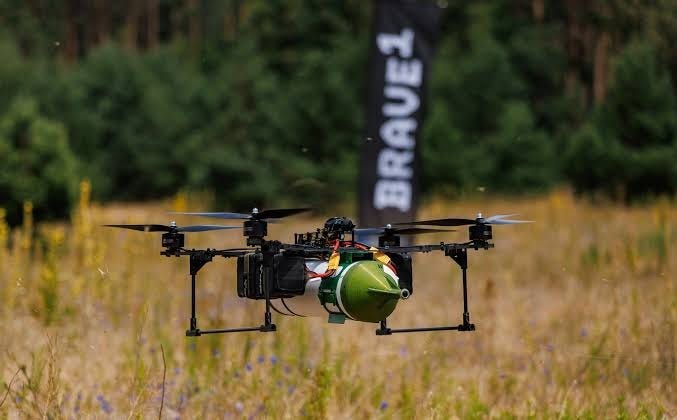
Tristam Constant’s claim, made on the day his company came out of stealth with thirty million dollars, is narrower than the headlines around it suggested. There is almost nowhere in Europe, he said, where you can develop and even test swarming drones, particularly with payloads, other than the front line in Ukraine, which is a terrible testing location. The qualifiers matter. Not nowhere but almost nowhere. Not testing in general but development and iteration. Not drones but swarms carrying payloads. Stated that carefully the claim is hard to dismiss, and it is also hard to verify, and the distance between those two facts is the most interesting thing about this round.
The company is Agon, based in London and Berlin and months old. The money came in two parts: a seven million dollar pre-seed led by Lakestar alongside 201 Ventures, the Kyiv defense fund D3 and angels, then a twenty-three million dollar seed led by XYZ Venture Capital and Lux Capital, with Northzone joining and Lakestar following on. Klaus Hommels took a board seat. David Helgason, who built Unity into the world’s most widely used game engine, is chairman, apparently for the first time in defense. Constant spent thirteen years in the British Army before running Anduril’s European operation and then Applied Intuition’s European defense business; his co-founder Junaid Hussain previously started Cambridge Aerospace and the AI gaming company Iconic. Beneath them sit people from Anduril, Applied Intuition, Palantir, Helsing, Google, Amazon, Havok and Unity.
What they propose to build is a synthetic arena in which autonomous systems train and are validated against adaptive adversaries drawn from live conflict intelligence, at a scale and fidelity the real world cannot provide. Constant describes it as a horizontal infrastructure layer that drone manufacturers can build on, and also as a capability for defense institutions. Air defense first, other domains later. His framing of the underlying shift is the sharpest line in the launch: warfare is moving from platform supremacy to algorithmic supremacy.
Every product claim here is the company’s own and none has been independently verified. There is no named customer, no disclosed contract and no revenue. In interview he is candid about this, describing design partnerships and saying the round exists to build the capability at the company’s own cost. Thirty million dollars has been placed ahead of the procurement rather than in response to it, against a constraint nobody has published a number for. Which makes the premise worth testing properly, because everything the company is worth rests on it.
Europe is not short of ranges. FMV advertises Vidsel in northern Sweden as 3,300 square kilometers of restricted ground beneath roughly 8,000 square kilometers of restricted airspace, with open radio spectrum permitting live GPS and communications jamming, instrumented tracking, and target drones that can carry jammers and chaff. MOD Aberporth is described by its operators as 7,500 square kilometers of sanitized airspace with a fully instrumented three-dimensional test area and active and passive infrared and radio-frequency jamming. NATO’s DIANA network lists roughly 200 test centers across the alliance. What none of this establishes is availability: whether a fifteen-person company can get onto one, how often, at what cost, and whether the instrumentation suits iterative multi-agent development rather than documenting a missile shot. These are national weapons ranges sold to ministries and primes on campaign-based scheduling, and the answers are not in public sources.
The friction is better documented on the civil side, and it is where the transatlantic gap is measurable. Testing anything beyond visual line of sight in Europe means the specific category of the EU drone regulation and a SORA submission to a national aviation authority, a ten-step risk assessment whose approval timelines commonly run four to eight months across member states and three to six in Germany, with industry practitioners reporting cases approaching a year. Military ranges sit outside civil aviation rules, but getting onto one requires a sponsoring defense authority, which is precisely what a pre-seed company does not have. Startups are therefore squeezed at both ends: too early for the military route, too slow through the civil one.
Founders describe the second-order effects consistently. Trial days shared with primes and several other vendors. Slots awarded months ahead and then cancelled on the morning without explanation or a rescheduling commitment. Certification and documentation requirements calibrated to a prime’s compliance department rather than to a company of fifteen people. The cost of a cancelled range day is not the day; it is a quarter of engineering roadmap and, for a company raising, a missing data point at exactly the moment a term sheet depends on it. None of this is captured in any published metric, which is part of why the constraint remains unquantified.
The American comparison is instructive and not entirely about regulation. Castelion, founded in 2022 to build low-cost hypersonic strike weapons, has flown more than twenty-five times in two and a half years, has run prototype launches from the Mojave at roughly fortnightly cadence, fired its first tactically representative solid rocket motor at a Midland facility less than a month after signing the lease, and has committed over 220 million dollars to a thousand-acre campus in New Mexico. It has also moved from critical design review to range safety approvals in under three months. Some of that is a permissive environment and abundant empty land. Much of it is a deliberate decision to own the test infrastructure rather than queue for someone else’s, which converts a scheduling dependency into a capital expenditure.
That points at an investment question Europe has barely asked: why is there so little privately owned test infrastructure here? The obstacles are real, including segregated airspace, land, spectrum licensing for electromagnetic effects, explosives and munitions permissions, insurance and national security clearance, and they differ by jurisdiction in ways that make a pan-European play hard. But the model is already appearing. TEKEVER’s purchase of West Wales Airport as a national uncrewed systems test hub is a private company buying its own range and offering access to partners and government stakeholders. Range capacity as an asset class, sold by the hour to companies that cannot get a ministry slot, is an unglamorous and highly defensible business, and it is a direct competitor to the synthetic proposition rather than a complement to it.
The weaker part of the claim is the dismissal of Ukraine, because Ukraine now operates a formal testing channel and Western industry is queuing for it. Brave1, the Ukrainian government’s defense technology cluster, launched Test in Ukraine in July 2025 under the Ministry of Digital Transformation. Foreign manufacturers of aerial and ground uncrewed systems, naval drones, electronic warfare and AI products can either send their own engineers to run trials or hand equipment to Brave1’s specialists, who test it with frontline units and return a structured report. Brave1 published a manual covering import permits, protocols and what happens when equipment is destroyed. Within a month it had 45 applications from companies in Australia, North America, Taiwan and the United Kingdom. Diehl was the first to complete a field trial, with an uncrewed ground vehicle. In July 2026 Airbus Defence and Space signed a memorandum of understanding making it Brave1’s first industrial strategic partner, with its technologies routed into the same framework. Ukrainian reporting has also placed Saab, Kongsberg, KNDS, Rheinmetall and Raytheon among firms expanding their in-country presence, though expanding presence and testing under this specific program are not the same thing and the distinction is worth holding.
The startups are further in than the primes. Stark opened a Kyiv research hub in February and has said the point is daily iteration against real operational data, with its Virtus loitering munition already in use at the front and full-cycle manufacturing planned in country; it now lists Ukraine among five countries of operation. Quantum Systems is contracted to supply 15,000 interceptor drones to the Ukrainian National Guard on German funding. Vermeer, a New York company with forward operations in Kyiv and eight of its forty staff in Ukraine, builds visual positioning for GPS-denied navigation, raised a ten million dollar Series A led by Draper Associates last October, and counts the US Army, US Air Force, Lockheed Martin, Northrop Grumman and the Ukrainian armed forces as customers; its chief executive has said building in a war zone is the only way to make the technology real. Ukrainian companies including Swarmer on drone-swarm coordination, The Fourth Law on autonomy modules and Himera on tactical radios are doing the same thing without having to travel. This is not a handful of exceptions. It is an institution, and it is the closest thing Europe currently has to a high-tempo autonomy proving ground.
So, the honest framing is not that Ukraine is a terrible testing location. It is that Ukraine is an extraordinary source of ground truth and a poor source of repetition, because the enemy schedules the encounters. A company refining one subsystem against a real electromagnetic environment gets exactly what it needs there, which is why Vermeer and Stark are in Kyiv. A company trying to train multi-agent behavior across ten thousand controlled engagements with one variable changed at a time does not, and cannot, because that is not what a war provides. Whether the second constraint binds harder than the first is what this round is betting on, and serious operators have landed on both sides of it.
There is a further problem that neither position addresses. Combat validation in Ukraine is not the same category of evidence as qualification for a European ministry. A system that has flown thousands of sorties against Russian jamming has accumulated operational experience that is uncontrolled, unrepeatable, selectively recorded, without independent observation, defined baseline or counterfactual. Procurement authorities want reproducible test data against a defined standard, safety and airworthiness certification, electromagnetic and environmental qualification, an auditable chain of custody, and conformity with the relevant standardization agreements, of which NATO’s catalogue runs to several thousand, each ratified and implemented on national timetables. Ukrainian units can adopt on a commander’s judgment in a week. The Bundeswehr cannot, and mostly should not.
NATO has effectively conceded the point in writing. The Rapid Adoption Action Plan endorsed at The Hague targets twenty-four months from identified need to fielded capability, shifts toward iterative problem-based procurement, and proposes alliance-level marks of approval for products that have cleared test, evaluation, verification and validation, on the stated reasoning that a shared standard of trust is what compresses national timelines. UNITE Brave NATO, co-funded with Ukraine at up to fifty million euros, is the bridge being built between the two evidentiary worlds. The existence of these mechanisms is the tell. If frontline use were sufficient proof, none of them would be necessary.
Which is the strongest available argument for what Agon says it is building, and not the one its launch materials lead with. A synthetic environment cannot reproduce the electromagnetic chaos of a real front, and the physical ranges already sell live jamming that no simulator matches. What a synthetic environment can do, which no war can, is generate instrumented, repeatable, auditable evidence: the same scenario run ten thousand times with one variable changed, logged, and defensible to a procurement officer answering to a parliamentary committee. Battlefield validation answers whether a thing worked once. Procurement asks how often, under what conditions, and how anyone else can check. Only the second question has a purchase order attached.
Which is why the prize, if the thesis works, is not simulation compute. It is becoming the evidence factory: the layer that converts autonomy from something a company believes works into something a ministry can sign for. That is close to a certification function, and certification functions are durable, high-margin and very hard to displace.
Three objections stand in the way, and the first comes from inside the syndicate. The proof that this category works is American: Applied Intuition began in 2017 selling simulation and validation to carmakers, entered defense in 2018, bought the tactical autonomy firm EpiSci in early 2025 and closed a Series F at a fifteen billion dollar valuation on US defense contracts running into the hundreds of millions. Constant ran its European business, so he knows exactly what he is importing. The same evidence cuts the other way. In automotive the customers were hardware companies that could not write software, so the toolchain became a platform. In defense the leading customers are software companies that can. Helsing did not buy a reinforcement learning factory, it built one, trained an air combat agent through self-play across hundreds of thousands of simulated flight hours and flew it on a Saab Gripen E under Swedish contract, and treats that capability as the weapon rather than a purchased input. Anduril is in the same position and Applied Intuition already sells in Europe. Agon’s realistic near-term market is the long tail of smaller autonomy firms, which is fragmented and much poorer than the top five.
The second is that the Unity analogy, which Constant makes explicitly and Helgason’s chairmanship underlines, describes the product better than the revenue. Unity’s economics come from hundreds of thousands of small studios paying seat and runtime fees in a market with no procurement cycle and no security clearance. European defense autonomy has a few dozen serious buyers on multi-year rhythms, and the institutional customers Agon also wants buy through frameworks that take years to stand up. The European Drone Defence Initiative was announced ten months ago and member states are still independently evaluating the same jammers. Building ahead of that procurement is a timing bet, and pursuing a developer platform and an institutional sale simultaneously is a focus bet on top of it.
The third is the data channel, and it is where diligence should concentrate. The claim that adversaries are drawn from live conflict intelligence and updated continuously is what would distinguish this from a game engine, and it is the claim carrying the most execution risk. The distinction that matters is whether adversary behavior is built from engagement telemetry or from intelligence assessment. On that reading the most informative name in the round is not Lux or Lakestar but D3, the Kyiv fund with direct access to the Ukrainian armed forces. If Agon has converted that into a contractual and ideally exclusive channel, it has a moat. If it is a warm relationship and a few site visits, it has a demo. And it is worth noting that Brave1 already runs a structured pipeline for turning frontline performance into written reports for foreign companies, which is either a partner or a competitor depending on how Agon has positioned itself.
Step back and the round says something about the market. European defense, security and resilience startups raised 8.7 billion dollars in 2025, up 55 percent year on year, but late-stage capital tripled to 4.7 billion while early-stage activity softened, primes participated in a record 4.1 billion dollars of venture rounds in the first half of 2026, and defense mergers and acquisitions rose 56 percent. Capital is concentrating in a few category winners, primes are buying optionality on the rest, and the exit path runs through acquisition rather than listing. A thirty million dollar seed is a late-stage check wearing an early-stage label, and there will be more.
The sovereignty framing deserves the same scrutiny. Hussain launched the company on Europe’s need for its own sovereign defense AI capability; the seed was led by two American funds, one of which also backs the American incumbent in the category. That is not disqualifying, and Europe’s problem has always been capital scarcity rather than capital origin. But the strategic case for European sovereignty rests on the possibility that American commitment is not permanent, at a moment when Washington has trimmed NATO staffing and drawn down forces in Romania, and the cap tables funding that sovereignty are substantially American. German procurement officials will eventually ask where the entity sits, where the model weights sit, who can revoke access and under whose jurisdiction the training data falls. Sovereignty is a marketing register in this sector today. It is going to become a structural test.
One genuine European advantage sits underneath all of this. Defense-specific training and evaluation is among the few AI infrastructure categories where Europe holds a structural edge, because the raw input is proprietary European and Ukrainian operational data. That advantage is narrow and real. The counter-risk is institutional: evaluation is becoming the chokepoint of military AI much as alignment evaluation is in civilian AI, and if NATO issues its own marks of approval for products clearing test and evaluation, the trust standard becomes an alliance asset and the accrediting authority sits inside the institution rather than beside it. Companies would then revert to selling tooling to state test centers, which is a decent business and a much smaller one.
For smaller funds the conclusion is not about Agon at all. The openings are in the gaps a horizontal platform will not fill: electronic-warfare-representative radio-frequency simulation, sensor-realistic synthetic data for specific modalities such as acoustic and passive RF, telemetry and labeling pipelines that turn field exercises and frontline sorties into training data rather than anecdote, independent test and evaluation sold as a service to companies that cannot afford range time, and physical range capacity itself, owned rather than borrowed. These are unglamorous businesses. They are also the ones every autonomy company in Europe will have to buy from somebody, and they can be started for a fraction of thirty million dollars.
Europe spent three years learning to fund weapons. The harder lesson, which this round tests rather than settles, is learning to fund the infrastructure that proves they work.