

The Next Evolution of FPV Warfare: How Neros and CX2 Are Turning Strike Drones into RF Hunters
Key Takeaways
FPV drones are evolving beyond strike roles. Integrating RF detection technology allows low-cost drones to locate and target enemy operators, expanding their tactical value.
Electronic warfare is moving down to the edge. Compact RF sensing modules like CX2’s Vadris enable distributed sensing across large numbers of small drones.
The sensor to shooter loop is compressing. Platforms that can both detect RF emissions and conduct strikes shorten targeting timelines significantly.
Venture-backed defense startups are moving into operational programs. Neros and CX2 illustrate how new entrants are transitioning from prototypes to real military deployments.
On modern battlefields, the hardest target to find is often not the drone, but the person flying it. As FPV drones proliferate across conflicts from Ukraine to the Middle East, both sides have learned the same lesson: eliminating the operator can be more decisive than destroying the drone. The challenge is locating those operators quickly, especially when they are hidden in buildings, tree lines, or urban clutter.
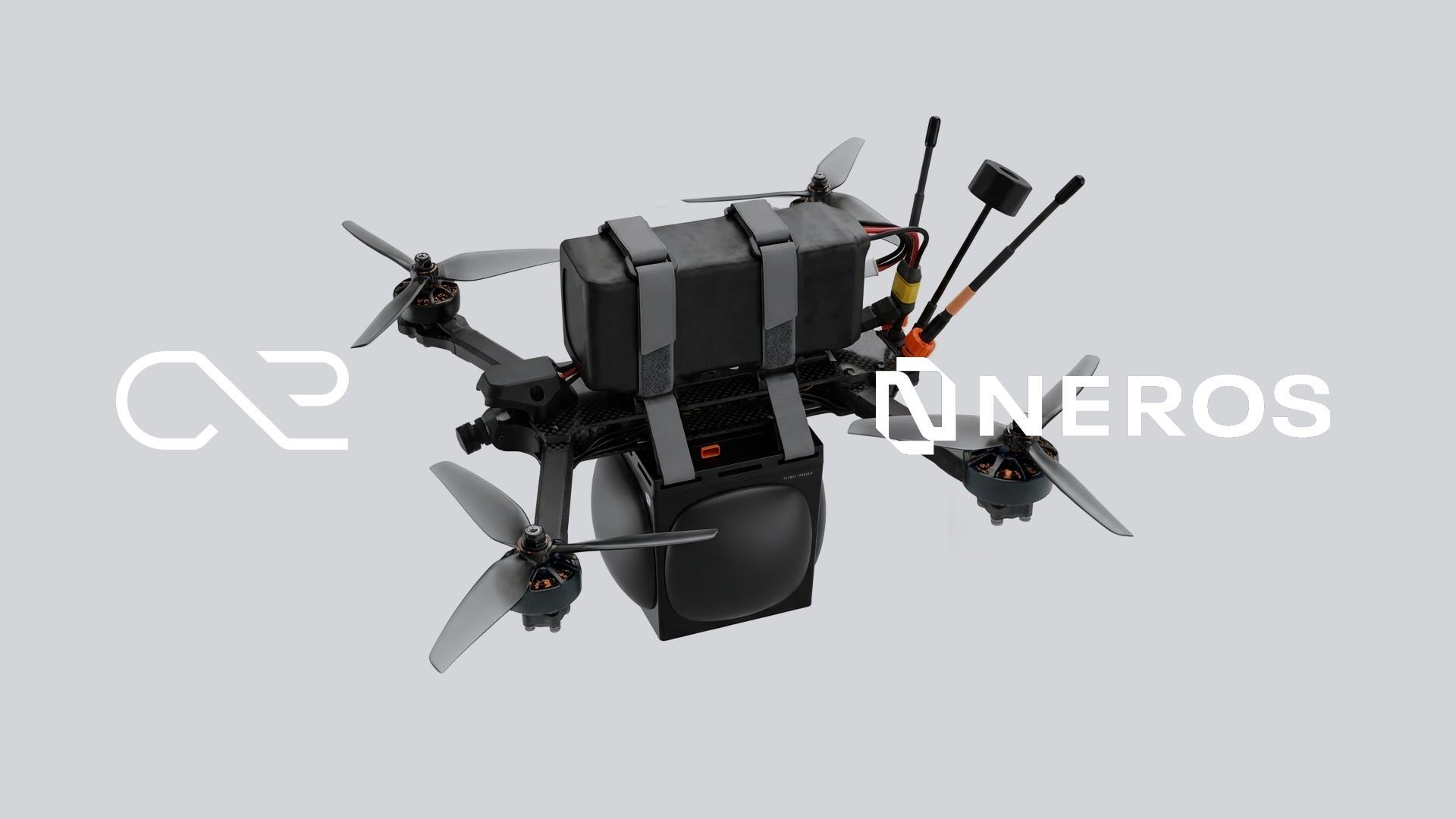
A new collaboration between Neros and CX2 aims to solve that problem by transforming low-cost strike drones into airborne RF detection platforms. The two Los Angeles based defense startups have announced a strategic partnership to integrate CX2’s Vadris RF-seeking pilot locator into Neros’ Archer FPV drone, creating a platform capable of detecting, identifying, and targeting adversarial drones and their operators. The partnership reflects a broader shift in drone warfare: pairing inexpensive attritable systems with increasingly sophisticated sensing and electronic warfare capabilities.
The war in Ukraine has demonstrated that inexpensive FPV drones can destroy equipment worth hundreds of thousands or even millions of dollars, but locating the operators behind those systems remains a persistent challenge.
Two Venture-Backed Defense Startups
Both companies operate out of El Segundo, California, which has rapidly become a hub for venture-backed defense technology firms.
CX2, founded in 2024, specializes in compact electronic warfare systems designed for drone detection and mitigation. The company is led by CEO Nathan Mintz, President Mark Trefgarne, Head of Warfare Porter Smith, and Head of Hardware Lee Thompson. The startup has raised approximately $46 million from investors including Andreessen Horowitz (a16z), 8VC, and Point72 Ventures.
Neros, meanwhile, focuses on domestically manufactured small-and medium-sized drones. The company was co founded by CEO Soren Monroe-Anderson and CTO Olaf Hichwa, and has raised $120 million, including a $75 million Series B led by Sequoia.
Together, the two firms represent a growing wave of venture funded defense startups focused on autonomy, attritable systems, and battlefield electronic warfare.
CX2’s Electronic Warfare Approach
CX2’s core mission is improving battlefield awareness by locating radio frequency emissions from adversarial systems. Two key products anchor the company’s portfolio:
Vadris is a compact RF seeker module designed to be mounted on FPV drones. The system detects and geolocates radio signals from enemy drone control links, allowing operators to identify the location of opposing drone pilots.
Wraith, another CX2 platform, is a sensor equipped drone designed to detect GPS jammers, control links, and other RF emitters across the battlespace.
The underlying concept is straightforward: in modern conflicts, nearly every system emits signals. Detecting and locating those emissions can provide decisive targeting intelligence.
Neros and the Archer FPV
Neros focuses on producing low-cost drones built entirely without Chinese components, a feature that has become increasingly important for U.S. defense procurement. Its flagship system, the Archer FPV, costs roughly $2,000 per unit and comes in several configurations:
Five inch FPV
Eight inch FPV
Ten inch FPV
Fiber optic variants developed with Kela Technologies
The company has already secured significant operational demand. Neros has contracts to deliver 6,000 drones to Ukraine and 8,000 Archer Strike drones to the U.S. Marine Corps. The startup is also participating in the U.S. Army’s Purpose Built Attritable System (PBAS) program and was recently selected for the Pentagon’s Drone Dominance “Gauntlet” competition, part of the Department of Defense effort to accelerate low-cost autonomous systems.
Turning FPV Drones into RF Hunters
Integrating Vadris onto the Archer FPV effectively converts the drone into an airborne RF detection and targeting platform. According to Neros Head of Growth Ross Pederson, the addition significantly expands the mission profile of FPV drones. While these systems are typically associated with strike missions, RF detection capabilities enable operators to identify emitting targets before engaging them. CX2 Head of Growth Scott Zolendziewski described scenarios where detecting the control signal of an enemy drone allows friendly operators to quickly locate and neutralize the opposing pilot.
The companies have already conducted demonstration tests with the 75th Ranger Regiment during Project GI, with further evaluations planned with U.S. Special Operations Command (SOCOM). According to CX2, testing has shown strong results in urban environments and dense vegetation, where adversarial operators often conceal themselves. The system has successfully located hidden drone pilots during both day and night operations. The next step is scaling deployment across special operations units, with plans to pursue combat validation in Ukraine later this year.
Why This Matters
For defense planners, the integration highlights a critical shift in the drone warfare ecosystem. FPV drones have proven highly effective as low-cost strike platforms, but their effectiveness depends heavily on target acquisition. Adding RF detection capabilities shortens the sensor to shooter cycle, allowing operators to rapidly identify emitting threats. This type of capability is particularly important in environments where adversaries rely heavily on drones and electronic warfare.
For investors, the collaboration reflects several structural trends in the defense technology market:
1. The convergence of drones and electronic warfare
Future unmanned systems are increasingly expected to carry sensing payloads, not just munitions. Integrating RF detection directly onto small drones is a step toward distributed electronic warfare.
2. The rise of attritable sensing networks
Low-cost drones equipped with RF sensors could be deployed in large numbers, creating distributed sensing networks that map emissions across the battlefield.
3. Venture-backed defense innovation scaling into programs of record
Both companies are moving beyond prototypes into real defense procurement pipelines, including Marine Corps contracts, Army programs, and SOCOM evaluations.
The Bigger Picture
Modern drone warfare is evolving rapidly toward sensor-driven targeting loops. The side that can detect emitters first, identify threats faster, and close the sensor-to-shooter loop more quickly gains a decisive advantage.
By combining low-cost FPV strike drones with RF detection technology, the Neros–CX2 partnership offers an early glimpse of how that evolution may unfold. Instead of serving purely as flying munitions, drones are increasingly becoming mobile sensors, electronic warfare platforms, and targeting nodes simultaneously. The decisive advantage may ultimately belong to the force that can detect and geolocate the signal first.
From a defense technology perspective, the collaboration reflects a broader shift: inexpensive drones are evolving from expendable strike assets into distributed sensing platforms. As RF detection and targeting software improves, the boundaries between electronic warfare, ISR, and drone operations will continue to blur.