

The Integration Problem in Western Defense Innovation
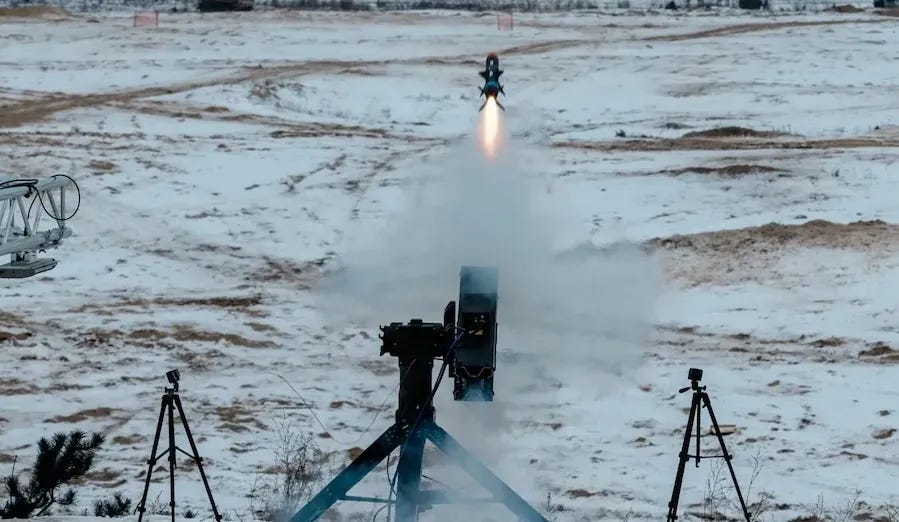
The recent partnership between Estonia’s Frankenburg Technologies and Poland’s state owned defense group PGZ is easy to read as a standard industrial agreement. A startup develops a counter drone interceptor and a larger manufacturer provides the capacity to produce it at scale. But the significance of the deal lies less in the system itself and more in what it reveals about the direction of defense innovation in Europe.
Over the past two years, European defense leaders have been forced to confront a shift in the character of warfare. The conflict in Ukraine has made clear that the challenge is not simply one of technological sophistication, but of scale, cost, and speed. Low cost drones and loitering munitions have proven capable of generating outsized effects, while traditional air defense systems often remain too expensive to deploy in large numbers against such threats. While technical limitations remain, the more immediate problem is that existing systems cannot be produced or deployed at the scale the battlefield now requires
Frankenburg’s interceptor is designed to address that mismatch. Yet, the important development is the structure behind it. The company retains control over core technology, including guidance and system design, while PGZ provides manufacturing capacity, local integration, and access to the Polish defense establishment. This division of labor is becoming a defining feature of the European ecosystem. Startups move quickly and iterate on real world problems, while established industrial actors enable scale and deployment.
This model has been shaped by both necessity and experience. Ukraine has demonstrated the value of rapid innovation driven by battlefield feedback, but it has also highlighted the limits of innovation without industrial depth. Systems that cannot be produced in volume cannot shape outcomes over time. Countries like Poland are increasingly stepping into this role, expanding their defense industrial base and positioning themselves as key nodes in a more distributed European production network.
At the same time, the broader ecosystem remains fragmented. Across Europe and the United States, there is no shortage of new technologies. Startups are building drones, sensors, interceptors, and software at a rapid pace. What is often missing is the ability to combine these elements into coherent systems that can be deployed quickly and sustained under operational pressure. Integration is frequently deferred, handled late in the process, or left to institutions that are not structured for speed.
This is not simply a technical problem. It is also a leadership problem. It reflects how defense organizations are structured, how procurement is conducted, and how responsibility is distributed across public and private actors. The result is a landscape in which capable components exist, but the systems they are meant to form remain incomplete or slow to materialize.
There are emerging alternatives. In parts of Northern Europe, closer coordination between governments, industry, and academic institutions has produced more cohesive innovation environments. These ecosystems emphasize practical deployment and system level thinking from the outset. Universities and research centers are not only generating new ideas, but also shaping how those ideas are integrated into operational frameworks. This creates a tighter feedback loop between design, production, and use.
The lesson is becoming increasingly clear. The West does not face an innovation deficit. It faces an integration deficit. The critical challenge is no longer whether new technologies can be developed, but whether they can be assembled into systems that are deployable at scale and aligned with the realities of modern conflict.
Partnerships like Frankenburg and PGZ point toward one possible path forward. They link speed with scale, innovation with production, and startups with state backed industry. But they also raise a broader question for defense leaders and the wider community. Who is responsible for integration, and how should it be organized?
The answer to that question will shape the next phase of defense innovation. The most important actors may not be those who build the most advanced individual systems, but those who can connect them across institutional and national boundaries. In an environment defined by volume, speed, and adaptation, the decisive advantage may belong not to the best technology, but to the best integrated system.