

Teradar Announces Launch of Terahertz Vision Sensor, Series B Funding
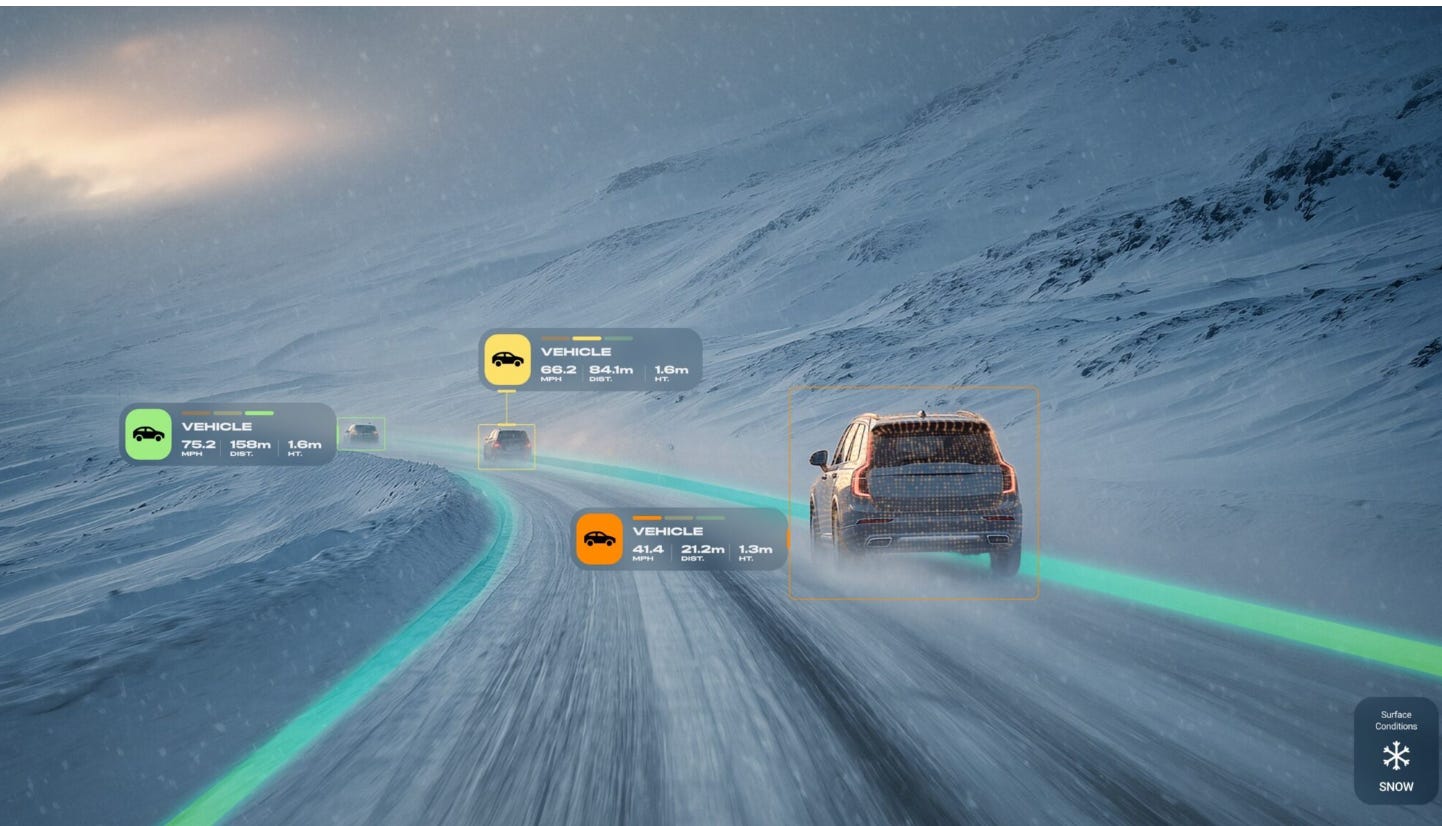
Boston-based Teradar emerged from stealth last week with a commercial solid-state sensor it claimed is the first capable of perceiving in the terahertz ban of the electromagnetic spectrum, which lies between microwaves and infrared. The company claims its chip technology offers up to 20 times higher resolution than current automotive radar with vision ranging longer than 984 ft, regardless of weather or lighting conditions - combining radar sensors’ durability, such as their resistance to environmental interference and lack of moving parts, with the high resolution found in lidar systems.
Because the technology has never been implemented at scale before, co-founder and CEO Matt Carey sought opportunities to demonstrate the capabilities of Teradar’s long-range, high-resolution, cost-effective sensor - notably during the Consumer Electronics Show in Las Vegas. It was at this event that attendees from major automotive companies observed the Teradar sensor analyze crowded environments in real time, substantiating its claims. Such demonstrations played a key role in securing $150 million in Series B funding from prominent investors including Capricorn Investment Group, Lockheed Martin’s venture arm, Ibex Investors, and VXI Capital.
The founding of Teradar was inspired by Carey’s personal loss. After a close friend died in an automobile accident in conditions unaddressed by existing sensors, discussions with Gregory Charvat, CTO of Humatics, motivated Carey to establish Teradar. “Teradar has made terahertz vision a reality by bringing unprecedented resolution and awareness at long range in any weather,” stated Carey. “This breakthrough provides vehicles the perception needed to anticipate danger, avoid accidents, and, ultimately, save lives.”
The company’s immediate goal is to supply sensors for advanced driver assistance systems (ADAS) and autonomous driving platforms. “Our goal is to eliminate automotive accidents altogether through dramatically better perception, and this vision can only be achieved with robust, high-performance sensors that can be easily integrated and scaled to support every type of vehicle,” said Carey.
Self-driving vehicle developers have long debated whether camera-only systems are viable for safe perception. While Lidar and radar add cost and have limitations as autonomy increases, Teradar claims its Modular Terahertz Engine (MTE) offers a customizable, solid-state solution for levels 1–5 autonomy by using proprietary chips to transmit and process terahertz waves. Terahertz sensors provide high-resolution detection in all weather and at long distances, enhancing vehicle awareness and safety. Teradar suggests this technology could prevent over 150,000 fatal accidents worldwide each year.
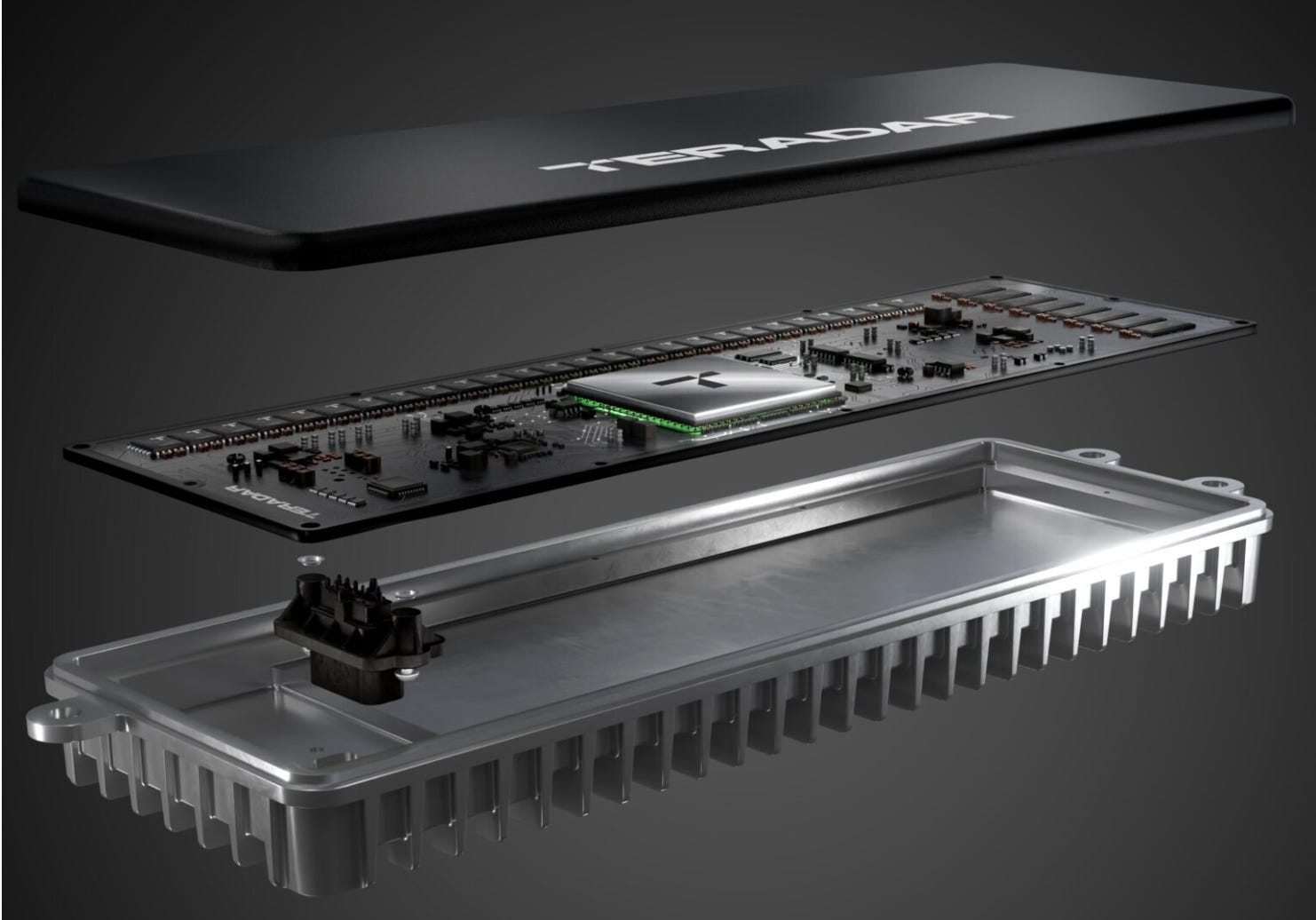
Terador is currently collaborating with five leading automobile manufacturers in the U.S. and Europe to validate the technology, targeting integration into vehicles for the 2028 model year. In addition, Teradar is partnering with three Tier 1 suppliers to facilitate manufacturing processes.
While previous efforts to commercialize terahertz technology have largely centered on industrial and security sectors; advances in silicon manufacturing and the expertise of a strong development team, led by co-founder Nick Saiz, have allowed Teradar to advance rapidly and engage significant industry partners. Teradar claims its sensor technology “unlocks safer, smarter vehicles and opens the door to transformative applications in mobility, defense, and beyond.”