

Stoke Space Seeks $500 Million, Pushing Nova Rocket Startup’s Value to Almost $2 Billion

Stoke Space, an emerging space technology company based in the Seattle area, is reportedly in the process of securing substantial funding, potentially amounting to hundreds of millions of dollars, a development not yet formally disclosed by the company. According to a recent report from The Information, which cites two unnamed sources, the fundraising round may reach $500 million, elevating Stoke’s valuation to nearly $2 billion. This figure represents a significant increase from the $944 million valuation reported by Pitchbook in January. The round is said to be led by Thomas Tull’s United States Innovative Technology Fund.
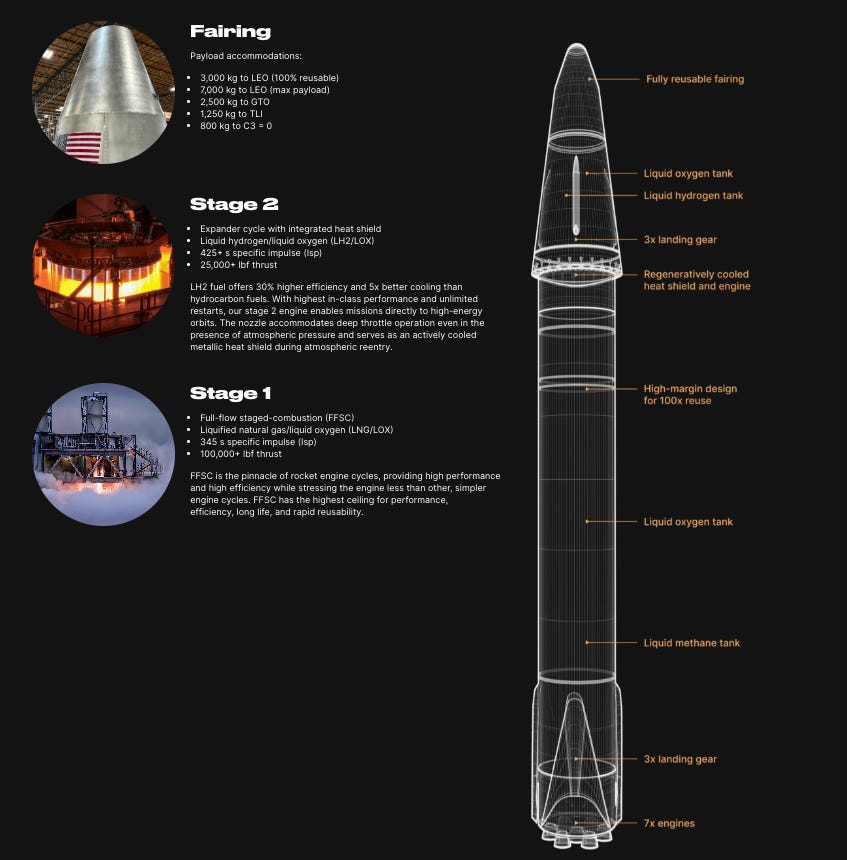
Founded in 2019 in Kent, Washington, by former Blue Origin executives Andy Lapsa (CEO) and Tom Feldman (Chief Technology Officer), Stoke Space is focused on the development of Nova, a fully reusable, two-stage launch vehicle. The company has previously conducted short-hop tests of a prototype upper stage and is nearing completion of its first-stage booster. In addition, Stoke is constructing a launch facility at Florida’s historic Cape Canaveral, the site of John Glenn’s journey as the first American in orbit in 1962.

Pending successful development, the initial test flight of Nova is anticipated next year. Sources suggest that proceeds from the current funding round will support several launch attempts
.Since inception, Stoke Space has attracted nearly half a billion dollars in investment from prominent backers, including Bill Gates’ Breakthrough Energy Ventures, Industrious Ventures, and Y Combinator. Notably, the company raised $260 million in a Series C round revealed in January.
Beyond its expansion in Florida, Stoke maintains a 168,000-square-foot headquarters in Kent, Washington, proximate to Blue Origin, and operates a 75-acre test facility in Moses Lake, Washington. Although orbital launches have yet to occur, Stoke Space was listed this March as a provider for U.S. Space Force national security missions.
Stoke Space’s strategy draws upon advancements pioneered by SpaceX, notably the reusability of rocket stages, with ongoing efforts to achieve full two-stage reusability akin to the Starship program. Stoke has engineered a liquid-cooled heat shield for Nova’s second stage, a concept SpaceX is now evaluating for Starship.
According to Stoke Space CEO Andy Lapsa, there remains significant opportunity within the launch sector for providers offering medium-lift, fully reusable rockets, capable of placing payloads ranging from two to twenty tons into low Earth orbit, compared to Starship’s 100-ton capacity. Lapsa has expressed optimism regarding industry developments such as the introduction of Starship: “The question that we get more frequently is, ‘What do you do when Starship comes online?’ And I’m personally super excited for that world. I think that helps us lay heavy infrastructure in space. I think it creates more opportunity for the rest of the industry, including us… Starship will put pressure on the industry to follow suit with full reusability, because it just fundamentally changes the cost.”