

Stealth Logistics: Why the U.S. Military Is Looking at “Narco Boats” for the Pacific
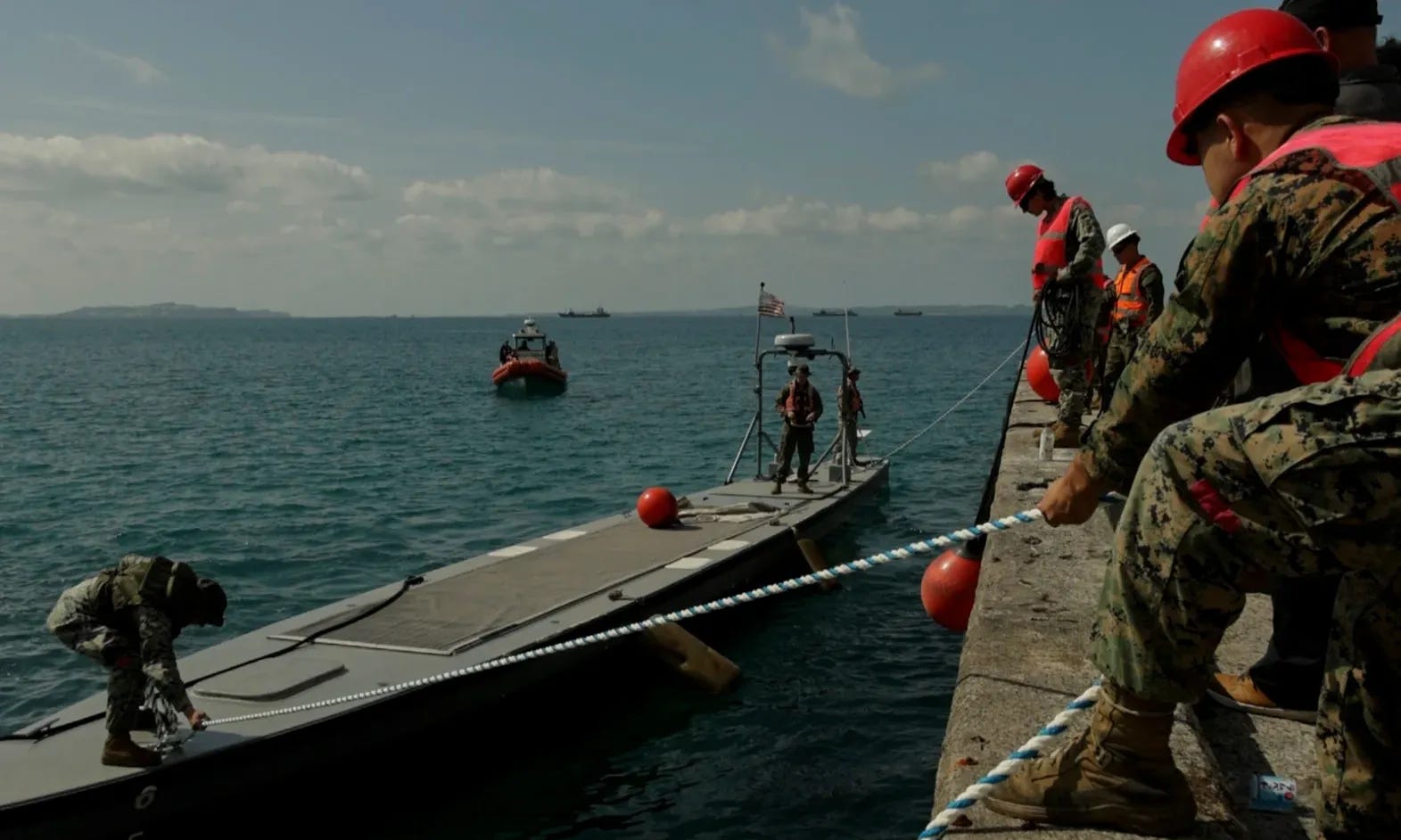
Future wars in the Pacific will be fought across vast distances, under constant surveillance, and within range of long range missiles. For the United States and its allies, the most difficult challenge may not be striking targets but sustaining forces. In this environment, the decisive question may not be how forces fight, but how they are supplied.
The Pentagon is beginning to adapt. One of the more unusual examples is a recent effort by the Defense Innovation Unit (DIU) to solicit industry proposals for an autonomous low profile vessel capable of transporting large quantities of cargo across contested maritime environments. The concept is simple but revealing. The vessel must carry roughly 18,000 pounds of cargo over distances approaching 2,000 nautical miles while operating autonomously and maintaining a low observable profile.
The inspiration is not a traditional naval platform. It comes from drug traffickers.
For years, narcotics smuggling networks in the Americas have built low profile semi submersible vessels designed to evade surveillance while traveling long distances at sea. These craft are cheap, difficult to detect on radar, and capable of carrying significant payloads. The Marine Corps has taken notice. Brigadier General Simon Doran described the concept bluntly: the military essentially copied the narco boat.
The appeal is clear. In a future conflict with China, large logistics ships and traditional supply routes would be extremely vulnerable. The People’s Liberation Army has invested heavily in long range anti ship missiles, satellite surveillance, and maritime patrol systems designed to target precisely these kinds of assets. A small fleet of stealthy, autonomous cargo vessels offers an alternative approach to sustainment.
The problem this effort is trying to solve is rooted in a broader shift in American military strategy.
The Pacific Pivot and Distributed Forces
Over the past decade, the U.S. military has increasingly oriented its planning toward a potential conflict in the Indo Pacific. Unlike operations in the Middle East or Europe, the Pacific theater presents enormous geographic challenges. Forces must operate across thousands of miles of ocean, often from remote islands with limited infrastructure.
The Marine Corps has responded with a concept known as “stand in forces.” Instead of concentrating large units on major bases, smaller and highly mobile formations would disperse across island chains within the Western Pacific. These units would operate inside contested zones, conducting reconnaissance, targeting, and anti ship operations against adversary naval forces.
Such a model requires logistics systems that can function under persistent threat. Aircraft, large supply ships, and even traditional amphibious vessels could be easily detected and targeted. Resupply must therefore become smaller, more distributed, and far less visible.
Autonomous low profile vessels are one possible solution. If a cargo vessel can operate without a crew, the risk to personnel is reduced. If it has a low radar and visual signature, it becomes harder to detect. And if many such vessels are deployed simultaneously, the logistics network becomes more resilient through redundancy.
This reflects a broader shift in military thinking: sustainment systems must become as distributed and survivable as the combat units they support.
The Rise of Autonomous Maritime Systems
The narco boat inspired resupply platform also fits within a larger trend across naval warfare. The U.S. Navy and Marine Corps are increasingly exploring autonomous and uncrewed systems in every domain.
Much of the attention has focused on unmanned aerial systems and autonomous surface vessels. However, underwater systems may ultimately become even more important.
Uncrewed underwater vehicles, or UUVs, are particularly attractive in contested environments. Operating beneath the surface dramatically reduces exposure to radar, optical sensors, and many surveillance systems. These vehicles can conduct reconnaissance, mine warfare, and infrastructure monitoring with a level of stealth that surface platforms cannot easily match.
The Navy has invested heavily in this area, developing systems such as the Orca extra large unmanned undersea vehicle and a range of smaller autonomous underwater platforms. These systems are designed to extend the reach of naval forces while reducing reliance on crewed submarines and surface ships.
Autonomous logistics vessels on the surface represent a complementary capability. Together with UUVs and unmanned aerial systems, they form part of a broader architecture of distributed, autonomous platforms that can operate across contested maritime spaces.
In effect, the U.S. military is gradually building an ecosystem of robotic systems designed to move information, sensors, and supplies across the battlespace without exposing large numbers of personnel or high value assets.
Learning from the Irregular World
Another notable aspect of the narco boat concept is where it originated. Rather than emerging from a major defense contractor or a naval research laboratory, the design inspiration came from the tactics of criminal organizations.
Drug traffickers have spent decades refining low profile vessels that can travel long distances while avoiding detection by coast guards and naval patrols. These craft are built for stealth, endurance, and affordability. Many are low-profile vessels that ride close to the waterline, dramatically reducing radar and visual signatures.
For military planners, the lesson is straightforward. Sometimes the most effective designs emerge outside traditional defense ecosystems.
This dynamic is becoming more common. Commercial drones, satellite imagery, gaming engines, and consumer electronics have all found their way into military applications. Defense innovation increasingly involves adapting technologies developed for entirely different purposes.
The narco boat is simply another example of this cross pollination.
DIU and the Push for Speed
The Defense Innovation Unit plays a central role in accelerating such ideas. Created to bridge the gap between the Pentagon and commercial technology firms, DIU focuses on rapidly prototyping solutions to operational challenges.
In the case of the autonomous logistics vessel, DIU is asking industry to deliver working demonstrations within months rather than years. Proposals are evaluated not only on technical merit but also on how quickly they can transition into operational use.
This approach reflects a growing recognition that traditional procurement cycles are poorly suited for emerging technologies, particularly in areas such as autonomy and robotics where commercial innovation moves rapidly.
By tapping nontraditional suppliers and accelerating testing cycles, the Pentagon hopes to field useful capabilities much faster than conventional acquisition programs allow.
Logistics as the Decisive Factor
Ultimately, the narco boat inspired resupply vessel highlights a fundamental reality of modern warfare. Advanced weapons systems often receive the most attention, but wars are frequently decided by the ability to sustain forces over time.
In a conflict across the Pacific, the United States would need to move fuel, ammunition, sensors, spare parts, and food across enormous distances while operating under constant surveillance and threat.
Autonomous, low profile logistics platforms could become an essential component of that effort. They would not replace traditional supply ships or aircraft. Instead, they would add a layer of resilience, allowing dispersed units to receive supplies even in heavily contested environments.
In that sense, the narco boat may offer an unexpected glimpse of the future of naval logistics. Not large supply ships moving safely across open seas, but small autonomous vessels quietly sustaining forces inside contested waters.