

Startup Valinor Aims to Develop Foundational Technologies to Support Defense Sector
Valinor Enterprises, led by former Palantir executive, Julie Bush, recently emerged from stealth mode with a distinct mission: to provide essential foundational tools for defense technology, rather than pursuing more high-profile innovation initiatives.
In its inaugural week, Valinor introduced two innovative yet distinct technologies:
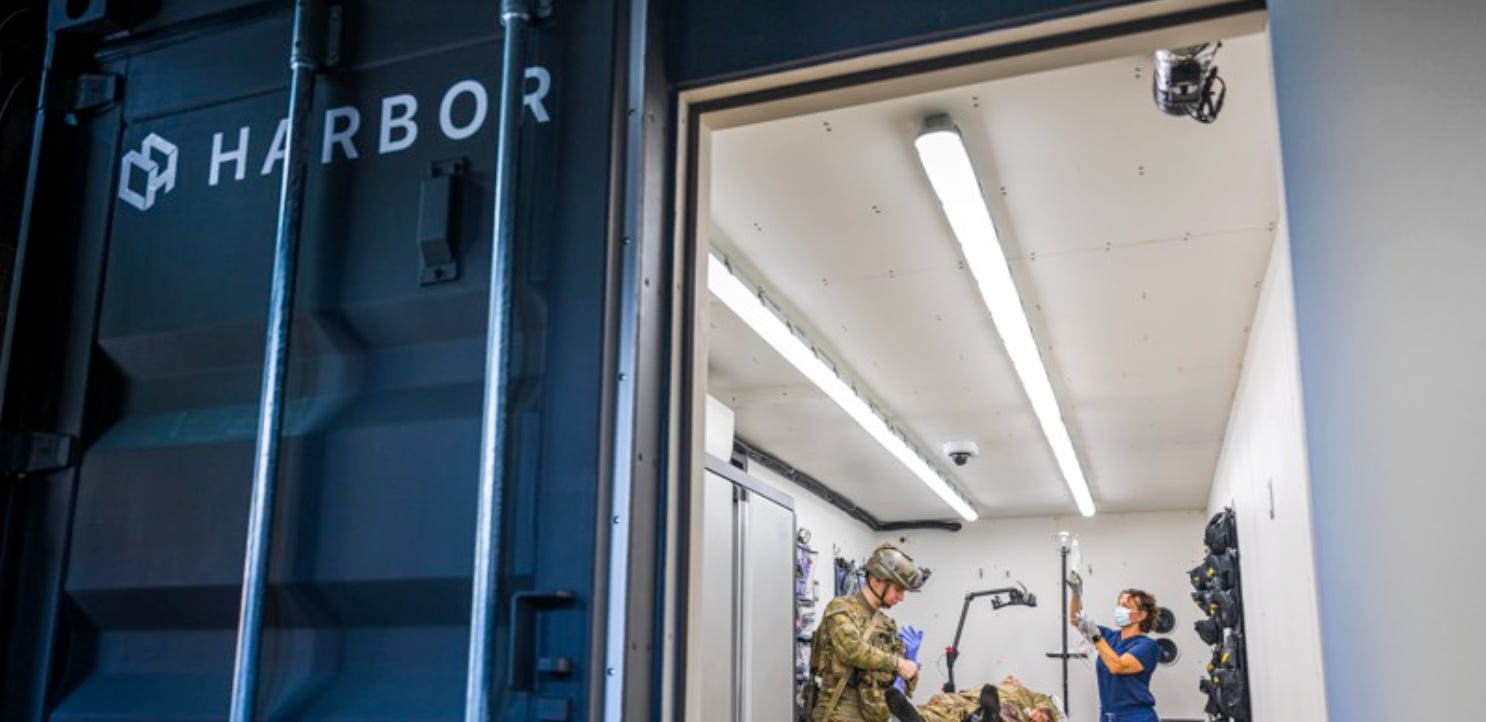
Harbor: A self-contained, mobile hospital operating room housed within a ballistic- and electronic warfare-hardened 20-foot container. Designed for battlefield medical care, Harbor supports procedures from resuscitation to surgery and prolonged casualty management. It operates on a dedicated software platform, HarborOS, which integrates medical sensors, processing, communications systems, and Anduril’s Lattice.
Dispatch: A mobile drone charging station capable of integrating with various military platforms deployed in remote environments. The initial iteration was developed for the Army’s Short Range Reconnaissance (SRR) program and can recharge drones such as Skydio’s X10D and Teal Drone Black Widow. Two Dispatch units have already been integrated onto Rheinmetall’s OX UGV at AUSA.
Looking ahead, Valinor has announced plans to launch three additional products in the coming weeks:
Streamline: A secure data capture solution tailored for disconnected operations and distributed teams.
Reflex: An advanced smart optics system incorporating next-generation vision models to enable intelligent data capture at source.
Condor: An expendable aerial system, deployable via air or ground, engineered for autonomous navigation, stabilization, and return-to-base operations.
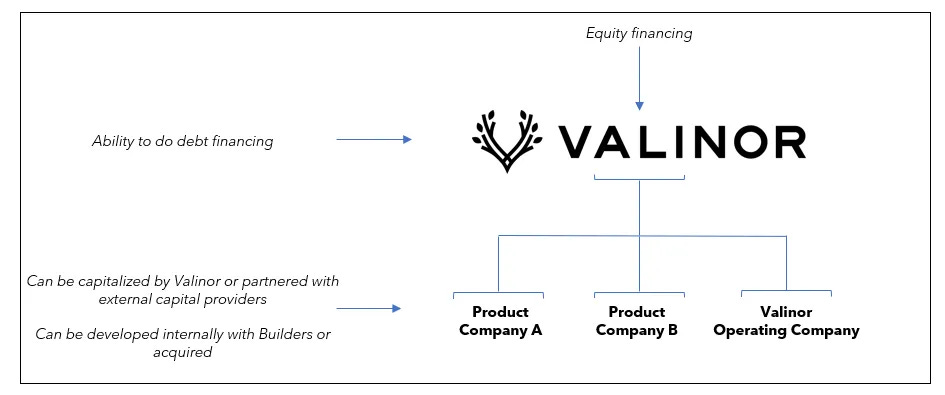
Valinor Enterprises, which is based in Washington, D.C., is distinguished by its unique corporate infrastructure, which better aligns with the company’s mission than traditional “venture capital” models followed by Palantir or Anduril. The company employs an “operational holding company” framework, comprising a central hub that manages go-to-market strategy, financing, prototyping resources, and legal support for its subsidiary companies (“spokes”), each specializing in individual products. This structure, inspired by biotech innovators like BridgeBio, grants subsidiary product teams and their founders greater autonomy over engineering and development, while centralized administrative functions remain managed by Valinor’s core team, enabling efficient capital allocation and rapid development while diversifying risk.
“There’s probably 1,000 times more picks and shovels in the government than the moon shots, but there’s really no model to serve them,” said Chief Executive Bush. A company spokesperson elaborated, “We approach our technologies as solutions to often-overlooked challenges, rather than as isolated innovations. Our unique organizational model enables us to address these unmet needs at scale. All Valinor products are informed by clear market signals, whether originating from government partners or ecosystem stakeholders. We begin with a recognized need and develop targeted solutions accordingly.”
Notably, this operational structure is influenced by Red Cell Partners’ incubation model. Red Cell founder and CEO Grant Verstandig is also a founding partner of Valinor, alongside Trae Stephens from Founders Fund and Paul Kwan from General Catalyst.
“A lot of the problem sets that I was coming across in the defense sector were interesting and needed to be solved, but they’re not like moon shots with enormous markets,” Stephens said. “The concept was: What if we were to incubate companies that are solving real problems that aren’t attached to this crazy hype-cycle moment?”
While the “hubs and spokes” model offers advantages, it introduces potential challenges, such as limited knowledge sharing across teams. The Valinor spokesperson noted, “Decentralization risks gaps in context sharing and consistent engineering practices. Centralized resources provided by the hub are essential for addressing these challenges.”
Despite these considerations, Valinor is optimistic about its progress and the opportunities presented by its organizational approach. The company’s objectives for the upcoming year include accelerating impact and growth among its existing subsidiaries, currently comprising 30 employees, and scaling its infrastructure to support over a dozen product companies within the Valinor ecosystem. Valinor’s leadership draws inspiration from strategic partners, including: Anduril, Palantir, and Helsing, and its partnerships with Founders Fund, Red Cell Partners, and General Catalyst. The company remains committed to ambitious growth and innovation in the defense technology sector.
Related:
Transforming the Defense Tech Business Model
Startup unveils mobile charging station to transform drone operations
Startup aims to reinvent battlefield medicine for the drone era