

SpaceX Successfully Launches Starship Flight 9 but Subsequently Losses Control of Spacecraft
SpaceX's Starship latest launch reveals new challenges
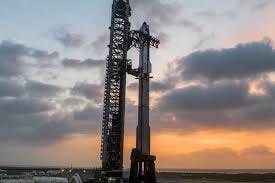
SpaceX’s Starship separated from its Super Heavy rocket booster and reached orbit on the evening of March 27th but later began spinning and made an uncontrolled re-entry into the Indian Ocean. SpaceX had cleared the surrounding airspace where Starship was coming down. The 400-foot tall (122 meter) Starship rocket system launched from SpaceX's Starbase in Texas.
While this launch surpassed two previous attempts earlier this year, which resulted in explosions that dispersed debris over Caribbean islands and caused several airliners to change their routes, Starship’s ninth test flight provided a mix of outcomes for the company. It was the smoothest Starship test of the year and the first launch to use a flight-proven Super Heavy booster, which had previously launched and returned during Starship’s seventh flight test.
The heavy booster successfully separated and Starship entered space. However, the ship was unable to open a side cargo hatch to deploy mock satellites in one planned test. Later in the flight, Starship lost attitude control, meaning it could no longer orient itself properly for re-entry.
The ninth flight test occurred less than a week after the Federal Aviation Administration cleared SpaceX to perform the test flight of its Starship rocket system following the earlier explosions this year.
In January, SpaceX caught the Starship’s heavy booster rocket on its descent for the second time. Starship successfully separated from the booster and ignited its rockets to ascend to orbit but was soon lost after experiencing an anomaly. Debris from Starship fell into the airspace near Puerto Rico, prompting the FAA to reroute several aircraft in the area.
SpaceX conducted another test in March. This time, the Super Heavy booster successfully separated and was caught by the launch tower in Texas for the third time. Starship reached space, but eight minutes into the flight, the ship lost multiple Raptor engines and began to spiral.
As a result of the two explosions, the FAA expanded the size of hazard areas in the U.S. and other countries for the flight based on an updated safety analysis provided by SpaceX. After completing an investigation into the loss of Starship on its eighth flight test, SpaceX made several hardware changes to increase reliability.
Thousands of company employees are working to develop a multi-purpose rocket designed to launch large groups of satellites, transport humans to the moon, and eventually carry astronauts to Mars. NASA’s moon program, which plans to use the rocket to land humans on the moon in 2027, has experienced challenges, in part due to the influence of Mars-focused initiatives on the Trump Administration. Musk envisions Starship as a future replacement for the SpaceX Falcon 9 rocket in the company's commercial launch operations, which currently deploys the majority of the world's satellites and other payloads to low-Earth orbit.