

Space X’s Orbital Data Center Gambit
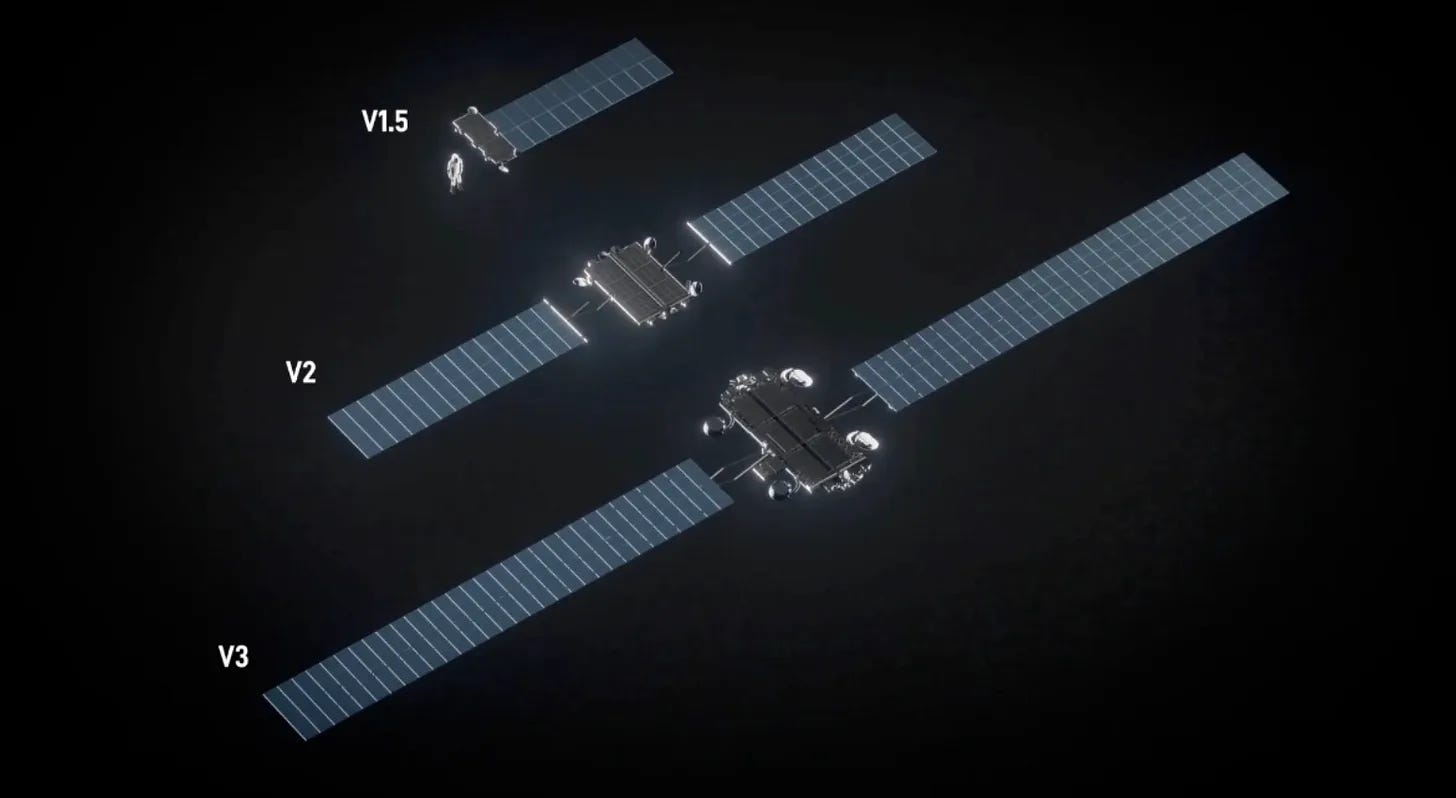
SpaceX has formally petitioned the Federal Communications Commission for authorization to deploy and operate up to one million satellites intended not merely to transmit data, but to process it. The proposal would establish a space based computing layer capable of supporting artificial intelligence workloads directly in orbit.
The filing does not constitute approval, nor does it represent a finalized construction plan. It is a regulatory request to secure spectrum rights and operational authority at an unprecedented scale. Even so, the application is significant. It signals that the future of AI infrastructure is now being contemplated beyond the physical and political boundaries of Earth.
In its submission, SpaceX characterizes the initiative as an early step toward a Kardashev Type Two civilization, one capable of harnessing a substantial fraction of the sun’s energy output. The language is aspirational, but the underlying motivation is pragmatic. Artificial intelligence is colliding with hard terrestrial limits. Power availability, water for cooling, land use, and permitting have become binding constraints on the expansion of data centers worldwide.
Orbit offers an alternative physical environment. Solar energy is effectively continuous. Heat can be dissipated through radiators rather than water intensive cooling systems. Once deployed, infrastructure in space avoids many of the siting conflicts and regulatory bottlenecks that increasingly shape Earth based buildouts.
According to the filing, the constellation would consist of satellites distributed across multiple orbital shells between approximately five hundred and two thousand kilometers above Earth. High bandwidth laser links would serve as the primary means of inter satellite communication, with Ka band radio frequencies acting as a secondary channel. The system is best understood not as a monolithic space borne data center, but as a highly distributed computational fabric.
That distinction is critical. Space based computing favors low density, geographically distributed workloads rather than tightly coupled hyperscale clusters. Heat rejection in vacuum imposes strict limits on compute density, making orbit poorly suited for training large frontier models. Its comparative advantage lies instead in edge inference, data preprocessing, real time analytics, and AI assisted satellite operations where proximity to data and continuous power matter more than raw scale.
At first glance, the ambition of deploying up to one million satellites appears implausible. Manufacturing, launching, and maintaining hardware at that scale would strain even SpaceX’s unmatched launch cadence and vertically integrated supply chain. Satellites have finite operational lifetimes, implying continuous replacement merely to sustain equilibrium. Orbital congestion, collision risk, spectrum coordination, and astronomical interference would intensify dramatically as numbers grow.
Regulators are therefore unlikely to approve the proposal in its entirety. Industry observers widely view the headline figure as an opening position rather than a realistic endpoint. Any authorization is likely to be narrower, phased, and subject to significant conditions.
And yet, skepticism must be tempered by precedent. Many of SpaceX’s core achievements were once dismissed as infeasible. Reusable orbital rockets, rapid launch cadences, and megaconstellations of thousands of satellites were all regarded as unrealistic before they became operational realities. What appears excessive today may function less as a literal target and more as a strategic claim on a future domain.
The proposal also aligns with SpaceX’s broader ecosystem. A large scale orbital compute network would reinforce demand for in house satellite manufacturing, complement the company’s launch operations, and potentially provide strategic advantages to affiliated AI efforts. It also offers a narrative consistent with future capital formation, including the possibility of a public offering to finance infrastructure on this scale.
There are unresolved externalities. Astronomers have already documented interference from existing satellite constellations, both optical and radio. Scaling far beyond current deployments raises serious questions about night sky visibility, scientific research, and long term orbital sustainability. While SpaceX has committed to mitigation measures, the filing offers limited detail on how such challenges scale to the magnitude proposed.
Ultimately, this application should be read less as a construction blueprint than as a declaration of intent. It suggests that artificial intelligence is no longer constrained solely by algorithms or semiconductors, but by energy and environment. SpaceX is asserting that those constraints may be addressed not by incremental optimization on Earth, but by expanding the physical domain in which computation occurs.
Whether or not this particular vision is realized at scale, it reflects a broader shift. As AI becomes a foundational industrial force, its infrastructure will follow power wherever it is most abundant. SpaceX is wagering that, over the long arc of technological development, the most abundant source lies above the planet rather than upon it.