

South Korea Announces Intention to Construct Lunar Base
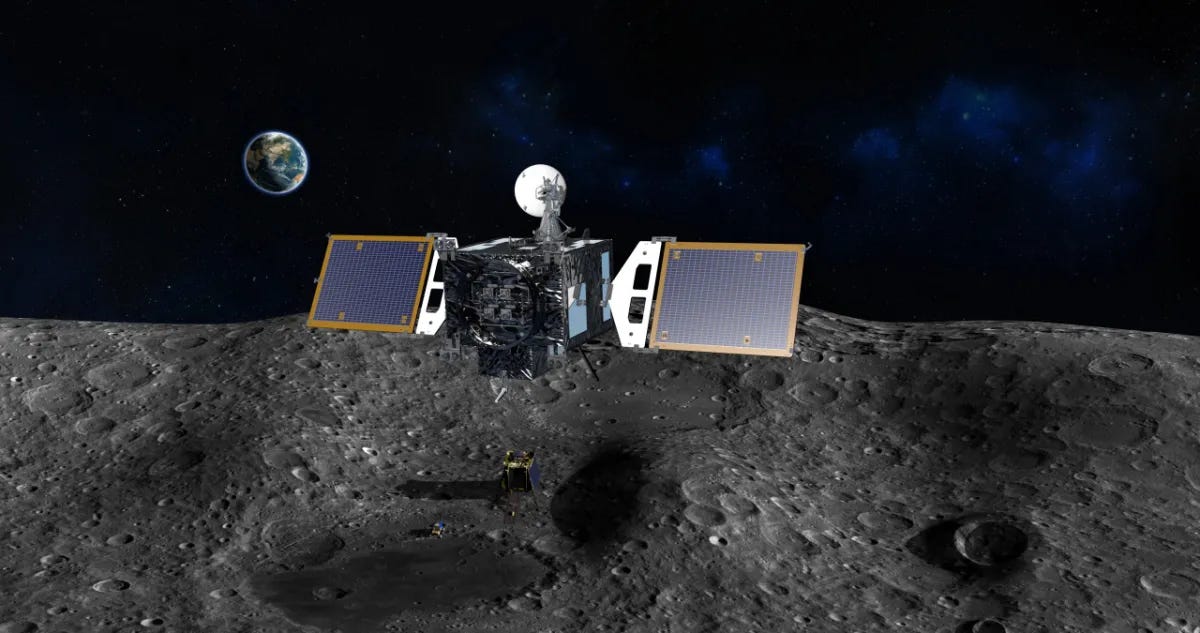
South Korea is the latest country to announce its plans to establish a presence beyond Earth’s orbit and to develop its own lunar base within 20 years.
At a public event hosted by the National Research Foundation of Korea on July 17th, the South Korean AeroSpace Administration (KASA) outlined a roadmap with “five core missions, including low-Earth orbit and microgravity exploration, lunar exploration, and solar and space science missions.”
KASA had already proposed deploying a robotic lander to the lunar surface by 2032. The latest plan expands these ambitions, adding targets such as designing a new lunar lander by 2040 and building a lunar economic base by 2045.
South Korea has undertaken previous efforts in lunar research. In mid-2022, the country launched Danuri, its first lunar probe, aboard a SpaceX Falcon 9 rocket. Danuri entered lunar orbit within the year and continues to operate, collecting data on lunar resources and testing technology intended for future KASA missions.

This activity marks phase one of the Korean Lunar Exploration Program. Phase two includes plans for the 2032 launch of the robotic module mentioned above, another lunar orbiter, and a 20-kilogram rover. For this phase, South Korea intends to launch from domestic territory using the under-development KSLV-III rocket at the Naro Space Center.
The Korea Institute of Geosciences and Mineral Resources is supporting mission preparations by testing prototype lunar rovers in former coal mines to assess technologies relevant to future space resource extraction.
KASA, established in May 2024 by the South Korean government as a counterpart to NASA, now oversees the Korea Aerospace Research Institute (KARI), which has managed aerospace technology development since 1989. Both KARI and the Korea Astronomy and Space Science Institute are sub-agencies of KASA. Through this organizational structure and private sector support, South Korea seeks to advance in the field of space exploration.
Future KASA initiatives include aiming for a Mars landing module by 2045 and developing probes for solar monitoring and space security. By 2035, KASA plans to launch a solar observation satellite to the L4 Lagrange point in space.
Other nations are pursuing similar objectives related to lunar bases and space infrastructure. NASA’s Artemis program aims to build a lunar base within the next decade, subject to ongoing political considerations. China, working with Russia and other partners, intends to construct a lunar base by 2045. India has also announced its intention to develop a lunar facility by 2047.
Related:
The next frontier in real estate: Data centers on the moon and space-support infrastructure
Reassessing NASA's Lunar Ambitions
China’s Steady Ascent to the Moon: How Beijing Is Rewriting Lunar Geopolitics