

Rainmaker CEO Responds to Cloud Seeding Questions After Texas Floods
Authorities investigating the Texas flash floods that killed over 100 people during the Fourth of July weekend are refuting social media claims linking the disaster to weather modification and to cloud seeding company, Rainmaker. Officials and experts claim that there is no evidence connecting cloud seeding to the floods or suggesting it could cause such severe precipitation.
During the flood, the Guadalupe River rose by 20 to 26 feet in 90 minutes, causing significant damage and prompting evacuations. The National Weather Service issued flood warnings across Texas, many of which are expected to remain in effect until at least Monday morning. According to NWS data, flooding is the second-deadliest weather hazard in the U.S. after extreme heat.
Augustus Doricko, CEO of Rainmaker, stated that his company, which collaborates with Texas farmers during droughts, “unequivocally had nothing to do with the flooding that was caused by the remnants of the tropical storm that blew in." He further noted that Rainmaker's largest missions have produced approximately 10 million gallons of precipitation, whereas the tropical storm released about 4 trillion gallons over two days, highlighting the difference in scale. The CEO has refuted claims linking cloud-seeding to floods and other natural events more broadly.
Cloud seeding is described as a method to increase precipitation from clouds by dispersing particles to stimulate the creation of water droplets or ice crystals, thus promoting rainfall or snowfall. This technology is also used to mitigate hail damage and reduce fog. Cloud-seeding operations are widely used in Texas, covering about one-sixth of the state- 31 million acres as of 2022- based on information from the Texas Department of Licensing and Regulation.
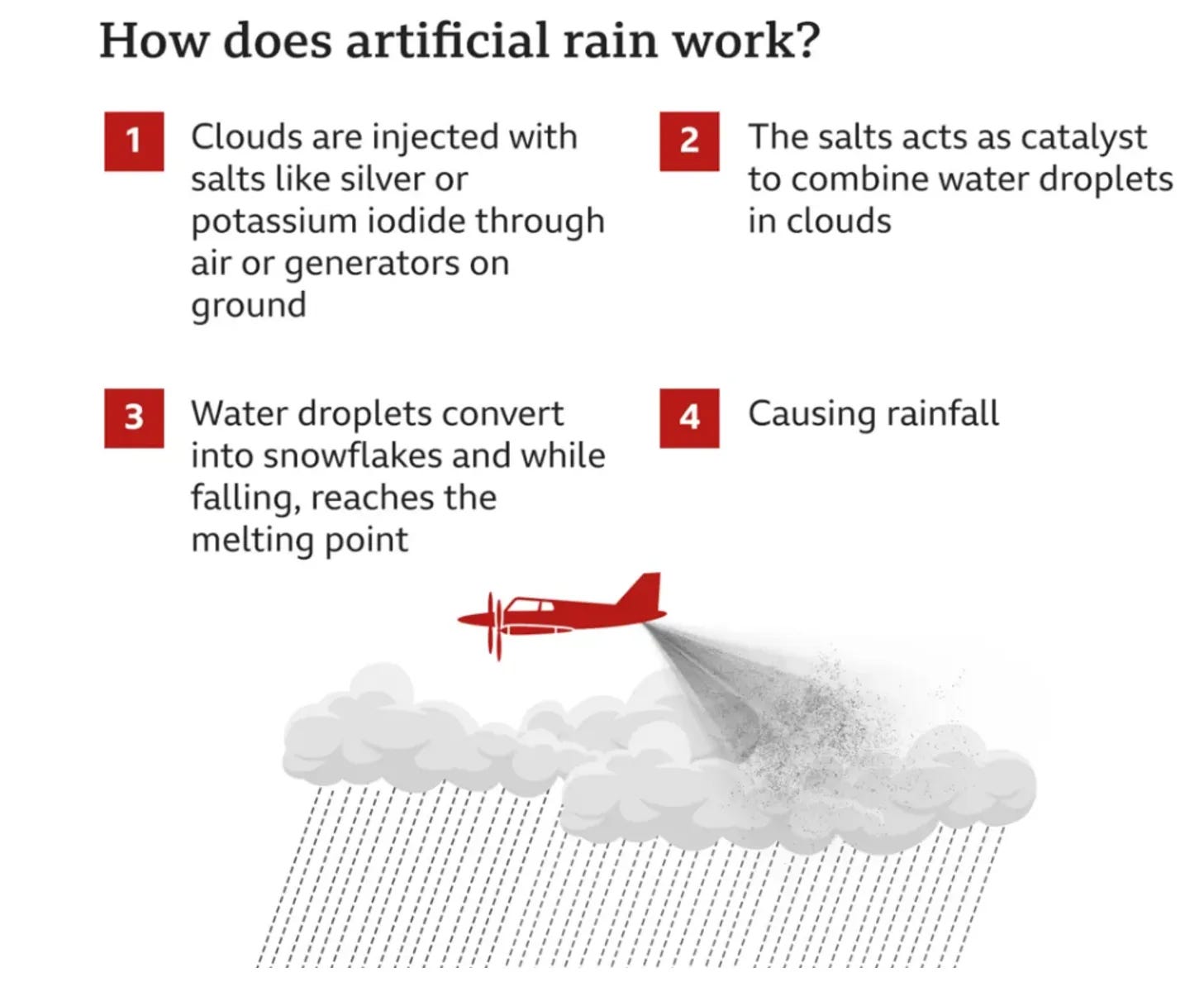
Rainmaker, based in El Segundo, California, provides cloud-seeding services in multiple states, assisting farmers to manage drought conditions. The company supplies water for agriculture, watersheds, and ecosystems, aiming to support growth and maintain natural systems. Rainmaker utilizes weather radar, atmospheric sensing, and weather-resistant drones in its operations, aiming to simulate weather activity that can help counter drought and preserve ecosystems in the United States.
Doricko explained that cloud seeding by farmers is conducted either for aquifer recharge or in response to drought conditions. The practice is not limited to Texas; municipalities in Utah and Idaho also use this technology, which originated in the United States in the 1940s. Doricko also stated that Rainmaker operates under regulations from the Texas Department of Licensing and Regulation, requiring suspension of activities if flooding risk arises. He reported that, "If ever there's a risk of flooding - if reservoir spillage is a risk- then you have to stop operating, and a day before there was any flash flood warning, our meteorologists proactively suspended operations before even that regulatory threshold from the state of Texas."
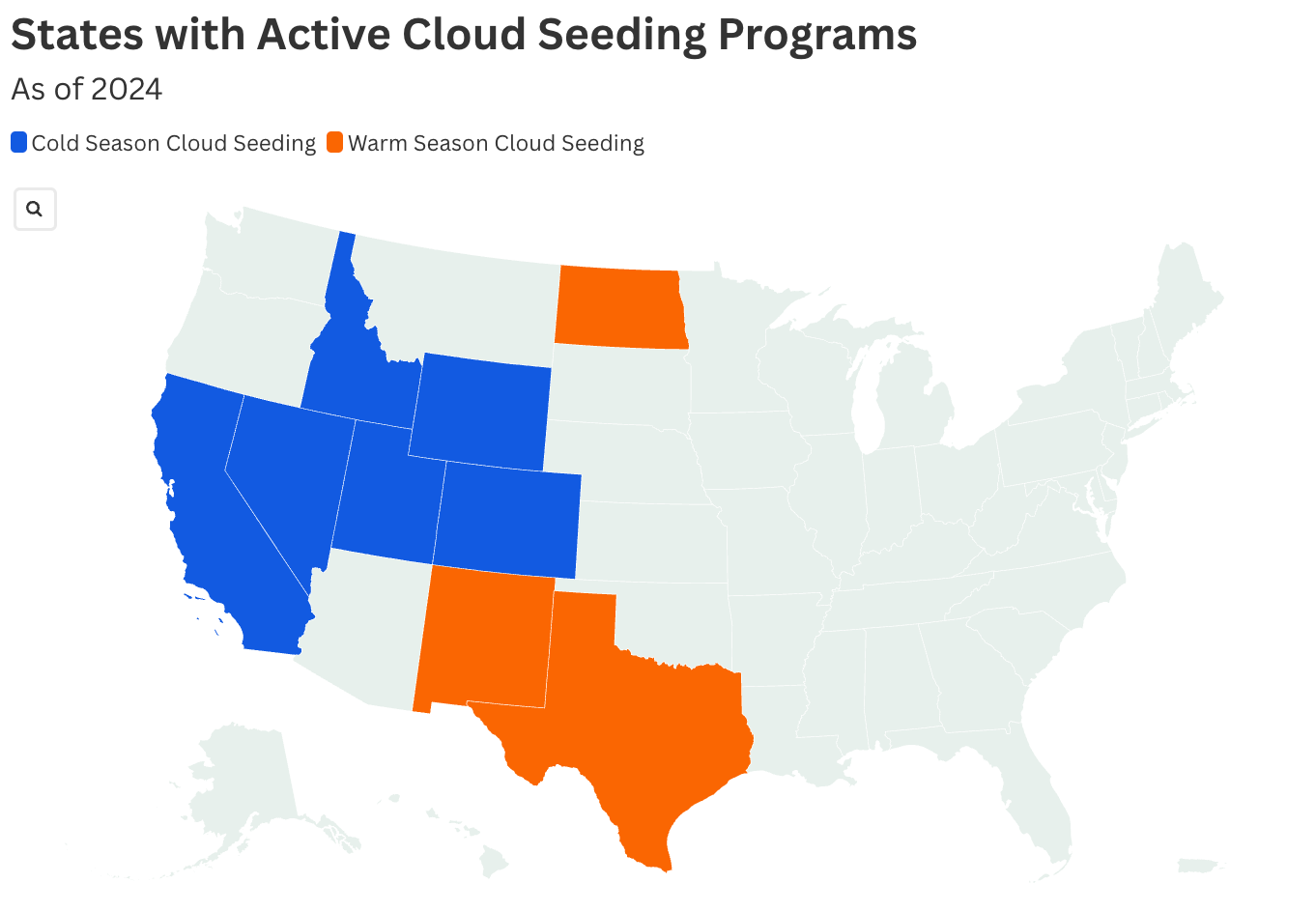
Tennessee is the only state with a legislative ban on cloud seeding and weather modification. Other states, such as Florida, have considered but not passed similar bans, while states like Montana regulate rather than prohibit cloud seeding. Following the floods in Texas, Representative Marjorie Taylor Greene of Georgia announced plans to introduce legislation regarding weather modification.