

Quindar Secures $18 Million to Scale Satellite Operations Software
Quindar, a Denver-based software company specializing in spacecraft mission control platforms, has secured $18 million in Series A funding to establish a classified mission operations center. This initiative is intended to accelerate the timeline for government and commercial clients to attain operational control of space-based assets, according to an announcement made this week.
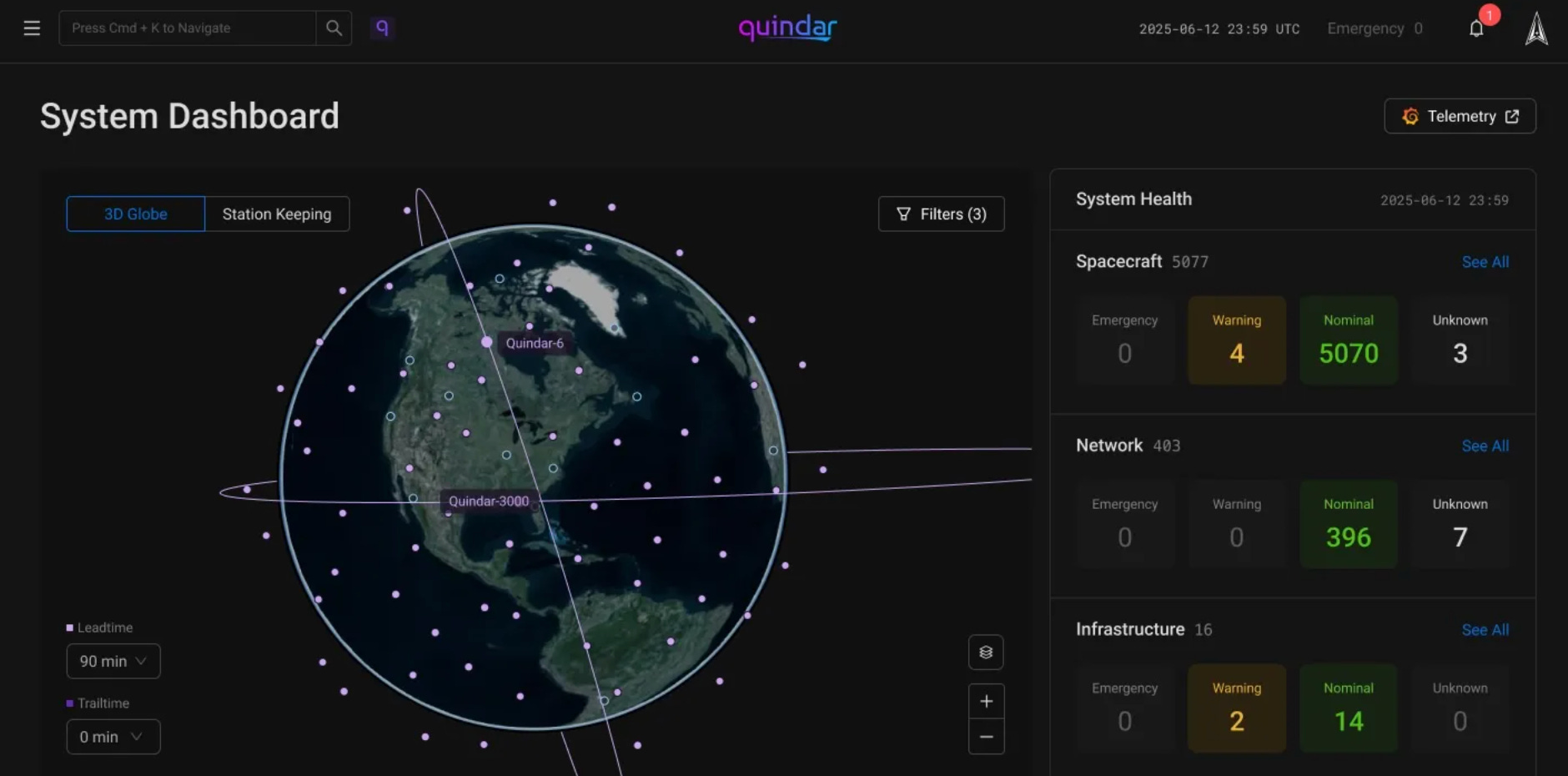
The Series A round was led by Washington Harbour Partners, with continued participation from Booz Allen Ventures, FUSE, FCVC, and Y Combinator. Funding will support additional hiring and facilitate increased integration with commercial customers. Currently employing 40 staff members, Quindar anticipates continued organizational growth as business expands. The company has previously raised $10 million across two separate funding rounds.
The new classified mission operations facility will be located in the Denver area and is expected to commence initial operations by late 2026, as stated by Quindar’s co-founder and Chief Executive Officer, Nate Hamet.
Quindar asserts that while the U.S. Space Force’s Space Systems Command typically requires over a decade to deploy a new operational ground system, its own mission management infrastructure can integrate a common operating platform within days for both government and commercial customers.
Hamet noted a significant trend toward government-owned, commercially-operated satellites, resulting in manufacturers taking greater responsibility for flying their vehicles, often across multiple programs. Each program necessitates unique interface requirements, which traditionally leads to extended development timelines for ground systems. Quindar addresses these challenges through a modular open systems architecture, allowing a single version of its Mission Management software to integrate satellites from different manufacturers into a unified interface or support numerous programs with distinct interfaces within the same mission control environment.
“We are answering America’s call to speed. Our commercially proven common operating picture quickly integrates one satellite or thousands into the same constellation in a matter of days,” said Hamet. “We can connect directly to spacecraft or through third-party mission operations centers, all while maintaining the observability, automation, and security needed for national defense. This investment enables us to support classified and unclassified missions alike, and to ensure that every operator, from startup to government, can fly with confidence.”
The mission management software delivers a comprehensive suite of services, including flight dynamics, command and control, payload routing, tasking, and event management. These capabilities are designed to meet routine operational needs and include automated anomaly resolution for onboard satellite systems.