

Quantum Imaging Startup Diffraqtion Announces Exit from Stealth Mode
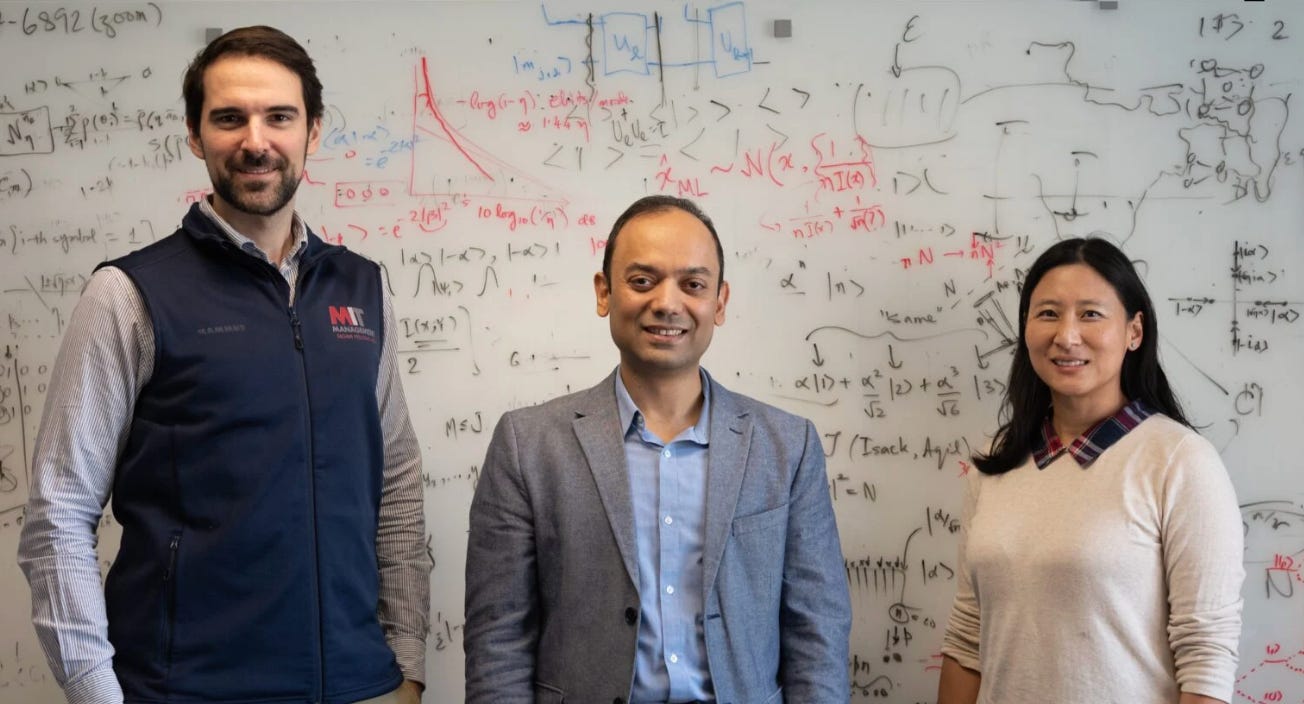
Diffraqtion, a quantum imaging startup based in Cambridge, Massachusetts, emerged from stealth mode after securing $4.2 million in pre-seed funding led by QDNL, with milemark•capital, Aether VC, and ADIN participating.
The investment also includes a $1.5 million DARPA SBIR Direct-to-Phase 2 contract, which will culminate with demonstrations of the company’s “quantum camera” on ground-based telescopes operated by the Air Force Research Laboratory in Hawaii and the University of California Observatories Lick Observatory in Santa Cruz, California.
The recent funding round will be used to grow the engineering team and accelerate the development of the company’s novel quantum camera technology, designed to provide high-resolution imaging and Space Domain Awareness (SDA) capabilities that bypass traditional optical limits, in preparation for initial orbital flight tests.
Diffraqtion’s advanced quantum cameras, designed for integration with satellites and ground-based telescopes, blend quantum imaging with artificial intelligence to detect faraway objects or produce high-resolution images of nearby targets using smaller lenses - ultimately enhancing space surveillance capabilities.
Traditional satellite and telescope systems are constrained by the diffraction limit, which determines the maximum resolution a lens can achieve based on its size, often requiring satellites to use larger and more expensive mirrors to observe smaller objects. Diffraqtion’s quantum camera addresses these challenges by employing photon-counting sensors and specialized AI algorithms capable of extracting up to 95% more data from incoming light than conventional CMOS or CCD sensors. This technology offers super-resolution imaging that produces detailed, high-quality images from payloads that are significantly smaller and lighter; exceptional low-light performance for capturing sharp photographs in extremely dark environments, such as shadowed lunar regions or high-altitude space; and, real-time on-orbit processing through “Orbital Edge AI,” allowing immediate, actionable insights by locally processing data instead of relying on raw downloads.
CEO and cofounder Johannes Galatsano explained that Diffraqtion is seeking to dramatically speed up image processing, while delivering their platform at a much lower cost compared to conventional options. The company will compete with traditional large-scale systems, but at a fraction of the price, with plans to develop 6U cubesats with 10cm lenses priced at $500,000, aiming for resolutions similar to larger Vantor satellites. Diffraqtion also aims to create a camera that matches the capabilities of the Hubble Space Telescope, mounted on a 50kg spacecraft for several million dollars.
Diffraqtion is currently working with the U.S. Space Force’s Apollo Accelerator and the Space Systems Command (SSC) TAP Lab to integrate its sensor data into military space defense architectures. Galatsanos highlights that the system can deliver rapid analytics, often within seconds, addressing the need for fast insights, especially in national security. “If successful, this technology will enable highly affordable, high-resolution imaging in near real-time.” Galatsanos indicated the potential for adaptation of the company’s technology in satellites and drones dedicated to missile defense and terrestrial observation, making them relevant to the Department of Defense’s Golden Dome initiative.
Diffraqtion is moving forward with plans for a satellite constellation, in accordance with the company’s long-term strategy. Ground-based Space Domain Awareness (SDA) services are expected to launch in 2027, with its first orbital deployment set for 2028 to expand SDA capabilities. By 2029, the company aims to enter the Earth Observation (EO) sector, broadening its offerings even further and potentially setting a new standard for Earth observation and tactical reconnaissance.