

PsiQuantum Announces Completion of $1 Billion Equity Financing Round
PsiQuantum, a startup based in Palo Alto, has raised a $1 billion Series E round that gives the 9-year-old company a $7 billion valuation. The round was led by BlackRock, Baillie Gifford, and Temasek, with participation from NVentures, Nvidia’s venture capital arm, Macquarie Capital, Qatar Investment Authority, Counterpoint Global (Morgan Stanley), and S Ventures (SentinelOne) and existing investors, such as Third Point Ventures and T. Rowe Price Associates. PsiQuantum’s total funding now exceeds $1.8 billion.
The company’s Series E investment is among the largest private investments in quantum computing technology to date. The quantum computing sector has seen several significant funding events this month, such as a $320 million Series B for Finland-based IQM and a $600 million raise for Quantinuum, a Honeywell joint venture, with a $10 billion pre-money valuation. Additionally, Infleqtion announced plans to go public through a special-purpose acquisition company (SPAC), targeting approximately $540 million in proceeds.
PsiQuantum cofounder and chief science officer Pete Shadbolt stated that the recent funding will support the deployment of large-scale prototype systems to validate systems architecture and integration, and further advance the performance of its quantum photonic chips and fault-tolerant designs. The company believes that a combination of photonic qubits and high-volume semiconductor manufacturing is necessary to overcome the scaling challenges of manufacturability, cooling, and networking faced when building a fault-tolerant quantum computer with a million qubits. PsiQuantum’s CEO and co-founder Jeremy O’Brien stated: “Only building the real thing - million-qubit scale, fault-tolerant machines - will unlock the promise of quantum computing.” The recent funding will also enable the firm to build quantum computing sites in Brisbane, Australia, and Chicago.
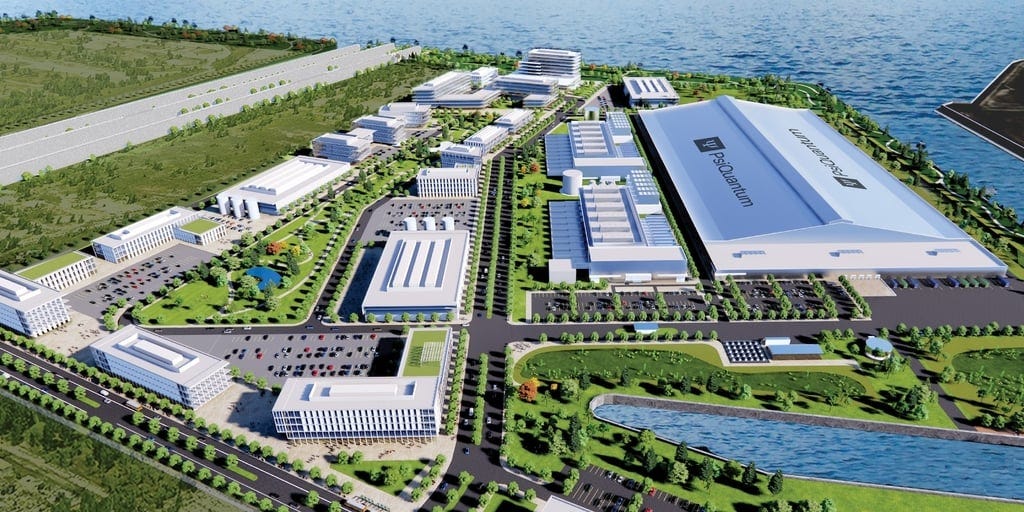
Although PsiQuantum has tested key components, it has not yet built a complete quantum computer. The company is transitioning from chip and device design work to developing large-scale infrastructure for data-center-sized facilities. The new funding will also be used to scale manufacturing of custom parts and materials for intermediate-scale systems. Shadbolt emphasized that the company has a roadmap for scaling up systems incrementally.
Tony Kim, head of BlackRock's Fundamental Equities Technology Group, noted in the announcement that quantum computing might become an integral part of future technology stacks alongside AI. Luke Ward of Baillie Gifford added that PsiQuantum has achieved technical milestones and established partnerships across industry and government, positioning the company for potential significant impact.
Nvidia’s participation marks a shift, since CEO Jensen Huang had previously commented that useful quantum computers were years away. However, at the GPU Technology Conference in Paris, Huang indicated that quantum computing is approaching an inflection point. NVentures’ investment in PsiQuantum is its third quantum-related deal this month. NVentures also participated in Quantinuum’s latest funding round, and QuEra, which develops neutral atom quantum computers, announced an additional investment from NVentures to expand its Series B round.
Nvidia’s investments in multiple quantum computing platforms reflect a diversified technological approach. According to Shadbolt, the existence of competing technologies demonstrates the early stage of quantum computing development. PsiQuantum is collaborating with Nvidia on various development areas, including quantum algorithms, hybrid quantum-GPU systems, and silicon photonics. Shadbolt observed that integrating quantum computers with existing GPU clusters is becoming more common internationally. PsiQuantum’s focus on photonics aligns with trends in AI supercomputing, where photonic integration addresses increasing data transmission and energy requirements. Recently, Taiwan Semiconductor Manufacturing Company unveiled a new process for manufacturing chips combining photonic and electronic circuits.