

President Trump Pledges to Revitalize American Shipbuilding
President Donald Trump pledged to revitalize American shipbuilding during his joint address to Congress last week, announcing the creation of a new office of shipbuilding within the White House and proposing special tax incentives to support this initiative. (He also reiterated his plan to impose tariffs, which could impact domestic manufacturers, including shipbuilders, that import materials like steel. Previously announced reciprocal tariffs are set to take effect on April 2.)
Shipbuilding has become a crucial focus for the second Trump administration. The President’s nominee for Navy secretary, John Phelan, noted Trump's significant concern about the state of the country's warship production infrastructure. The U.S. still builds ships domestically, but the number of manufacturers, shipyards, and suppliers has decreased in recent decades, leading to a skilled workforce shortage and significant production delays for warships and nuclear submarines. A 2023 report from the Office of Naval Intelligence indicated that Chinese shipyards can produce around 232 times more tonnage than their U.S. counterparts.
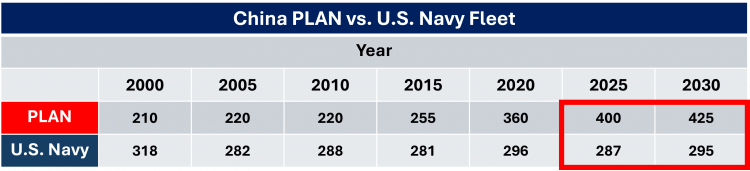
China has the world’s largest fleet.
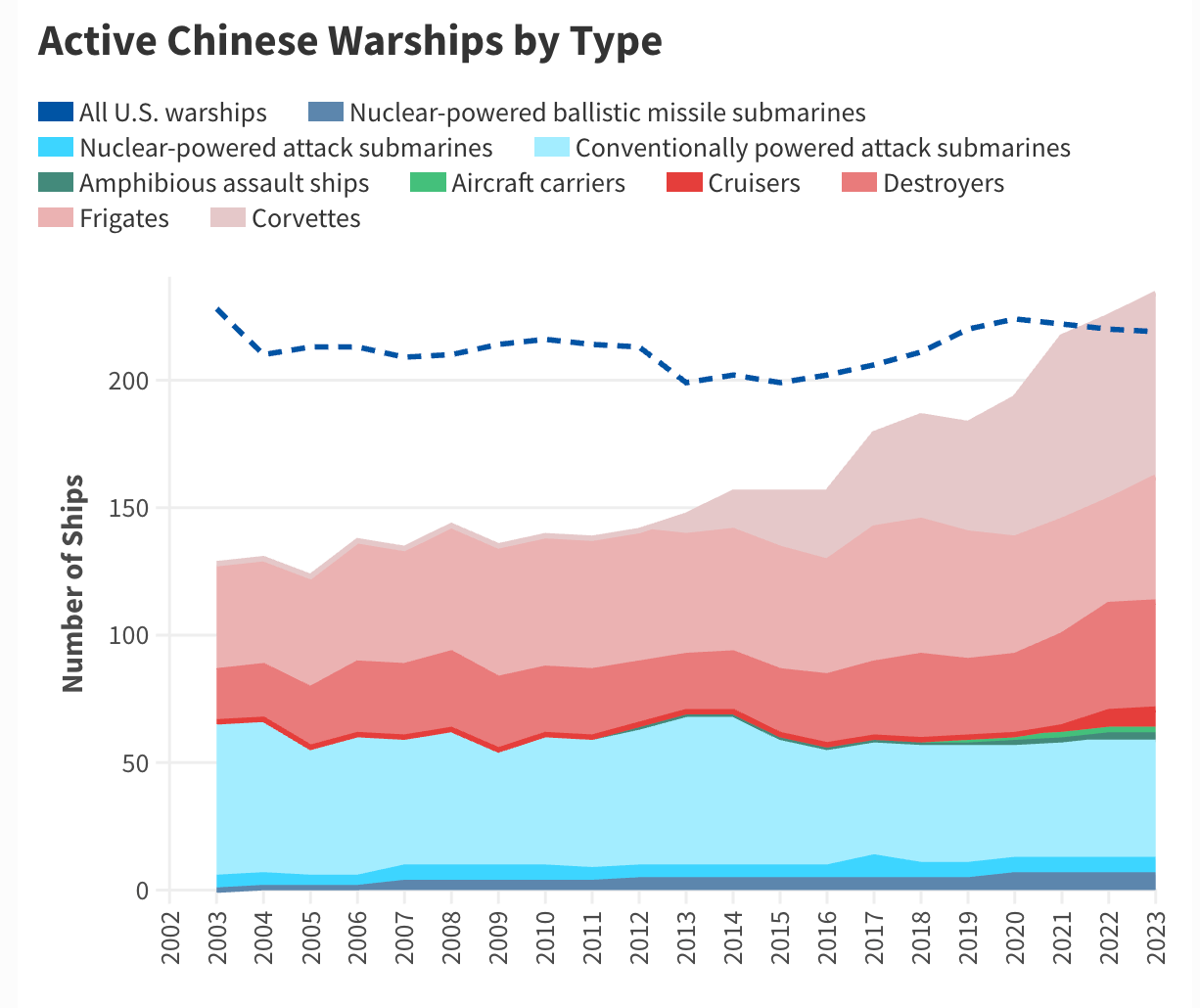
US Fleet.

Navy and the Pentagon have adopted measures to accelerate shipbuilding efforts. However, the Navy still lacks a comprehensive strategy and coordinated leadership for its industrial base efforts.
China's market share in global shipbuilding was less than 5% in 1999 and rose to 50% by 2023, according to a Congressional Research Service report. In contrast, the U.S. share has fallen to just 0.1%, posing challenges for the U.S. and its allies. In 2024 alone, one Chinese shipbuilder constructed more commercial vessels by tonnage than the entire U.S. shipbuilding industry has built since World War II. China already has the world’s largest naval fleet.
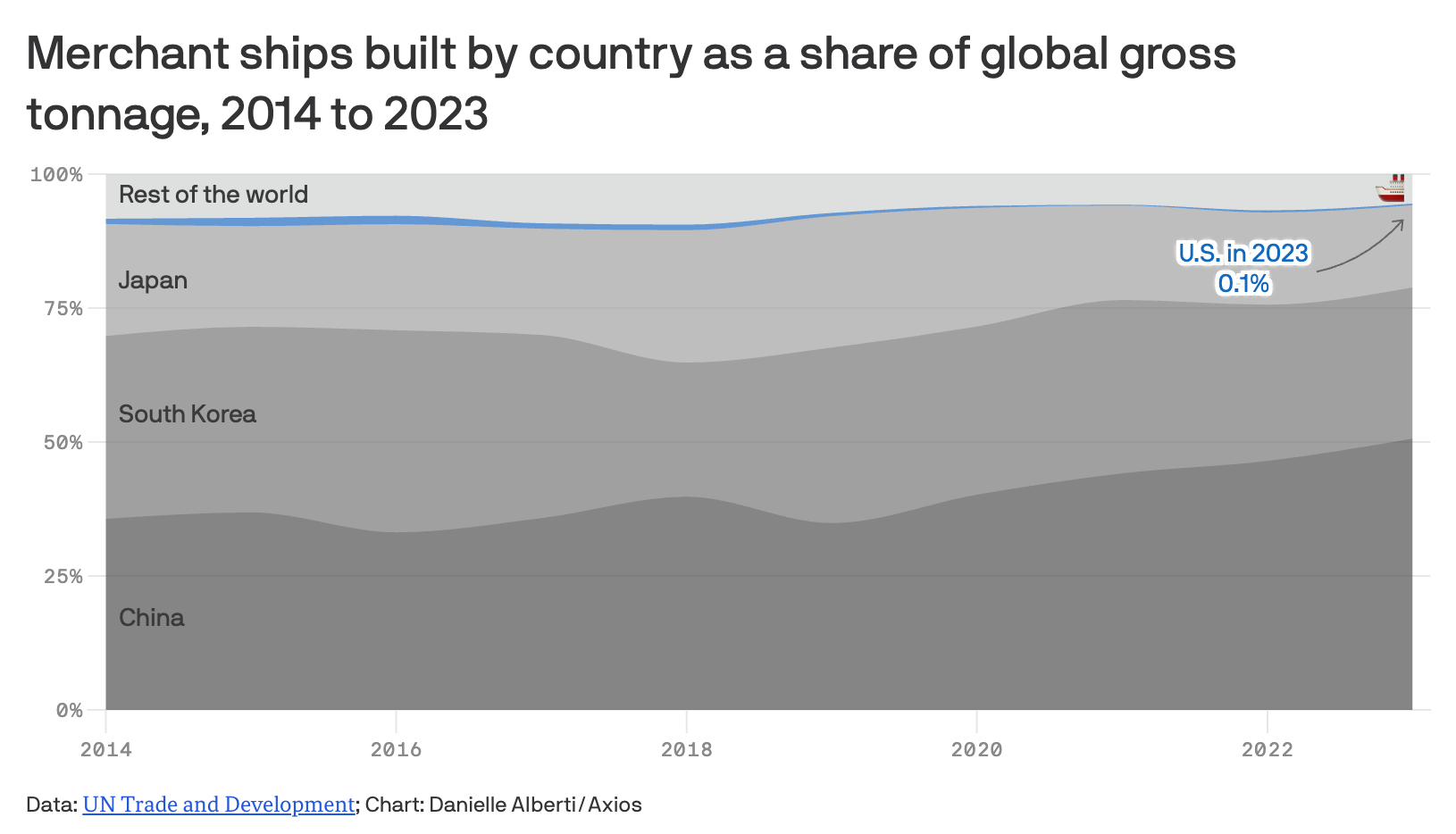
The erosion of U.S. and allied shipbuilding capabilities in the face of China's growing grip on the $150 billion global ocean shipping industry poses a threat to military readiness, reduces economic opportunities, and contributes to China's global power-projection ambitions. The Navy would need to spend tens of billions of dollars annually for three decades to satisfy its expansion goals, according to the Congressional Budget Office. The service tallied 296 battle force ships (aircraft carriers, submarines, surface combatants, amphibious ships, and logistics and support ships) in December 2024, with a goal of increasing that number to 381. This does not include many unmanned assets key to the hybrid fleet envisioned by former chiefs of naval operations, Admirals Lisa Franchetti and Michael Gilday.
The U.S. Navy faces a growing possibility of defeat at sea for the first time in half a century, and the United States could soon face its first potential contender for maritime dominance since at least the collapse of the Soviet Union. China’s naval might is already allowing Beijing to flex its muscles in the Pacific in ways that endanger U.S. allies and undermine stability. None of this means that China will defeat the U.S. Navy in wartime. The U.S. Navy has vastly more combat experience and time at sea and a blue water naval tradition dating back more than two centuries, while the Chinese tradition dates back less than three decades. A war between China and the United States would also engage air, ground, space, and cyber forces. Each country’s relative strength in each of these domains will matter.