Poseidon Aerospace Secures $11 Million for Development of Unmanned Cargo Aircraft

Unmanned aerospace company, Poseidon Aerospace, announced the successful closure of an $11 million seed funding round for the development and manufacturing of two unmanned cargo platforms: Egret, a short takeoff and landing (STOL) aircraft, and Heron, a seaplane. The round was led by Tamarack Global with participation from Draper Associates, Starship Ventures, Drover Ventures, Cade Ventures, GoAhead Ventures, Fortitude VC, as well as contributions from angel investors.
Founded in 2024 by David Zagaynov and Parker Tenney, former engineers at Amazon and Lockheed Martin, respectively, Poseidon Aerospace, headquartered in San Francisco, California, is focused on engineering unmanned aircraft specifically tailored for heavy-lift cargo operations.
Heron is designed to operate in aquatic environments, remote coastlines, and locations where conventional runways are unavailable. Egret, optimized for STOL capabilities, supports cargo missions in regions characterized by unfinished runways or restricted landing areas. Both models are engineered to transport up to two tons of cargo over distances reaching 1,500 miles. Flight testing for Heron and Egret is scheduled for mid-2026.

This latest funding milestone coincides with significant challenges confronting the air cargo industry. By 2035, half of current U.S. pilots will be required to retire due to age, while the average age of air cargo fleet aircraft now exceeds 25 years. These factors contribute to elevated maintenance costs and staffing limitations that place upward pressure on cargo pricing.
“Air cargo economics have remained problematic for decades,” stated David Zagaynov, CEO and co-founder of Poseidon Aerospace. “Rather than incrementally updating legacy systems through autonomous retrofits, our approach replaces aging aircraft with purpose-built platforms, rigorously optimized for cost-per-flight-ton-mile.” In commercial air cargo, this metric is critical in evaluating how efficiently carriers convert operating resources such as fuel, labor, and equipment into paid freight movement.
Initially, Poseidon Aerospace aims to address underserved routes and remote communities, with long-term plans to offer solutions for a broad range of route profiles, including trans-Pacific, trans-Atlantic, domestic, and regional networks. Large-scale production of aircraft optimized for specific routes will enable Poseidon to redefine the efficiency and affordability of traditional air freight.
These design features are equally relevant for defense logistics, particularly in environments where conventional supply chains are vulnerable. The ability to reliably and economically deliver cargo across extensive distances under contested conditions is essential.
Current U.S. strategic airlift capacity, approximately 200 C-17s and fewer than 100 C-5s, remains insufficient for scaling to contested logistics requirements. In the event of Pacific conflicts, the absence of guaranteed access to ports and airfields necessitates reliance on austere logistics networks; destruction of infrastructure renders established methods ineffective.
China has already integrated unmanned cargo platforms to support contested logistical operations, developing technologies to facilitate swift delivery to island chains in the South China Sea. Beyond electric vertical takeoff and landing (eVTOL) craft, these advances include new heavy-lift unmanned aircraft and amphibious seaplanes. Poseidon Aerospace is committed to bridging this capability gap for the United States.
By deploying cargo platforms capable of unmanned flight to destinations lacking functional infrastructure, Poseidon enables resilient, distributed logistics networks that are less susceptible to disruption. This strategic innovation allows goods to be transported across islands and isolated regions where maritime transit is inefficient and runways are unavailable. The separation of logistics from traditional infrastructure, facilitated by rapid, flexible, and available aircraft platforms, represents a transformative shift in both supply chain management and military strategy.
Parker Tenney, CTO and co-founder, emphasized the significance of scalable manufacturing: “While prototype development has progressed, the central challenge lies in transitioning designs to full-scale production. Our expertise in accelerating time-to-market directly addresses urgent demands in both commercial and military sectors.”
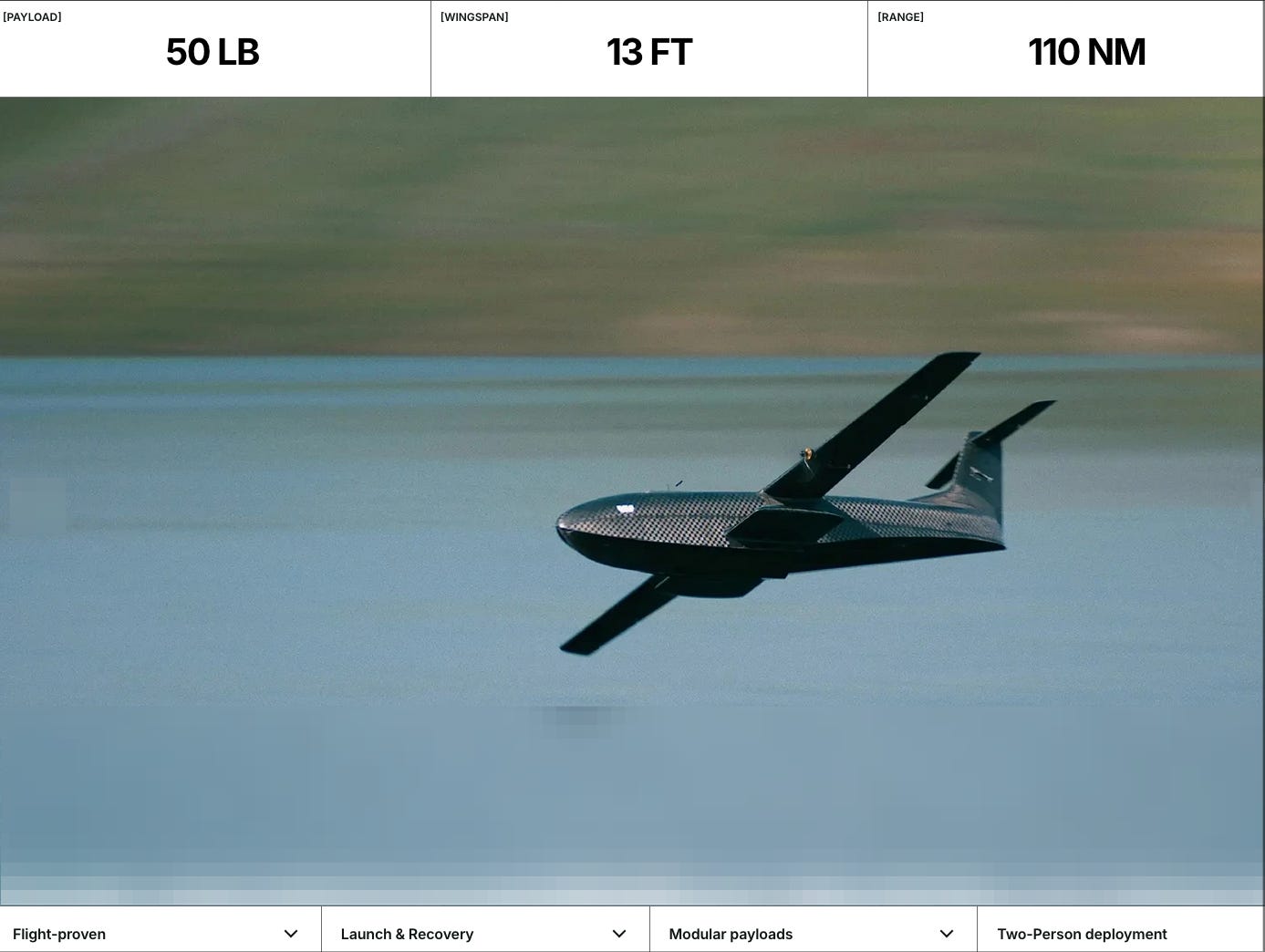
In 2024, Poseidon Aerospace completed the Seagull prototype, featuring a 13-foot wingspan and a demonstrated payload capacity of up to 50 lbs. The company has entered into a cooperative research and development agreement with the Naval Surface Warfare Center Panama City Division, successfully showcasing capabilities in littoral environments. Poseidon has established a Washington, DC office to strengthen relationships with defense and government clients, and secured a manufacturing facility in Brunswick, Maine to support large-scale production of its integrated aircraft platforms