

Perpetual Atomics and QSA Global Achieve Breakthrough in Americium Ceramic Fuel Pelleting for Space Power Systems
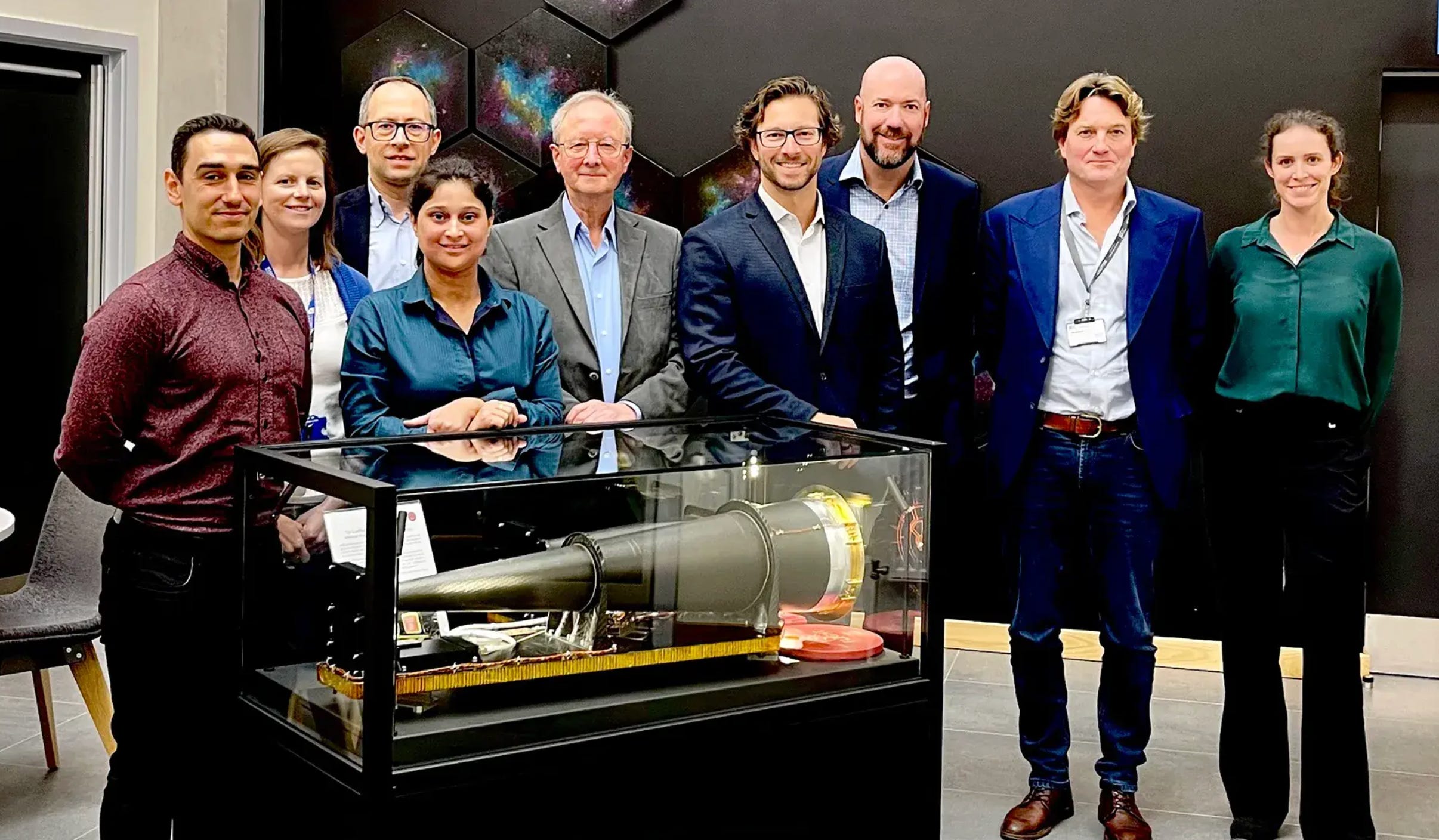
U.K.-based Perpetual Atomics and U.S.-based QSA Global have announced significant progress in processing americium dioxide for use in radioisotope power systems that support space missions. Through an industrially scalable method, the two companies report converting americium into stable, large-scale ceramic pellets suitable for direct integration into sealed sources used in radioisotope heater units (RHUs) and radioisotope thermoelectric generators (RTGs).
Traditionally, plutonium-238 has been the primary fuel for space-based RHUs and RTGs. However, americium-241 is emerging as a viable alternative, especially in Europe where supplies of plutonium are limited. Notably, Am-241 possesses a half-life of approximately 430 years, considerably longer than Pu-238’s 90-year half-life, which enhances its suitability for extended space missions.
Utilizing an innovative process, previously untested with americium, the team has produced the largest ceramic americium pellet of its kind to date. Developed through an industrially scalable technique that yields high-density, durable americium pellets with elevated volumetric power density, these units are suitable for direct integration into sealed power systems. This advancement contributes to enabling dependable, long-duration energy solutions for upcoming space missions.
Furthermore, the approach provides rapid production, reduces pellet volume and waste, and supports higher throughput, thereby facilitating the creation of larger-scale pellets suited to advanced power system requirements.
Perpetual Atomics, a University of Leicester spinout headquartered at Space Park Leicester, entered into a collaboration with QSA Global in January 2025 to develop sealed americium sources for radioisotope power applications. QSA Global specializes in the design and manufacture of commercial radioisotope sealed sources for industrial settings.
Joe Lapinskas, director of innovation and marketing at QSA Global, stated, “Within just one year, Perpetual Atomics and QSA Global have progressed from conceptualization to manufacturable fuel pellets. By leveraging Perpetual Atomics’ expertise in space nuclear power and QSA Global’s extensive experience in sealed source design, qualification, and high-reliability manufacturing, we are transforming an innovative concept into operational hardware ready for next-generation space missions.”
Ramy Mesalam, chief technical officer of Perpetual Atomics, added, “The main challenge lay in developing both the fuel form and a robust processing method. This was initially addressed using surrogates and subsequently applied to americium in partnership with the QSA team, achieving success within a notably short timeframe.”
Matthew Cook, head of space exploration at the U.K. Space Agency, commented, “Radioisotope power systems will be vital for future deep space endeavors and the exploration of challenging environments such as the lunar south pole. By advancing scalable americium fuel pelleting processes within the United Kingdom, we are positioning British expertise at the leading edge of this essential technology.”