

Pentagon to Increases Critical Mineral Reserves with $1.5 Billion Acquisition Initiative
The Pentagon has moved to acquire up to $1 billion worth of critical minerals as part of an accelerated stockpiling drive aimed at reducing US dependence on China, according to filings from the Defense Logistics Agency (DLA). The directive to expand the National Defense Stockpile comes in response to Beijing’s tightening of export controls on materials crucial to defense and high-tech industries. The $1 billion procurement marks a sharp acceleration from earlier stockpiling efforts.
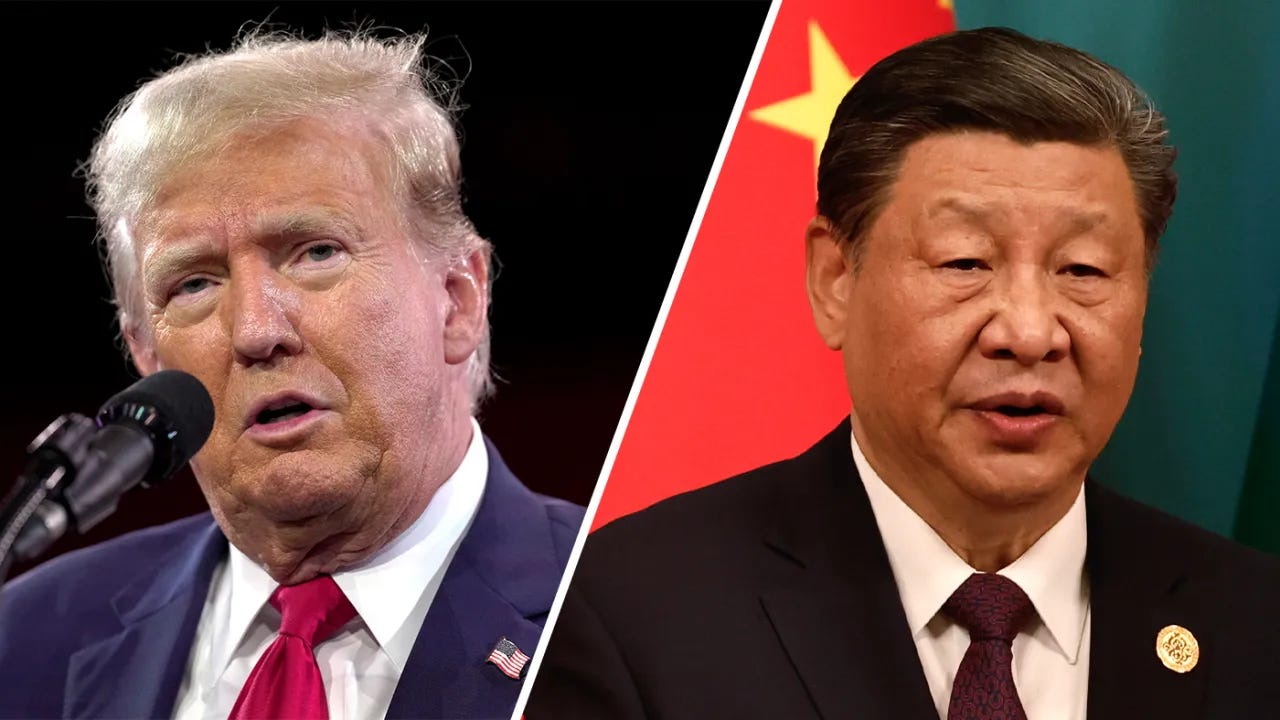
Beijing’s sweeping new export restrictions on rare earths and related technologies announced on October 9th prompted U.S. President Donald Trump to cancel a planned meeting with Chinese President Xi Jinping in South Korea later this month and to pledge a 100% tariff on Chinese imports, effective November 1st. “There is no way that China should be allowed to hold the world ‘captive’,” Trump said.
The president’s pledge caused U.S. stock markets to tumble on Friday, wiping out approximately $2 trillion in equity value in just one day.
Restrictions have fueled fears among those reliant on Chinese supply within the U.S. Currently, China accounts for over 70% of the world’s supply, mines more than half of the world’s rare earths, and controls over 90% of the minerals’ processing capacity, making it by far the most dominant player in the global supply chain. As such, stockpiling of these minerals aims to serve as a safeguard against potential supply disruptions, especially during geopolitically sensitive periods.
The Pentagon’s broader push is backed by Trump’s One Big Beautiful Bill Act (OBBA), which allocates $7.5 billion for critical minerals - $2 billion to expand the National Defense Stockpile by 2027, $5 billion for supply chain investments, and $500 million for a Pentagon credit program to spur private projects.
The Pentagon’s new buying activity will involve not only rare earths, but also metals not previously requested by the National Defense Stockpile, such as tungsten, bismuth and indium. The DLA has shown interest in purchasing significant amounts of minerals, including up to $500 million worth of cobalt, up to $245 million of antimony from US Antimony Corporation, up to $100 million of tantalum from an unnamed American company, and a total of $US45 million worth of scandium from both Rio Tinto and APL Engineered Materials, a chemical manufacturer headquartered in Illinois with offices in Japan and China.
The DLA, which already stockpiles dozens of metals and alloys, can release them only in wartime or as deemed necessary by the under-secretary of defense for acquisition and sustainment.
In another move aimed at countering Chinese dominance, the Trump administration is also considering stockpiling minerals found on the Pacific Ocean seabed, which is rich in nickel, cobalt, copper and manganese, amongst others.
Prices for several key minerals have surged amid tighter Chinese exports. Germanium prices have spiked this year, while antimony trioxide has nearly doubled over the past 12 months. Car makers have also faced shortages of rare earth elements following new Chinese curbs.
The DLA’s proposed volumes have startled some market participants. According to Cristina Belda of Argus Media, quantities requested in many cases exceed the US annual production and import levels. Fastmarkets’ analyst Solomon Cefai noted that the sought-after volumes of bismuth and indium were “significant” enough to potentially constrain non-China supply. The prices of some purchases have also surprised the market. Analysts at Jefferies noted that the scandium deal with Rio Tinto for roughly 6 tons of scandium oxide was priced “higher than market expectations.” The Pentagon stockpile of antimony would ensure industrial base mobilization during a national emergency and allow for continued production in what has been a volatile sector.
China’s recent announcement builds upon export restrictions introduced in April, resulting in widespread shortages of several critical elements utilized throughout the technology sector. In May, China temporarily paused export restrictions affecting more than two dozen American companies following a trade agreement with the United States, which restored access to certain rare earth minerals and magnets. In June, China indicated that it would authorize the export of rare earth minerals to the U.S. that “meet the conditions in accordance with the law,” provided that the U.S. reciprocates by lifting its own trade restrictions. The Trump administration has taken steps to reduce dependency on Chinese imports; in July, the Department of Defense announced the acquisition of $400 million in MP Materials’ preferred stock, making the United States the majority shareholder in the company, which operates the nation’s sole rare earth mine.
Economist Robin Brooks from the Brookings Institution believes Trump’s proposed China tariffs will ultimately hurt the U.S., but he rejects the notion that China holds an advantage; he notes Chinese exporters are already experiencing sharp profit declines due to the tariffs. Brooks suggests China’s possible escalation with rare earths stems from limited options as its export sector suffers. Former White House advisor Dean Ball, now a senior fellow at the Foundation for American Innovation, added that China’s restrictions offer an opportunity for other countries to develop resilient supply chains.