

Overland AI Raises $100M as Ground Autonomy Moves From Experiment to Force Structure
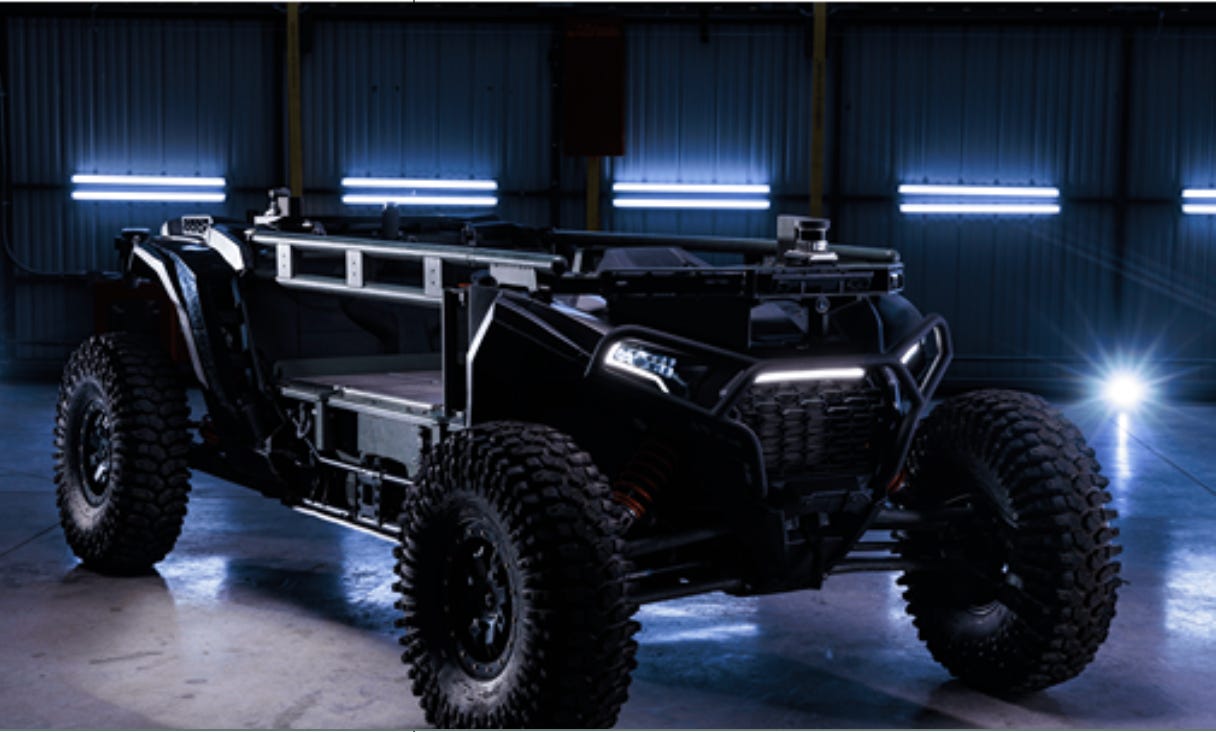
Overland AI just closed a $100 million equity round, with an additional $20 million in venture debt, to scale autonomous ground systems across the U.S. military. The round was led by 8VC, with participation from Point72 Ventures, Ascend, Shasta, Overmatch, Valor Equity Partners, and StepStone Group, alongside debt financing from TriplePoint.
The headline matters less than the timing.
Ground autonomy is no longer being evaluated as a novelty or a DARPA science project. It is being pulled, by units, into operational formations. Overland’s leadership was explicit about that shift. Demand, they argue, has moved decisively from experimentation to integration. The capital is intended not to fund R&D moonshots, but to scale alongside deploying units through manufacturing, field support, and embedded integration teams. That distinction is important. Defense startups often raise on promise. Overland is raising on absorption capacity.
From DARPA to Units
Overland completed DARPA’s RACER program in late 2024 after three years of autonomy testing in complex, off road, GPS denied environments. Since then, the company has transitioned its autonomy stack into operational contexts spanning contested logistics, ISR, counter UAS, breaching, and resupply.
This isn’t autonomy as a standalone vehicle demo. It’s autonomy as part of combined, human machine formations.
One of the most revealing examples is breaching. Breach points are among the most dangerous moments in ground combat, traditionally requiring combat engineers to operate under direct fire while clearing obstacles. Overland worked with the Army’s 36th Engineer Brigade and subordinate units to integrate autonomous systems into breach operations, reducing exposure while preserving tempo.
That’s not a slide deck use case. It’s a doctrinal pressure point.
Why This Raise Is Different
The investor list is notable, but the more telling signal is who Overland is working with today: Army and Marine Corps formations include the 82nd Airborne, 1st Cavalry Division, 173rd Airborne Brigade, and SOCOM elements. These are units that care less about novelty and more about reliability, trust, and operator burden.
Overland’s ULTRA vehicle is designed to let a single operator manage multiple robotic systems at tactically relevant speeds, in terrain where GPS and pristine infrastructure cannot be assumed. That constraint, real terrain, real weather, real electronic warfare, is where most autonomy programs quietly fail.
The company has also expanded into civil defense, partnering with CAL FIRE on wildfire mitigation and suppression. That dual-use angle is secondary strategically, but it reinforces a core point. Autonomy that works off road, under stress, and without perfect conditions is rare.
The Broader Signal
Joe Lonsdale framed the investment as a bet on expertise over bureaucracy. That framing aligns with a broader Pentagon shift toward fewer bespoke prototypes and more emphasis on deployable capability and teams that can scale with operational units. In other words, autonomy is no longer being judged by benchmarks. It is being judged by whether commanders will sign for it.
Overland’s raise suggests that at least one category of ground autonomy has crossed that threshold. The real test now isn’t technical. It’s organizational. Can the Army and Marine Corps integrate autonomous ground systems into formations at scale without breaking command relationships, logistics, or trust? This round is a bet that the answer is finally yes, and that Overland will be one of the companies supplying that future.