

The Drone Industry Is Moving to America - But Not for the Reason You Think
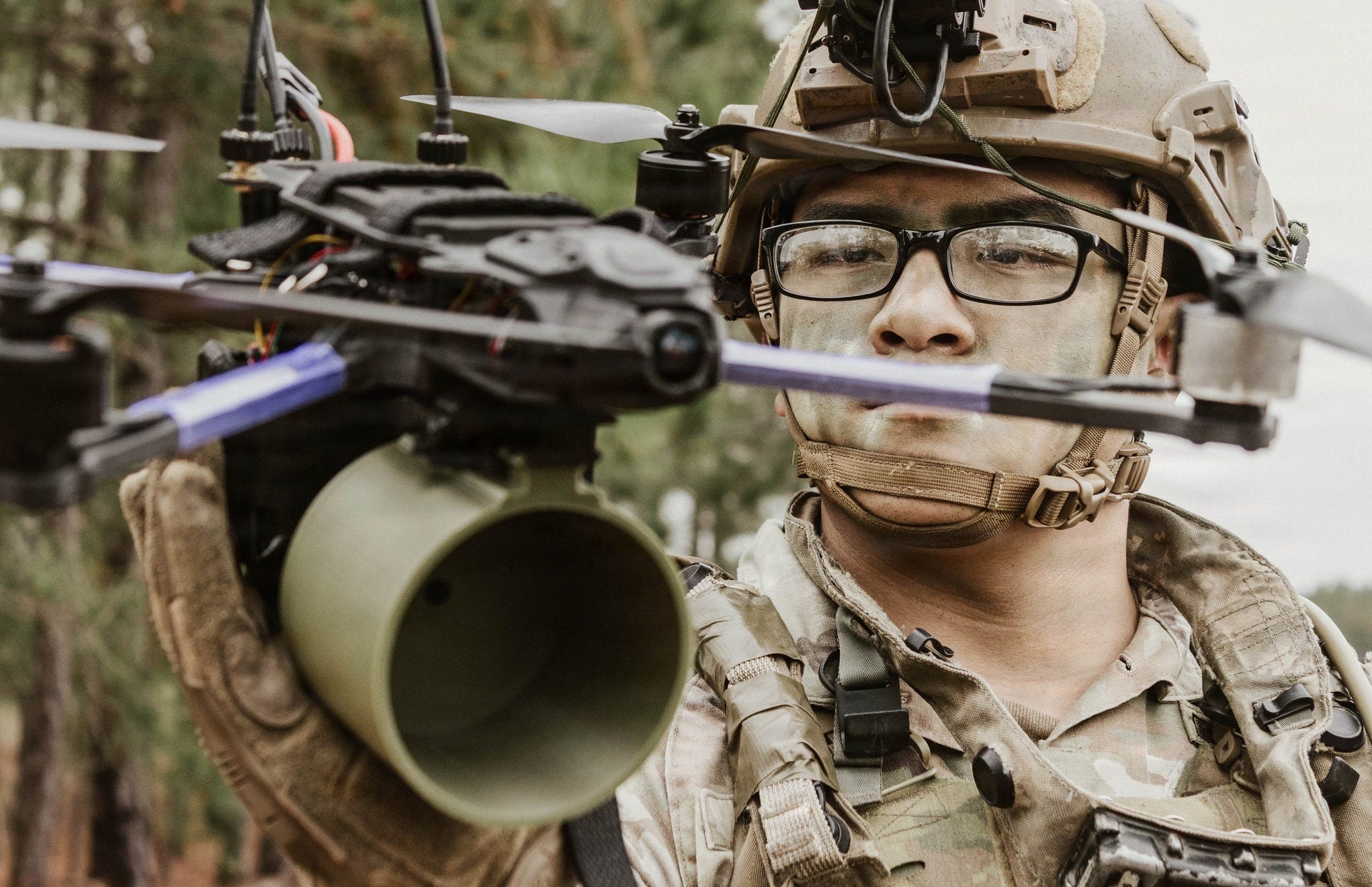
The movement of drone manufacturers into the United States is accelerating, not yet a full-scale shift, but a clear signal of how defense production is being reshaped by procurement policy, supply chain security, and the demands of modern warfare. Croatian drone company Orqa FPV is the latest to formalize that shift, announcing the launch of Orqa US, an independent entity designed to operate within the American defense ecosystem and compete for programs such as the Pentagon’s Drone Dominance initiative.
From European Battlefield to U.S. Industrial Base
The new entity will work in close partnership with defense contractor By Light Professional IT Services, combining Orqa’s combat-tested drone designs with U.S.-based manufacturing capacity. Production will take place at a 180,000-square-foot facility in Port Orange, Florida, with the company aiming to scale output to approximately 8,000 systems annually by the end of the year. The move reflects not only commercial ambition, but alignment with a rapidly evolving procurement environment that increasingly prioritizes domestically produced, NDAA-compliant systems.
For Orqa, the U.S. expansion builds on a foundation established in Europe’s most demanding proving ground. Since its founding in 2018, the company has developed a vertically integrated approach to drone manufacturing, producing everything from flight controllers and radios to cameras and FPV goggles in-house. Its systems, particularly the EW-resilient MRM2-10, have seen deployment in Ukraine, where survivability in contested electromagnetic environments has become a defining requirement. This operational feedback loop has allowed Orqa to refine both hardware and architecture at a pace difficult to replicate in more traditional defense development environments.
An Ecosystem Strategy, Not Just a Product
Unlike many drone startups that focus solely on finished platforms, Orqa has positioned itself as both a manufacturer and a supplier within a broader ecosystem. The company provides components to other firms, collaborates on joint platforms, and supports distributed production models through its Global Manufacturing Partnership program. Its work with Firestorm Labs on the Squall FPV, as well as its partnership with Ukrainian manufacturer General Cherry to develop interceptor drones for European and NATO markets, underscores a strategy centered on interoperability and scale rather than vertical isolation.
This ecosystem approach is reinforced by growing financial and institutional backing. Orqa recently closed a $14.7 million Series A round, bringing total funding above $23 million, while also securing contracts and partnerships spanning Europe, the Middle East, and the United States. Agreements with Red River Army Depot to expand U.S.-based component production, alongside international deals with Croatia and Qatar, highlight a dual-track strategy: embedding within national industrial bases while maintaining a globally distributed manufacturing footprint.
A Bridge Between Innovation and Scale
The structure of Orqa US reflects this balancing act. Headquartered in Oakland, California, and currently employing a small team, the entity is funded by both Orqa and By Light and governed by an independent board. While lean in size, it is designed to integrate tightly with the parent company’s intellectual property and production capabilities, effectively serving as a bridge between European innovation and American industrial scale. Orqa Inc., a U.S.-based subsidiary of the Croatian parent, will continue supplying components to domestic partners, reinforcing its role within the broader U.S. drone ecosystem.
Rewiring the Defense Industrial Base
What emerges from this move is not simply another foreign defense firm entering the U.S. market, but a case study in how the drone sector is reorganizing itself along geopolitical and industrial lines. The war in Ukraine has exposed both the importance of small, adaptable UAV systems and the vulnerabilities of globalized supply chains, particularly those dependent on Chinese components. In response, the United States and its allies are accelerating efforts to build resilient, politically aligned production networks that can scale in times of conflict.
Orqa’s expansion sits squarely within this shift. By combining battlefield-validated technology developed in Europe with U.S.-based manufacturing and compliance structures, the company is positioning itself within a broader transatlantic defense ecosystem. This reflects an emerging model: innovation distributed across allied nations, but industrialized and scaled within the United States.
The Real Shift
The issue is not that the United States cannot build drones, it is that the systems now shaping modern warfare were not invented inside its traditional defense industrial base. They emerged from faster, less constrained ecosystems, where iteration cycles are measured in weeks rather than years and where real-world combat feedback directly informs design. Companies like Orqa are products of that environment, shaped as much by battlefield necessity as by engineering capability.
What is now unfolding is less about foreign firms entering the U.S. market and more about a structural adjustment in how defense innovation is produced and absorbed. The United States remains the center of gravity for procurement, capital, and large-scale manufacturing, but it is increasingly pulling in externally developed technologies that can meet the demands of modern conflict - cheap, adaptable, and rapidly scalable systems.
Innovation is happening at the edges of the system, often outside traditional defense institutions, while the U.S. acts as the platform where those innovations are industrialized and deployed at scale. The long-term question is whether this model remains a temporary bridge, or evolves into a defining feature of the Western defense industrial base.