

Orbital Operations Raises $8.8M Seed Round for Liquid Hydrogen-Fueled Orbital Vehicle
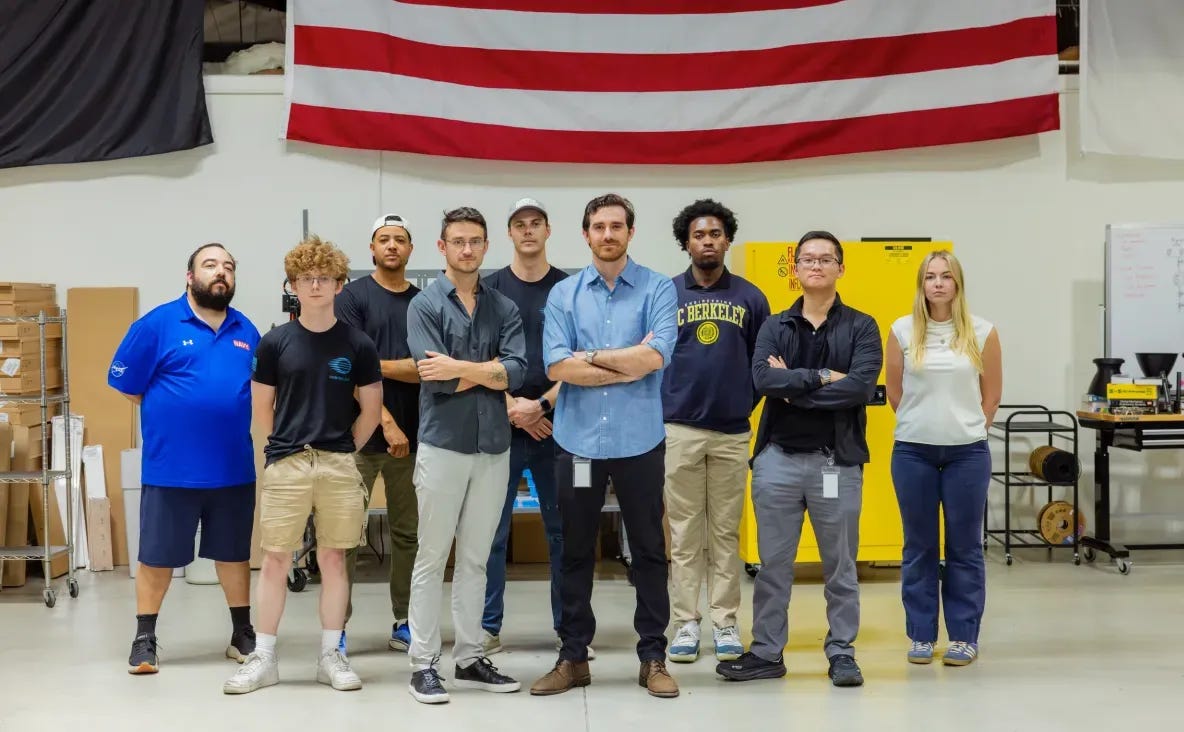
The latest concept vehicle for the Space Force is a high-thrust, cryogenic platform designed to remain on orbit for extended periods, facilitating interception and space domain awareness. Long Beach, CA based Orbital Operations, founded by Ben Schleuniger and Ross Doherty, both former Relativity engineers, is addressing the persistent issue of boil-off from powerful propellants, aiming to enable longer orbital missions. The team is pursuing various government development contracts to validate its technology.
Following participation in Y Combinator earlier this year, Orbital Operations secured an $8.8M seed round led by Initialized Capital, with contributions from Harpoon Ventures, DTX Ventures, Rebel Fund, TRAC VC, Karman Ventures, and investor Immad Akhund. Orbital Operations will use the funding to expand its team and facilities in Long Beach, demonstrate its cryogenic propellant management system, and continue development of a new rocket engine, in collaboration with national security partners.
Orbital Operations’ Astraeus vehicle will utilize hydrogen and oxygen as propellants. Efficient management of these propellants requires cooling them to 20 and 90 Kelvin (-424 and -297 Fahrenheit). Once in orbit, exposure to sunlight and radiation increases tank temperatures, resulting in propellant boil-off. The current mitigation method involves venting the tanks, which limits mission duration to one or two days. “Our goal is to provide the US Space Force with a third-stage rocket capable of indefinite orbital presence,” CEO Schleuniger. “Achieving this requires implementing an active cooling cycle within the tanks.” The technology was previously considered for ULA’s Centaur second stage, but has yet to be demonstrated in orbit.
Schleuniger and Doherty initially explored active cooling in relation to nuclear propulsion before determining it could be effectively applied to chemical propellants. Orbital Operations’ system employs heat exchangers and turbomachinery to circulate coolant around the tanks.
Astraeus will feature a proprietary engine delivering 10,000 pounds of thrust and is engineered to achieve 10 km/s of Delta-v, allowing rapid repositioning between low Earth orbit (LEO) and target orbits. While there are commercial applications as an orbital transfer vehicle, Orbital Operations is prioritizing other markets.
“This system serves as a counterspace asset,” Schleuniger stated. “If an adversarial satellite approaches critical infrastructure such as GPS or naval communication satellites, we can respond swiftly by positioning near those assets as deterrence, with interception capability if needed.” Regarding interceptor functionality, Schleuniger emphasized non-kinetic methods: “Both Orbital Operations and the US Space Force prefer degradation technologies including high-power microwave, spoofing, or energy-based systems, and we are collaborating to determine the most suitable approach.”
Currently, the company is building a test stand for its engine and developing a ground-based demonstrator for its cryogenically cooled tanks, with plans to demonstrate long-term propellant cooling by year-end.