

Orbit Fab Secures Refueling Contract from ESA and UK Space Agency
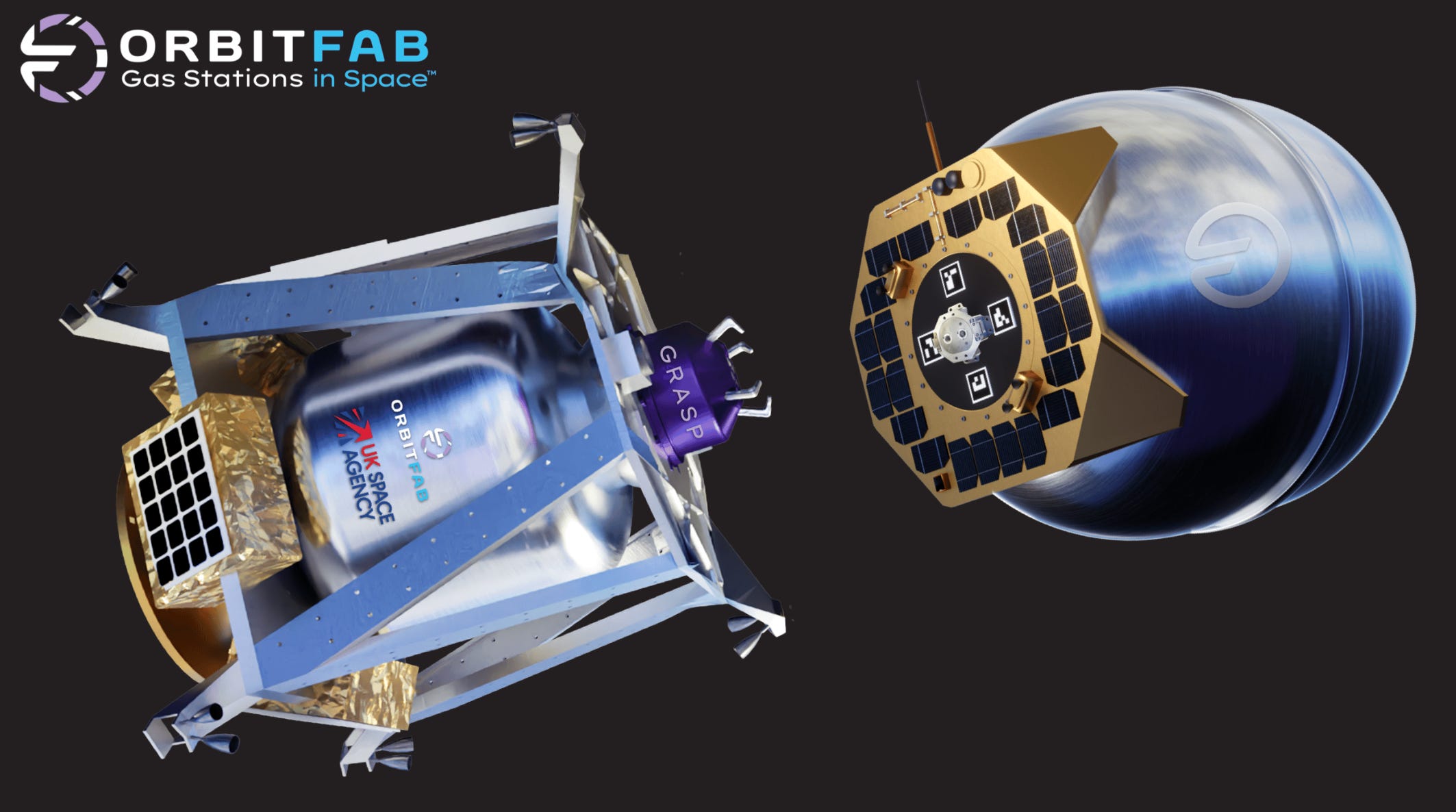
Orbit Fab has set its sights on establishing refueling infrastructure in space. The company recently announced the award of the initial phase of a contract valued at £1.3M ($1.7M) from the European Space Agency (ESA) and the UK Space Agency. This initiative aims to demonstrate in-space refueling capabilities by 2028, in collaboration with a consortium comprising partners from the UK, Austria, and Lithuania. The Advance Satcom Technology with Refueling and Logistics (ASTRAL) contract, co-funded through ESA’s ARTES program, represents a total investment of $3.8M.
Based in Colorado, Orbit Fab has achieved significant milestones toward the realization of routine and reliable space refueling services, including resupplying the International Space Station and developing the only refueling valve currently approved by the US Space Force. The ASTRAL mission marks Orbit Fab’s first major project in Europe, involving its UK subsidiary, and will validate the company’s RAFTI and GRASP refueling interfaces, a step toward satellite servicing and refueling.
“Our ASTRAL mission is focused on building European expertise in satellite refueling,” stated Jake Geer, Managing Director of Orbit Fab UK. The endeavor will be the first to refuel Xenon using technology developed in Harwell, leveraging European supply chains and partnerships.
Under ASTRAL, the consortium will utilize Orbit Fab’s GRASP interface to dock with satellites in orbit and transfer multiple propellants, Nitrous Oxide, Ethane, and Xenon, via the RAFTI fueling port. Key consortium members include KISPE Space Systems, Gate Space Innovation, Blackswan Space, and Indra Deimos, all contributing to the design and development of essential supporting technologies.
Though driven by civil agencies, the ASTRAL mission holds substantial significance for Europe’s sovereign defense ambitions, particularly as national governments seek greater autonomy in critical space capabilities. “Military organizations across NATO recognize that higher orbits, especially GEO, where secure communication satellites are prevalent, are increasingly contested,” Geer commented. “Maintaining freedom of maneuver is now crucial, and this fundamentally depends on reliable access to fuel.” Orbit Fab anticipates securing additional funding and welcoming new European partners to the consortium in the coming months.
Related:
UK backs next-generation satellite communications with £6.9 million investment