

Niron Magnetics and Moog Inc. to Develop Rare-Earth-Free Actuator Designs for Defense Applications
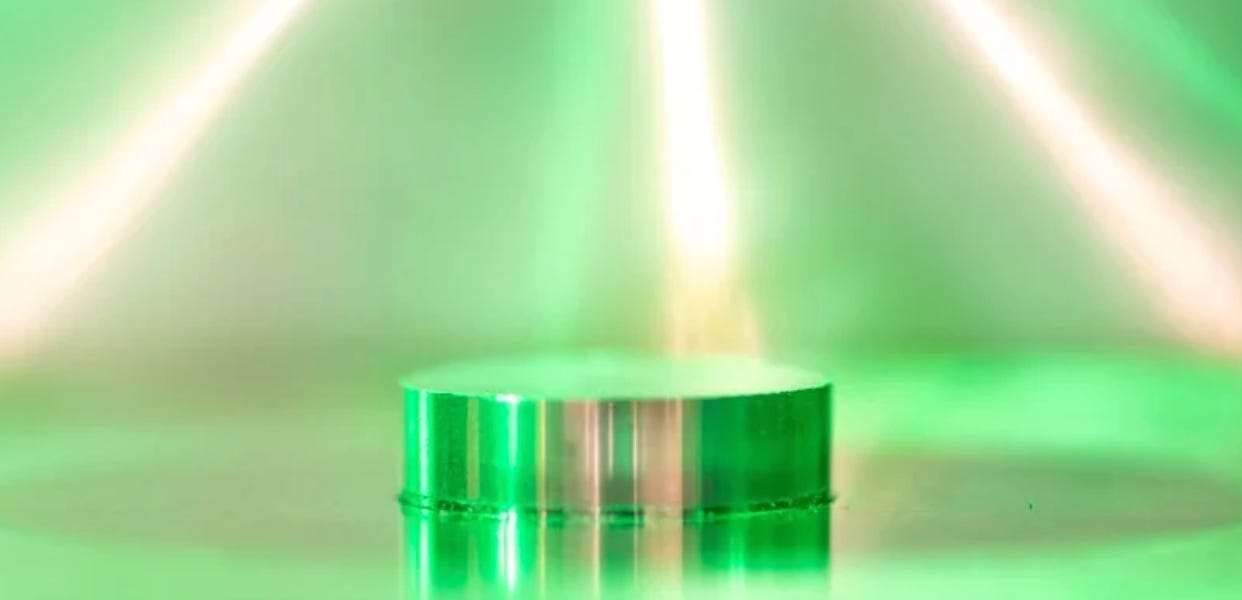
China’s response to President Trump’s tariffs in April has highlighted the United States’ continued dependence on China for rare earth elements, particularly those essential to military applications. Notably, Minneapolis-based startup Niron Magnetics has developed an innovative approach to reducing this reliance by manufacturing magnets that do not contain rare earth elements. Last week, Niron revealed its partnership with Moog (MOG.A), an aerospace and defense company, to evaluate and test these magnets within guided munitions systems.
As part of the collaboration, Moog and Niron aim to expedite the adoption of Niron’s rare earth-free magnets in Moog’s actuators for guided munitions. Actuators are electromechanical or electro-hydraulic devices that modulate a missile or projectile’s control surfaces, enabling accurate flight adjustments in response to navigational inputs.
Currently, most modern missile actuators utilize rare earth magnets, primarily composed of neodymium, iron, and boron (NdFeB), due to their magnetic strength, thermal stability, and capacity for miniaturization. The Pentagon has expressed significant concern regarding the concentration of rare earth mining and processing in China, which is responsible for 60% of global mining, according to the International Energy Agency, and over 90% of processing and magnet production. By contrast, the US accounts for only 1% of global rare earth production. This strategic vulnerability has prompted federal initiatives to diversify supply chains, including $400 million in funding for MP Materials and direct support to Vulcan Elements. Furthermore, legislation such as the FY2021 National Defense Authorization Act (NDAA) prohibits the use of Chinese-sourced magnets in Department of Defense applications by 2027 and mandates comprehensive origin tracking for magnets under the 2023 NDAA.
Niron Magnetics, founded from University of Minnesota research in 2014, is advancing iron nitride magnet technology, utilizing iron and nitrogen, which as both abundant elements in nature, to produce high-performance permanent magnets without rare earths. The company, which has secured $150 million in investment from corporations such as Samsung, GM, and Stellantis, as well as Volvo Cars Tech Fund, Volta Energy Technologies and AIN Ventures, has recently begun constructing a facility in Minnesota projected to meet 3% of US magnet demand when operational in 2027. The company is reportedly considering several states for its next 10,000-ton-per-year “world-scale” plant, which could provide more than 20% of U.S. supply after it opens in 2029. Meanwhile, Niron’s existing Minneapolis plant manufactures hundreds of magnets daily at a commercial scale, according to CEO Jonathan Rowntree. Beyond the U.S., Niron plans to build one factory somewhere in Europe and another in Asia. “It won’t be in China. It’ll be in Southeast Asia, most likely,” Rowntree added.
Niron reports that its iron nitride magnets match the performance of rare earth magnets at elevated temperatures, which is advantageous for missile and defense system manufacturers such as Moog. Rowntree commented: “We are providing the magnets, while Moog is applying its engineering expertise to optimize and thoroughly test their designs, ensuring our technology meets the rigorous standards required for their customer solutions. Considerable resources have been dedicated to developing their systems around our magnets.”
Although the partnership remains in its initial phases, both companies are committed to accelerating integration and thorough testing processes. Rowntree added, “Magnets are indispensable not only to national security but to contemporary society at large. Niron’s technology presents the opportunity to eliminate reliance on foreign sources within a relatively short timeline. The current situation necessitates a comprehensive response; multiple solutions are needed to reinforce the magnet supply for all critical applications.”
In response to evolving market dynamics, the diversification of supply chains has become increasingly crucial. The strategic partnership between Niron and Moog is in direct alignment with the U.S. Department of Defense’s revised Acquisition Transformation Strategy (ATS). Supply chain challenges are particularly significant for aerospace, defense, and critical infrastructure sectors, where consistent access to resources is fundamental to safeguarding national and economic interests. Through their collaboration, Niron Magnetics and Moog are advancing the Department’s objectives by promoting innovative solutions across diverse industries and strengthening supply chain resilience through the utilization of domestically produced, commercially viable technologies.
Related:
Moog and Aeon Combining Turrets and Missiles for 2026 Test