

Nemo Industries Aims to Strengthen U.S. Steel Supply Chain Using AI
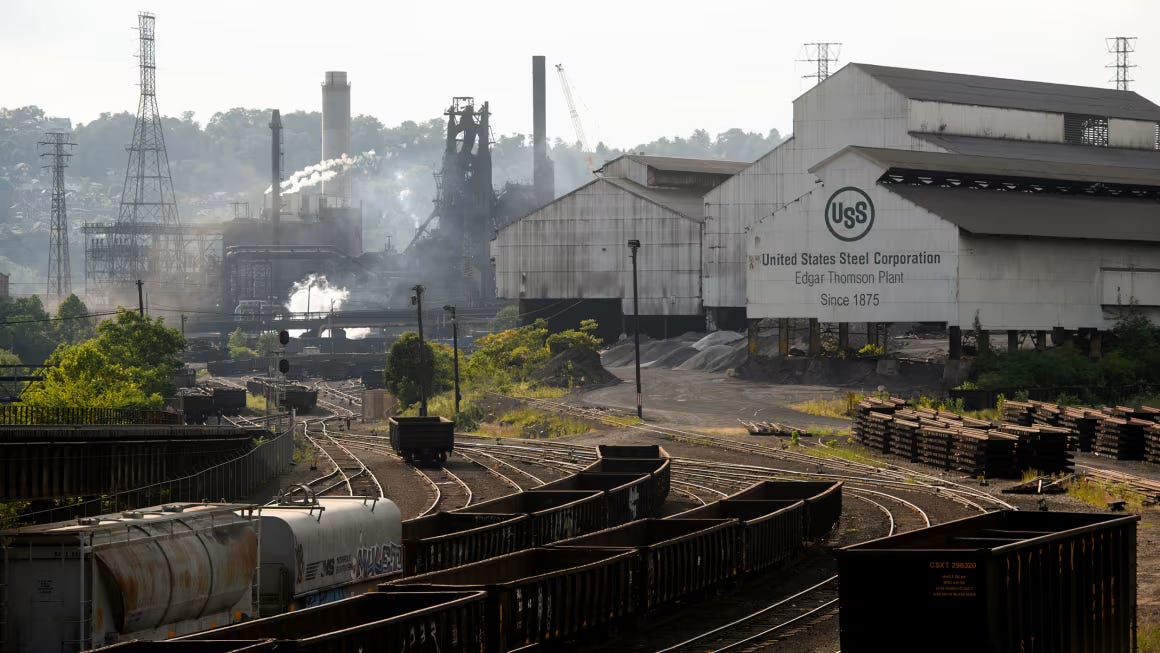
Daniel Liss, co-founder of social network Dispo and dating application Teaser AI, has identified a significant opportunity in the steelmaking sector. His journey into this industry began unexpectedly with several opinion pieces he authored for TechCrunch regarding antitrust enforcement in social media.
These articles attracted attention from policymakers in Washington, D.C., which led to an invitation for Liss to serve as a guest judge for a strategic war game capstone exercise at the National War College in spring 2023. The simulated scenario focused on U.S.-China competition over Taiwan and the South China Sea. Liss observed, “Our core supply chain, the arsenal of democracy, including the ships my grandfather served on, is lacking adequate shipbuilding capacity. Even if the capacity existed, we do not possess sufficient steel production,” he noted.
This realization sparked Liss’s intense interest in the steel supply chain, culminating in the founding of Nemo Industries. The central premise of his new venture aligns two prominent areas of concern in the United States: steel manufacturing and artificial intelligence. Operating in stealth until recently, Nemo Industries is now offering insights into its strategy.
Nemo aims to leverage AI to optimize pig iron production, addressing inefficiencies in an industry that Liss describes as significantly outdated. According to him, many plants currently rely on basic tools such as Excel spreadsheets or even manual methods, despite operators possessing extensive expertise that is difficult to scale. Unlike conventional industrial software providers, Nemo intends to construct and operate its own furnaces. Liss believes companies integrating AI from their inception can achieve a substantial margin advantage, estimated at 20% to 30%, over competitors. This approach requires considerable investment; for example, Hyundai Motor Group recently committed $6 billion to a steel plant in Louisiana. However, Nemo’s focus on pig iron, an intermediate material for alloy production, suggests potentially lower capital requirements.
Nemo plans to fuel its furnaces with natural gas, thereby reducing carbon dioxide emissions relative to traditional coal-based processes. The company is also exploring carbon capture solutions, supported by tax incentives under the Inflation Reduction Act, which Liss asserts enhances project profitability. Michael DuBose, Liss’s partner at Nemo, brings critical experience from Cheniere Energy, where he managed large-scale LNG infrastructure projects. Liss emphasizes the necessity of such expertise, given the ambitious scale required for success.
To date, Nemo has raised $28.2 million and is negotiating a $100 million Series A financing round with current investors. The company has reportedly received offers exceeding $1 billion in incentives from two southern states, contingent on constructing three facilities over 15 years. While challenging, Liss notes that foundational industries like steel have historically yielded outsized gains for early investors, citing examples such as Rockefeller, Carnegie, Mellon, and Frick.