

NASA's X-59 “Quiet” Supersonic Jet Completes Inaugural Flight
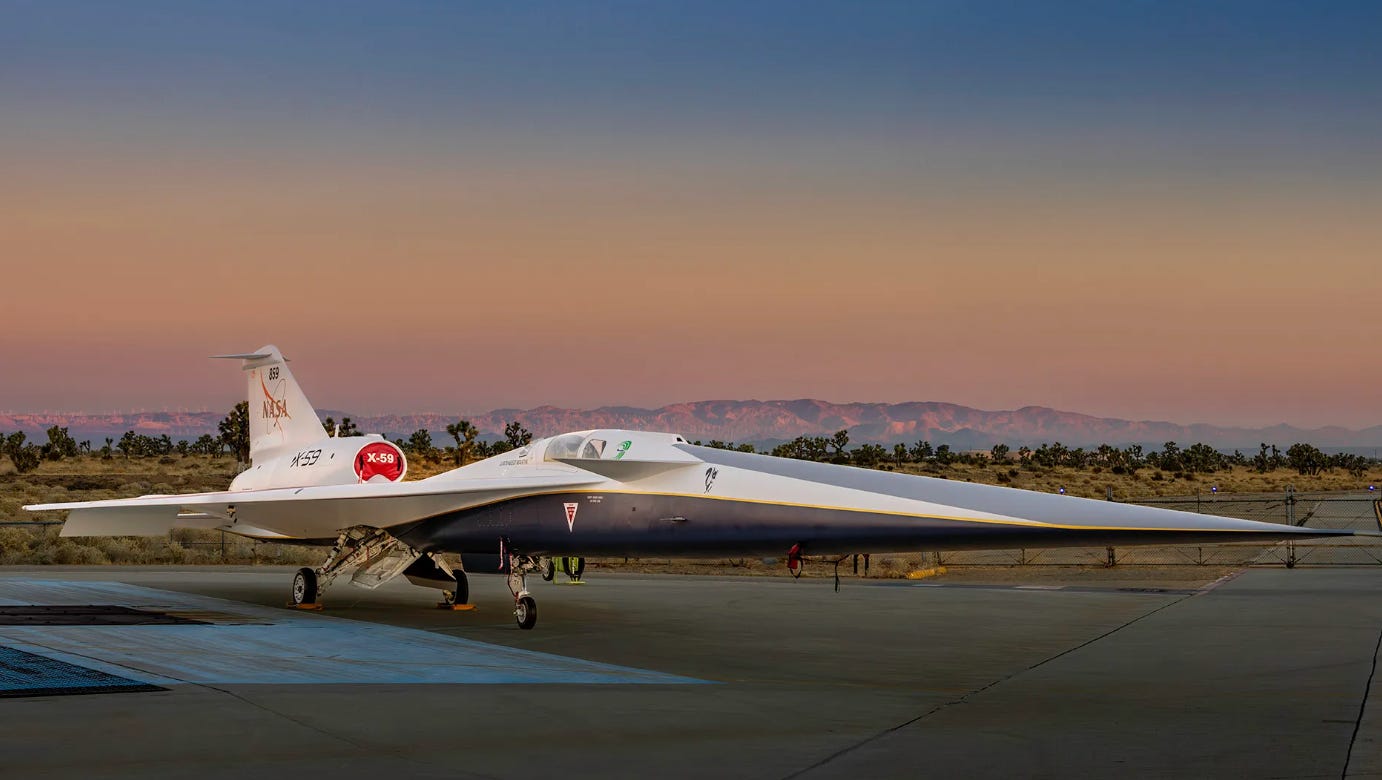
NASA’s X-59, an experimental jet designed to break the sound barrier without creating loud sonic booms, has successfully completed its first flight. The aircraft took off from Palmdale Regional Airport in California on October 28th.
The flight was not announced beforehand, but following the event, acting NASA administrator Sean Duffy commended the achievement in a Lockheed Martin statement. Built by Lockheed Martin’s Skunk Works in Palmdale, the X-59 is meant to demonstrate American innovation and could change aviation, Duffy said. According to Lockheed Martin, the X-59 performed flawlessly during its maiden flight.
During its test, the jet flew oval “racetrack” patterns above Edwards Air Force Base for just over an hour before landing there. The Armstrong Flight Research Center, located at Edwards, will now host the X-59 as it undergoes further testing, including flights over microphones in the desert and alongside other sensor-equipped aircraft to study its shock waves.
The X-59’s unique design allows it to travel faster than sound without producing the disruptive sonic booms that have kept supersonic flight banned over land in the U.S. since 1973. NASA aims to prove that “quiet” supersonic travel is feasible, potentially lifting these restrictions and paving the way for faster commercial flights. Supersonic speeds could also benefit industries such as disaster relief and medical transport.
Supporting these efforts, President Trump issued an Executive Order directing the FAA to begin repealing the ban on supersonic flight over the country. Other U.S. companies are joining the push for advanced supersonic aircraft. Notably, Colorado-based Boom Supersonic’s XB-1 jet broke the sound barrier in January 2025, marking the first time an independently-developed commercial plane achieved supersonic flight over mainland United States.