

Long Wall Introduces Cyclops Interceptor
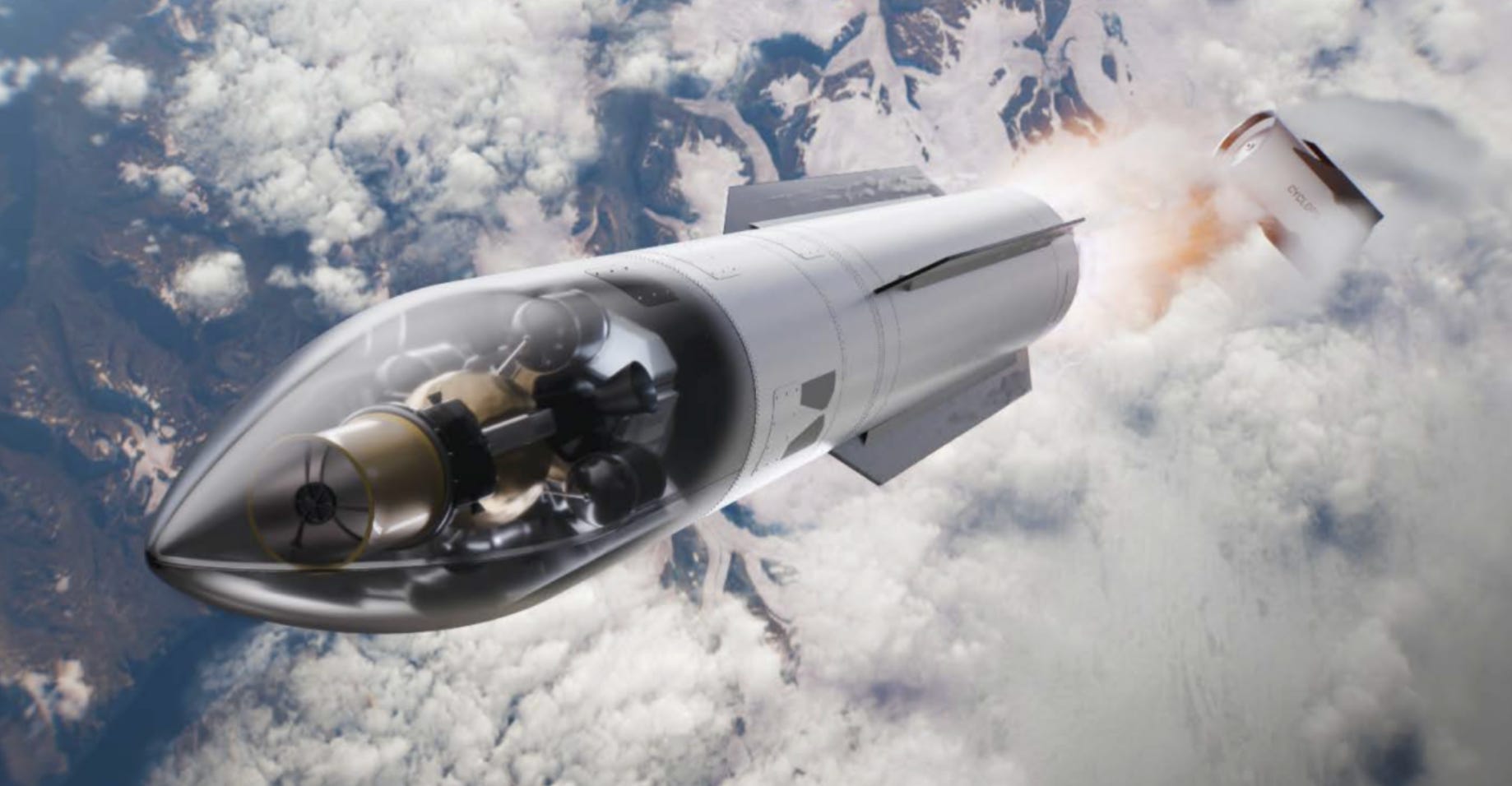
Despite persistent cost concerns surrounding the Golden Dome initiative, interest in cutting-edge missile defense remains high. Today, Long Wall, previously known as ABL Space Systems, unveiled “Cyclops,” a new surface-launched, exoatmospheric missile interceptor designed to tackle threats during their midcourse flight.
Cyclops aims to be a more affordable alternative to current interceptors like the Navy’s SM-3, which can cost up to $30 million each. According to Long Wall, Cyclops can be produced in large quantities at a much lower price. “There are several areas within missile defense that need improvement, but we see midcourse, surface-launched interceptors as the most urgent gap,” said Dan Piemont, Founder and CEO of Long Wall.
Missile interception remains a global strategic priority, with countries such as the United States, Ukraine, Taiwan, and Australia pursuing advanced capabilities. This demand has spurred startups like Castelion to meet emerging needs. High-performance interceptors used by US and allied forces, including THAAD and Patriot systems, are costly and difficult to produce rapidly. Recent conflicts have highlighted how quickly missile stocks can dwindle and how challenging restocking is.
Piemont cited the US conflict with Iran, during which roughly 80 SM-3 missiles were launched from Navy destroyers and 150 THAAD missiles deployed. “It will take years to rebuild those inventories lost in just two weeks of fighting, and that wasn’t even against a major adversary,” he noted. “In a longer or larger-scale war, the consequences could be far greater.”
Cyclops is distinctly different from smaller anti-drone interceptors; while technical specifics remain confidential, Piemont emphasized that it belongs in the higher performance tier of U.S. weaponry. The interceptor features an exoatmospheric kill vehicle capable of high-speed engagements suitable for both regional and continental defense, able to deal with fast-moving threats and equipped to counter certain defensive measures.
Designed for compatibility with existing U.S. military launch systems, and Long Wall’s own containerized launcher, the Cyclops offers operational flexibility for use on land or sea. Missions range from homeland defense against ICBMs to upgrades for allies’ integrated air and missile defense systems, targeting MRBMs, ICBMs, and hypersonic glide vehicles.
The company did not provide details about any contracts for Cyclops, but Piemont confirmed ongoing tests since early this year, with further trials and demonstrations set for 2026. Long Wall claims its facilities can manufacture over one hundred Cyclops units annually, with scalability and mass production central to its design.
Piemont added, “It’s been decades since the U.S. introduced an entirely new interceptor in this category. Most current models stem from older designs. Cyclops was developed to enable efficient, large-scale production, representing a significant leap forward for the industry.”
Long Wall, originally established 2017 in El Segundo, California as ABL Space Systems by Harry O’Hanley and Dan Piemont, former employees of SpaceX and Morgan Stanley, has evolved considerably since its inception.
In 2018, the company entered into a lease agreement with Camden County, Georgia to support future operations at Spaceport Camden. In 2019, Long Wall expanded its testing operations and facilities by signing with Spaceport America in New Mexico; however, as of October 2022, this location is no longer referenced on the company’s facility list. By 2021, the firm had leased facilities at the Port of Long Beach, previously occupied by Sea Launch.
March 2023 marked a significant milestone when Long Wall received a $60 million contract from the U.S. Space Force and the U.S. Air Force Strategic Funding Increase program. This funding was allocated to enhance the company’s ‘responsive launch’ operational capabilities. By 2024, Long Wall had secured over $500 million in funding for the development and operation of its rocket projects, drawing from both venture capital and major client launch contracts.
However, the venture struggled to gain traction, with two failed orbital launches in 2023 and 2024. Competing against major companies like SpaceX and Rocket Lab and facing financial difficulties, ABL decided to change direction.
In November of 2024, after almost 8 years of failing to achieve a successful commercial launch, the company announced a strategic pivot toward military applications, aiming to adapt its past launch vehicles and engines for missile defense technologies.
In February 2025, Piemont revealed that the organization would rebrand as Long Wall, inspired by the historic Long Walls of Ancient Athens, and the company’s new focus would center on the advancement of missile defense systems and hypersonic flight test vehicles.
Long Wall’s pivot reflects a wider movement among space startups toward defense-related initiatives, prompted by challenges competing in the commercial sector as well as anticipated profitable prospects resulting from escalating geopolitical tensions and growing interest from the Pentagon in hypersonic technologies and missile defense systems.
Long Wall is currently based in Long Beach, CA.