

Israel Reveals Breakthrough in Laser Defense System
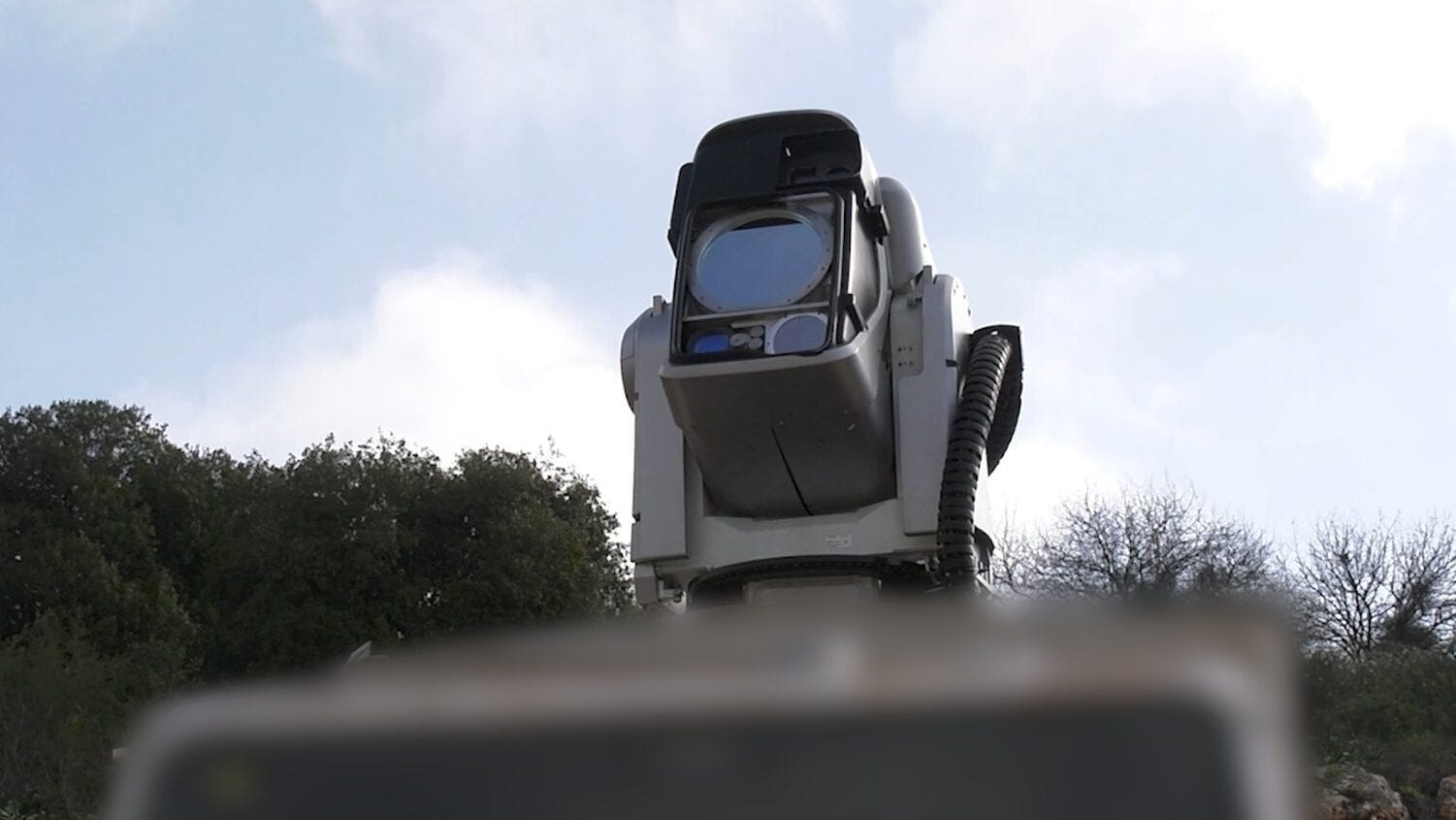
Israel has unveiled the operational use of a new laser-based air defense system, marking a significant advancement in military technology. This system successfully intercepted 30 to 40 drones, primarily launched by Hezbollah, during recent hostilities in Lebanon. The groundbreaking technology, developed in record time following the October 7 attack, represents a revolutionary advancement in aerial defense capabilities, offering rapid and cost effective interceptions, that military officials say opens a new chapter in modern warfare capabilities.
The Israeli military confirmed that the mobile laser system developed by Rafael Advanced Defense Systems was utilized operationally for the first time during the conflict. This high-energy beam system neutralizes unmanned aerial vehicles (UAVs) at short range, with an estimated power output of several tens of kilowatts. The platform incorporates foreign-developed laser technology and signifies an advanced prototype among Rafael’s laser programs.
Israel has previously employed laser weapons, including Elbit Systems’ "Sky Shield," which protects commercial aircraft and executive jets from missile attacks. The "Iron Beam" system, currently under development, aims to intercept rockets, mortars, cruise missiles, and drones, complementing existing systems such as Iron Dome, David’s Sling, and Arrow. This system integrates with Iron Dome batteries and is expected to become operational within the next year, incorporating artificial intelligence to determine appropriate interception methods. Daniel Gold, the head of DDR&D said Israel is the first country in the world to “demonstrate large-scale operational laser interception capabilities.”
Iron Beam development involves collaborative efforts by the Defense Ministry’s Research and Development Directorate, Rafael, and Elbit. A $2 billion procurement deal was signed for thousands of Iron Beam units, with additional U.S. military aid earmarked for future acquisitions. The deployment of Iron Beam signifies the onset of a new era in battlefield technologies.
Laser weapons operate by emitting focused, high-intensity beams capable of long-distance targeting and burning through targets silently and invisibly. Lasers can be very useful as part of a larger web of air defenses, able to knock out smaller, slower targets. They offer advantages in speed, precision, stealth, and cost, but face limitations in power, range, and susceptibility to bad weather conditions. Notably, while costing almost nothing to fire, the setup costs for these laser systems are huge. However, the interceptor missiles for Israel's vaunted Iron Dome short-range air defense system cost tens of thousands of dollars each, causing costs to quickly escalate when defending against high numbers of targets.
Globally, various nations have pursued laser weapon development, with Israel poised to integrate these systems into its operational air defense. The strategic and psychological impacts of deploying Iron Beam near conflict zones influence enemy decision-making. Future objectives include enhancing laser power to facilitate ballistic missile interception and developing mobile and maritime platforms, expanding the scope of laser defense capabilities.
As warfare becomes increasingly reliant on drone technology—seen most visibly in Ukraine and Russia’s tit-for-tat strikes involving hundreds of UAVs each week—Israel’s laser defense systems offer something rare: proven battlefield results at a fraction of the price. The cost per interception of Israel’s 30 kilowatt Iron Sting laser is just a few dollars, limited to the electricity required to power the laser. By comparison, interceptor missiles or air-to-air munitions can cost hundreds of thousands of dollars per engagement. However, drone technology continues to evolve at a rapid pace and could end up fitted with countermeasures to make it much harder for lasers to intercept.
Israeli companies Rafael Advanced Defense Systems and Elbit Systems are already part of NATO supply chains, and their new laser systems could become significant exports, pending diplomatic issues. Despite over 10,000 successful interceptions, Israel's Iron Dome system hasn't been sold as a complete platform abroad, though parts have been purchased by the UK and US. This contrasts with the successful international sales of other Israeli defense systems like Arrow 3, David’s Sling, and Barak MX. Other Israeli weapons such as Rafael’s Spike anti-tank guided missiles and Elbit’s PULS rocket artillery system have gained traction within NATO.
Israel is optimistic about global adoption of its laser-based interception technology, betting billions on Iron Beam and Iron Sting, which offer promising capabilities for short-range rocket interception as well as mobile deployment on armored vehicles. However, the success of exports also relies on geopolitical factors, particularly the growing European criticism of Israeli operations in Gaza.
France, for instance, reportedly tried to persuade Germany not to purchase the Arrow 3 system. Other European countries have minimized their acquisition of Israeli-made systems due to domestic political concerns. While some European defense ministries are keen to acquire Israeli technologies, officials face increasing constraints from the political environment.
Nonetheless, the security rationale remains compelling. NATO states such as Finland, Sweden, Poland, and Germany, which are increasingly worried about potential Russian aggression, regard laser interception systems as an essential new layer of defense. Although the United States has deployed 60-kilowatt laser systems on naval vessels, Israel appears to be on the verge of becoming the first country to deploy a land-based laser system in operational service.
Related:
Israel has used ‘high-power lasers’ to down ‘scores’ of threats to homeland
Historic breakthrough: IDF reveals Iron Beam-like laser defense shot down dozens of aerial threats
Revealed: Israel deployed laser weapons to intercept dozens of drones in war