

Isar Aerospace: the Company Pioneering Europe's Access to Space
Introduction
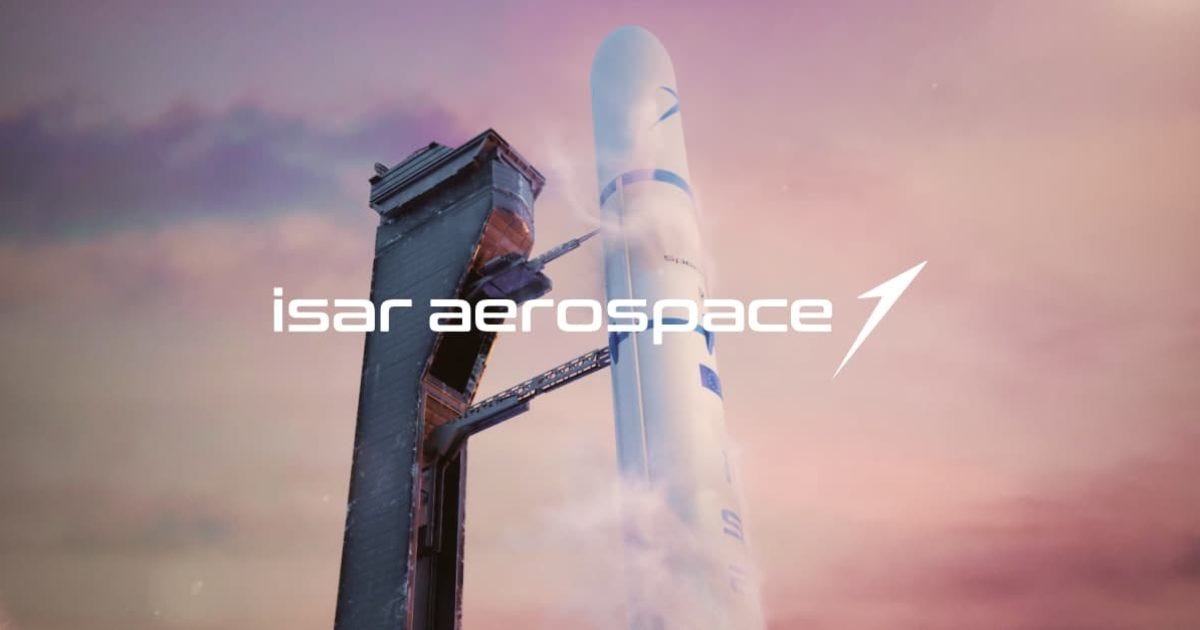
ISAR Aerospace, a Munich-based German aerospace company founded in 2018, is at the forefront of Europe's burgeoning private space industry. Named after the Isar River that flows through Munich, the company is dedicated to providing affordable, sustainable, and flexible access to space for small and medium-sized satellites. Through a vertically integrated approach, significant funding, and innovative technology, ISAR Aerospace is poised to make history with the upcoming launch of its Spectrum rocket. As of March 17, 2025, the company is in the final stages of preparation for its maiden test flight, scheduled for no earlier than March 20, 2025. This article reviews ISAR Aerospace, its flagship product—the Spectrum rocket—and the details surrounding its highly anticipated first launch.
Company Overview
ISAR Aerospace was established in 2018 by founders Daniel Metzler (CEO), Markus Brandl, and Josef Fleischmann, emerging as a spin-off from the Technical University of Munich’s rocket technology initiative, WARR. The company's mission is to lower barriers to space access, making it cost-efficient and sustainable for satellite constellations and other payloads. Headquartered in Ottobrunn, near Munich, ISAR employs over 400 individuals from more than 50 nations, reflecting its diverse and international workforce.
The company has raised over €400 million in funding, positioning it as one of the most well-capitalized launch startups in Europe. Key funding milestones include:
· Seed Round (2018): Initial angel investment from Bulent Altan (former SpaceX executive) and others.
· Series A (April 2020): $17 million led by Earlybird Venture Capital and Airbus Ventures.
· Series B (December 2020): $91 million led by Lakestar, with participation from HV Capital, Vsquared Ventures, and others.
· Series C (March 2023): $165 million from investors including 7-Industries Holding, Bayern Kapital, and Lombard Odier.
· Series C Extension (2024): An additional $70 million from the NATO Innovation Fund and others.
Additional grants, such as the €10 million European Innovation Council (EIC) Horizon Prize for “Low-Cost Space Launch” awarded in January 2022, have further bolstered ISAR's financial position. This funding has enabled the company to pursue its ambitious goal of developing and launching the Spectrum rocket, a two-stage orbital launch vehicle designed to compete in the growing small satellite launch market.
ISAR Aerospace distinguishes itself through its vertical integration strategy, manufacturing approximately 80% of its rocket components in-house. This approach reduces dependency on external suppliers, cuts costs, and allows for greater control over technology development. The company leverages advanced manufacturing techniques, such as 3D printing for rocket engines and automated processes for carbon composite structures, to achieve high efficiency and scalability.
Products: The Spectrum Rocket
The cornerstone of ISAR Aerospace’s offerings is the Spectrum rocket, a two-stage, liquid-fueled launch vehicle designed specifically for small and medium satellites. Spectrum aims to provide a flexible, cost-effective solution for deploying payloads into low Earth orbit (LEO) and sun-synchronous orbit (SSO), targeting a price point of approximately €10,000 ($11,700) per kilogram.
Specifications
· Payload Capacity:
· Up to 1,000 kg to low Earth orbit (LEO).
· Up to 700 kg to sun-synchronous orbit (SSO).
· Stages: Two stages, both powered by ISAR’s in-house developed Aquila engines.
· Propellant: Liquid oxygen (LOX) and propane, chosen for their high energy density, non-toxic properties, and environmental friendliness.
· Height: Compact design, though exact dimensions are not publicly specified, optimized for efficiency and payload performance.
· Engines:
· First Stage: Nine Aquila engines, providing the primary thrust for liftoff and ascent.
· Second Stage: One Aquila engine, equipped with a multi-ignition system for precise orbital insertion, eliminating the need for an additional kick stage.
· Structure: Primary structure made from a single-part carbon composite, manufactured using automated processes for lightweight durability and scalability.
· Price Point: Targeted at €10 million per launch, making it competitive in the small launch vehicle market.
Technology Highlights
The Spectrum rocket incorporates cutting-edge technologies to maximize performance and reduce costs:
· Aquila Engines: Developed entirely in-house, these engines use a turbopump to deliver propellant at high pressure. The second-stage engine’s multi-ignition capability allows for multiple burns, enhancing flexibility for complex mission profiles. In 2023, ISAR conducted 124 hotfire tests of the Aquila engine at Esrange, Sweden, with one engine fired six times without refurbishment, exceeding performance expectations.
· Additive Manufacturing: Complex engine components are 3D-printed from high-performance metals, reducing part count and lead times while improving design flexibility.
· Carbon Composites: The rocket’s lightweight structure enhances payload capacity and is produced through automated manufacturing, ensuring consistency and scalability.
· Non-Toxic Propellants: The use of LOX and propane aligns with ISAR’s commitment to sustainability, offering high performance without the environmental drawbacks of traditional fuels.
Launch Configurations
Spectrum offers three mission profiles to accommodate diverse customer needs:
· Dedicated Launch: Customers determine the orbit and launch time for a single payload.
· Lead Launch: A primary customer sets the destination and timing, with additional payloads sharing the ride.
· Rideshare: Routine missions to predetermined orbits, ideal for smaller satellites seeking cost-effective access.
This flexibility positions Spectrum as a versatile option for satellite operators, research institutions, and commercial entities.
Upcoming Launch: Spectrum’s Maiden Flight
As of March 17, 2025, ISAR Aerospace is on the cusp of a historic milestone: the first test flight of the Spectrum rocket. The launch is scheduled to occur no earlier than March 20, 2025, from the Andøya Spaceport in Norway, pending weather, safety, and range availability conditions.
Launch Site: Andøya Spaceport, Norway
ISAR Aerospace has a 20-year exclusive lease at Andøya Spaceport since April 2021. Located in northern Norway, it is ideal for reaching sun-synchronous and polar orbits. The Spectrum rocket is on-site for final testing.
Preparations and Milestones
ISAR tested the Aquila engines extensively, including a 30-second static fire test of the first stage on February 14, 2025, followed by tests on both stages by March 2025. A full-up static fire test on February 21, 2025, confirmed the readiness of the nine first-stage engines and single second-stage engine. On March 17, 2025, ISAR received launch approval from the Norwegian Civil Aviation Authority, with the final license expected soon.
Payload and Mission Profile
The inaugural flight will carry approximately 150 kg of payload, including seven small satellites from five European institutions. This test aims to demonstrate Spectrum’s capability to deliver payloads to polar orbit.
Timeline and Delays
Initially planned for 2022, the launch was delayed to 2023, then 2024, and finally 2025 due to technical challenges and thorough testing. ISAR's commitment to reliability has been emphasized by CEO Daniel Metzler.
Future Launches
ISAR plans a second test mission within six months, carrying 19 spacecraft from various customers. Commercial launches are booked, including:
· D-Orbit (2025+): ION space tug to SSO.
· Exotrail (2024-2029): Multiple launches for spacedrop service.
· Arctic Ocean Surveillance (by 2028): Two satellites with the Norwegian Space Agency.
ISAR aims for 30-40 launches per year long-term, including operations from the Guiana Space Centre.
Strategic Importance and Market Position
ISAR Aerospace is a key player in the small satellite launch market, alongside competitors like Rocket Factory Augsburg, HyImpulse Technologies, Rocket Lab, and SpaceX. Its vertical integration, competitive pricing, and European focus provide a unique advantage. Partnerships with Airbus Defence and Space, DLR, and political support highlight ISAR's role in enhancing European space sovereignty.
Summary
ISAR Aerospace prepares for Spectrum’s first test flight on March 20, 2025. With innovative technology and a vision for sustainable space access, ISAR is set to lead the European NewSpace ecosystem. The success of this launch could signal Europe's growing independent space capabilities, paving the way for satellite deployment and scientific exploration.