

Igniting a US Manufacturing Revival with Foundation Alloy
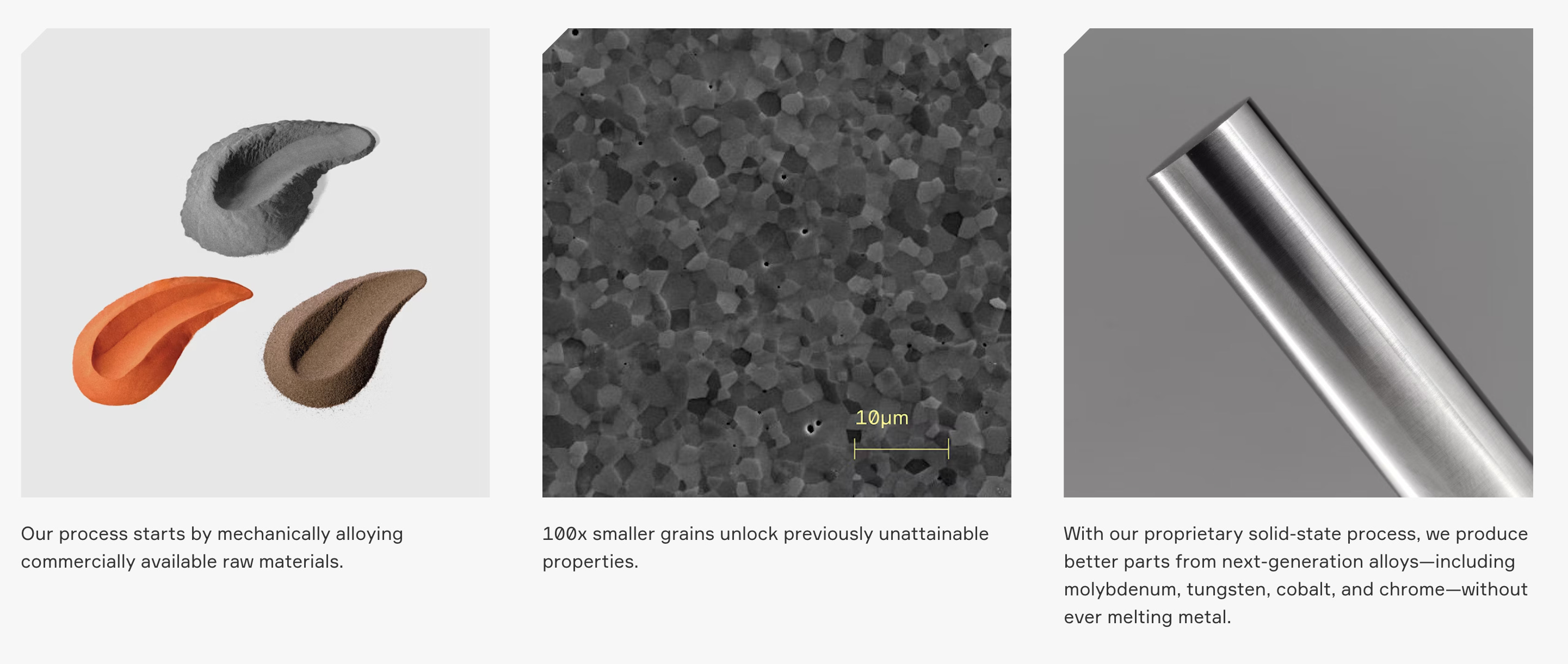
Not all advancements in defense technology involve aircraft or drones. Occasionally, innovations arise from the very materials used to construct sophisticated systems, such as metals.
On May 7th, advanced metals manufacturing company, Cambridge, MA-based Foundation Alloy, announced a $7.5M funding round, led by Alumni Ventures, America’s Frontier Fund, Engine Ventures, El Cap, Material Impact, and Yamaha Motor Ventures. This follows the company’s $10.5 million seed round, co-led by The Engine and Material Impact, with participation from Safar Partners. According to CEO Jake Guglin, the company will utilize the funds to increase production of its highly efficient metals. “Metal is involved in some way across almost every industry in the world, yet we continue to rely on materials and processes developed in the 1950s. The newest, most innovative applications need a new foundation of advanced materials and processes to build on,” said Guglin during the 2022 fundraise. “By enabling a higher echelon of performance, while also increasing the speed, flexibility and reliability of the metal parts supply chain, we will support the next generations of products in critical industries.”
Traditionally, alloy creation involves extreme heat to melt a base metal and subsequently add another metal. Although the final product may be stronger than the base metal, the melting process can compromise the microstructures of the metals, Guglin noted. Consequently, metals produced through conventional methods may not endure the heat generated by high-performance engines. Additionally, traditional alloying is energy-inefficient due to the necessary heat levels.
Guglin, along with Jasper Lienhard, and professors Chris Schuh and Tim Rupert founded Foundation Alloy in 2022 to address these issues. Utilizing techniques developed in MIT and UC Irvine laboratories, they engineered ultra-strong alloys that require no heat for production. The central method employed is mechanical alloying, which physically binds different metals together rather than melting them. Metal powders are combined with small metal balls termed media. As the machine operates, these balls collide with the metal powders, causing them to bond. The resulting compound metal particles are entirely homogeneous, with grain sizes about 100 times smaller than usual. “Essentially, we have blended the materials down to the atomic level through a purely mechanical and kinetic process,” Guglin stated.
Guglin suggested that his company's metals will revolutionize defense manufacturing in the United States. Initially, they could enhance tooling—the equipment required to fabricate large-scale defense systems. “[Tooling] may not be glamorous, but it is ultimately one of the most critical elements influencing production quality, rate, efficiency, and costs,” he remarked. He also indicated that their metals could significantly improve engines, aircraft, and ships. “For instance, if we can develop a metal capable of operating at temperatures several hundred degrees higher than current possibilities, this would result in more powerful, faster, and more efficient jet engines,” he added.
The U.S. metals industry has been losing competitiveness for years despite tariffs and protectionist policies. The real issue is a lack of innovation. Foundation Alloy is a rare success in this field. The company is transforming how industrial metals are made and strengthening America's industrial abilities. Steve Weinstein, General Partner at America’s Frontier Fund, stated, “The next industrial revolution won’t be led by software alone but by companies like Foundation Alloy. AFF invests in advanced materials because they are crucial for national security and economic competitiveness.”