

Hydrosat Raises $60 Million in Series B for Constellation Expansion
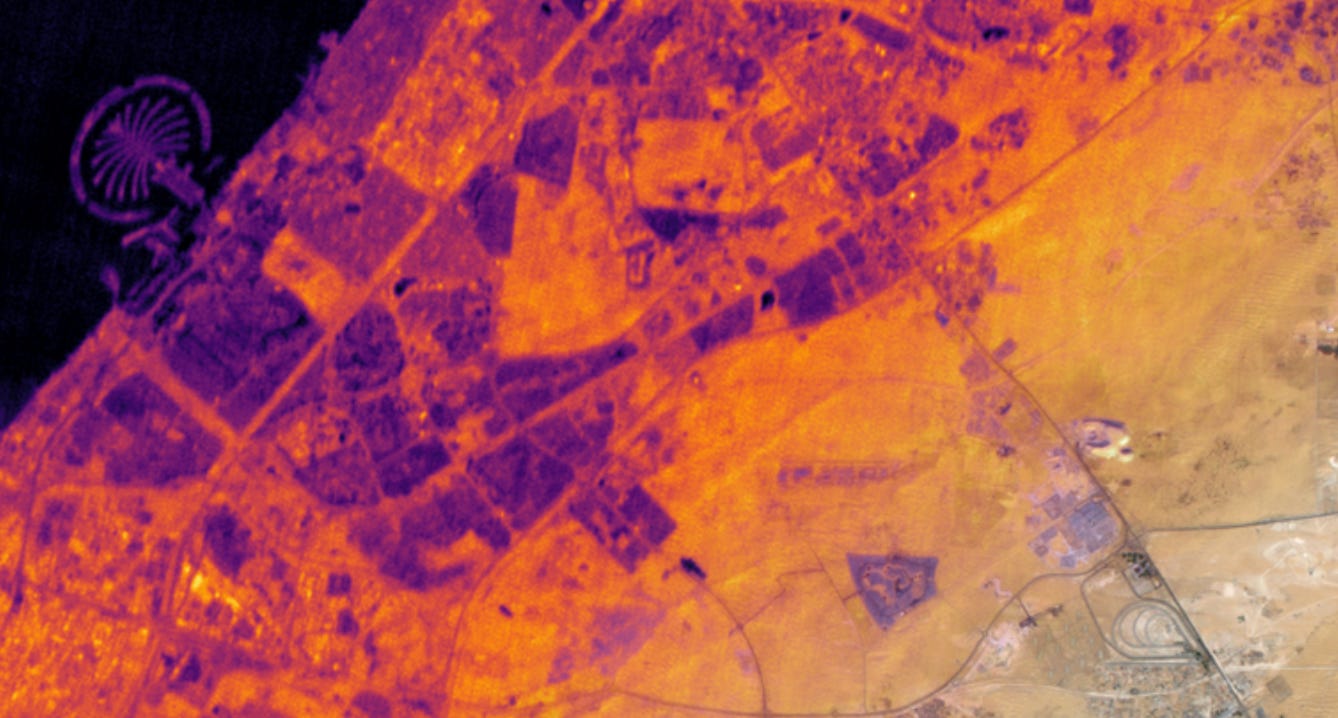
Thermal imaging startup focused on water resource management, Hydrosat, has announced a $60 million Series B funding round to meet the growing demand for its Earth observation (EO) data. The round was led by Hartree Partners, Subutai Capital Partners, and Space4Earth, with participation from Truffle Capital, the Luxembourg Future Fund, OTB Ventures, Blue Bear Capital, Statkraft Ventures, Cultivation Capital, and Santa Barbara Venture Partners.
With this new funding, Hydrosat, founded in 2017 and based in Luxembourg and Washington, aims to expand beyond its current two thermal-infrared satellites in orbit, which provide customers with imagery and data products that reveal water stress in agriculture. Funding will accelerate the growth of Hydrosat’s constellation, with the next block of satellites scheduled to be operational by 2027. The upcoming block will enable Hydrosat to deliver enhanced capacity and resolution to customers to meet a broader spectrum of high-value applications in natural resource management and national security.
“We’re seeing remarkable momentum behind Hydrosat’s mission,” Hydrosat CEO and co-founder Pieter Fossel said in a statement. “This new funding underscores the company’s sustained growth and positions us to meet the increasing demand for intelligent solutions to some of society’s most complex challenges in national security and natural resources.”
Over the upcoming 18 months, Hydrosat also plans to double its workforce, prioritizing the hiring of engineers and boosting its business development team to keep up with rapid demand. The investment will support the company’s global expansion in regions such as Central Asia, the Middle East and North Africa, India, and Latin America. Hydrosat has already hired sales staff in India, Spain, UAE, and Colombia, with plans for more international offices next year as part of its Series B strategy to boost export revenue. “We’re making substantial investments in our global expansion,” said Fossel. “That includes reinforcing our core US government contracts and broadening our international and sovereign governmental offerings in agriculture, resource management, and national security.”
Recently, the increasing need for Earth observation imagery and advancements in AI have made Hydrosat a valuable partner for both defense and commercial sectors. “Our data is designed to be AI-ready and machine-readable,” Fossel explained. “It provides location, temperature signature, and timestamp, all of which feed directly into AI models.” This capability enables customers to observe subtle changes that might otherwise go unnoticed - like tracking water usage and soil health for agriculture, or monitoring the thermal output of industrial sites.
Government agencies in particular, apply Hydrosat observations to food security, public safety and national defense. Hydrosat’s federal clients currently include the National Reconnaissance Office (NRO) and the National Oceanic and Atmospheric Administration (NOAA). The company also maintains active contracts with the U.S. Air Force focused on enhancing weather modeling capabilities for national defense.
In defense especially, Hydrosat plays an increasingly important role within an integrated ecosystem of EO solutions. Its spacecraft collect over 10 million square kilometers of imagery daily, making them ideal for “tip and cue” strategies: Hydrosat can identify temperature anomalies, such as ships at sea or troop movements along borders, prompting other high-resolution optical or SAR satellites to investigate further. Unlike typical optical EO satellites, Hydrosat’s technology delivers insights at night and can detect heat signatures through camouflage, dense forests, or even underground.
“Hydrosat’s data is rapidly becoming essential infrastructure for managing water resources,” Hartree Partners head George Potts said in a statement. “By providing continuous, regional or field-level insights into irrigation patterns and best practices, the company gives governments, agribusinesses, and communities the clarity they need to build resilience.”