

HavocAI Raises $85 Million to Supply Autonomous Boats for U.S. Military
Following the enactment of President Trump’s legislation allocating billions of dollars towards the rapid prototyping and integration of artificial intelligence systems for the Department of Defense, startups have accelerated their efforts to secure funding in order to compete for these resources.
One such enterprise is HavocAI, headquartered in Rhode Island, which demonstrated its autonomous vessels last summer and has subsequently commenced sales to the U.S. military and its allies. The company recently secured $85 million in venture capital, enabling it to scale production of thousands of autonomous boats and integrate its technology stack into new vessel types efficiently, according to co-founder and CEO Paul Lwin.
Lwin indicated that, upon announcement of the reconciliation bill, existing investors urged swift action in capital acquisition rather than a protracted fundraising process. Consequently, HavocAI completed its latest round in just three months, bringing its total capital raised since inception in January to nearly $100 million. This round featured participation from B Capital, Up.Partners, Scout Ventures, Outlander Ventures, the CIA’s venture capital arm In-Q-Tel, Lockheed Martin, and Taiwania Capital, positioning HavocAI to pursue a share of the $3.3 billion allocated specifically for medium and small unmanned surface vessel development.
Lwin and co-founder Joe Turner both possess military backgrounds. Lwin, originally a Myanmar refugee, served as a Navy EA-6B Prowler pilot, while Turner was a naval surface officer who later founded an autonomous systems company. Together, they established HavocAI in January 2024. Since its launch, HavocAI has expanded its workforce to 80 employees.
HavocAI’s approach centers on rapid and cost-effective manufacturing. For years, U.S. military officials have criticized the slow and expensive process of domestic shipbuilding, where constructing a Navy vessel may take up to six years - contrasted with the one to two years typical for commercial ships due to advanced technology and specific requirements.
However, Lwin asserts that commercially produced boats are suitable for defense applications. He emphasizes innovation not in the vessel itself, but in the technologies that transform these boats into autonomous systems capable of interconnection. HavocAI collaborates with commercial boat manufacturers to produce standard-sized boats, retrofitted with its proprietary autonomous software employing AI algorithms and perception models akin to those used in self-driving cars.
The company debuted its Rampage vessel at “Silent Swarm,” a two-week U.S. Navy experimentation event last summer, after which the Navy acquired a dozen 14-foot vessels at $100,000 each. Lwin stated that the pricing strategy aims to make such vessels expendable, similar to munitions, facilitating large-scale deployment without significant financial loss. Larger vessels under development with Lockheed Martin will command higher prices. Since Silent Swarm, HavocAI has operated an additional 20 boats as a contractor for the Army, Navy, and Defense Innovation Unit, expanded its technology to 38-foot Seahound and 42-foot Kaikoa vessels, and is currently testing a single 100-foot Atlas vessel in Rhode Island.
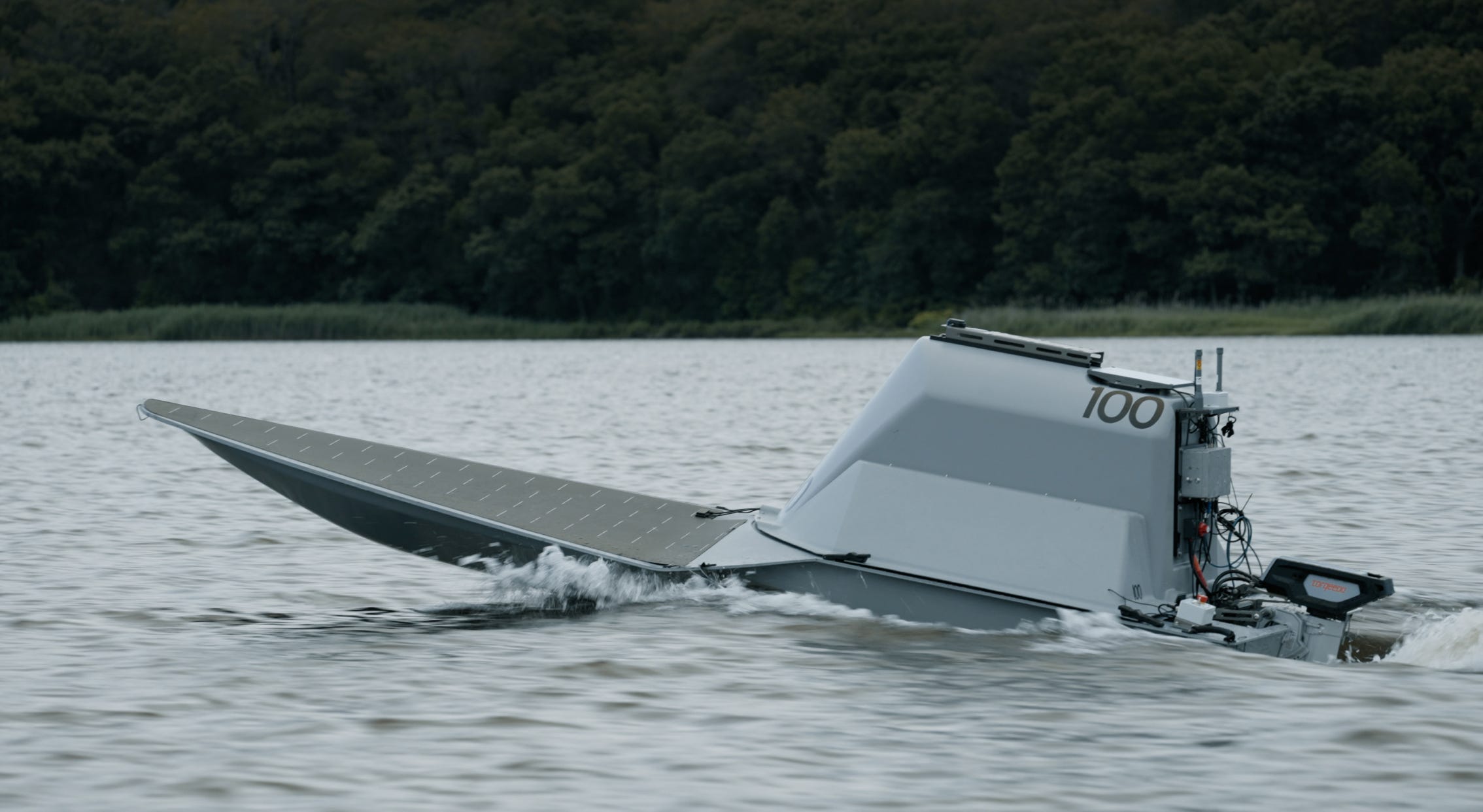
Lwin envisions the use of the company’s boats to create distributed sensor networks across thousands of vessels for enhanced situational awareness over vast regions. The Army and Marine Corps could employ the 14-foot boats for logistical tasks, transporting up to 300 pounds of supplies without endangering personnel. Polish forces are reportedly testing HavocAI vessels for intelligence gathering in the Baltic Sea. Boatbuilder Metal Shark recently announced plans to integrate HavocAI’s autonomous platform within its existing fleet of unmanned surface vessels. HavocAI is among several American defense technology firms, including RapidFlight, Kratos Unmanned Aerial Systems, and Cyberlux, sanctioned by China at the end of last year for providing U.S. arms to Taiwan. The maritime autonomous systems market now features multiple competitors, such as Blue Water Autonomy.