

GRU Space Opens Bookings for Planned Lunar Hotel
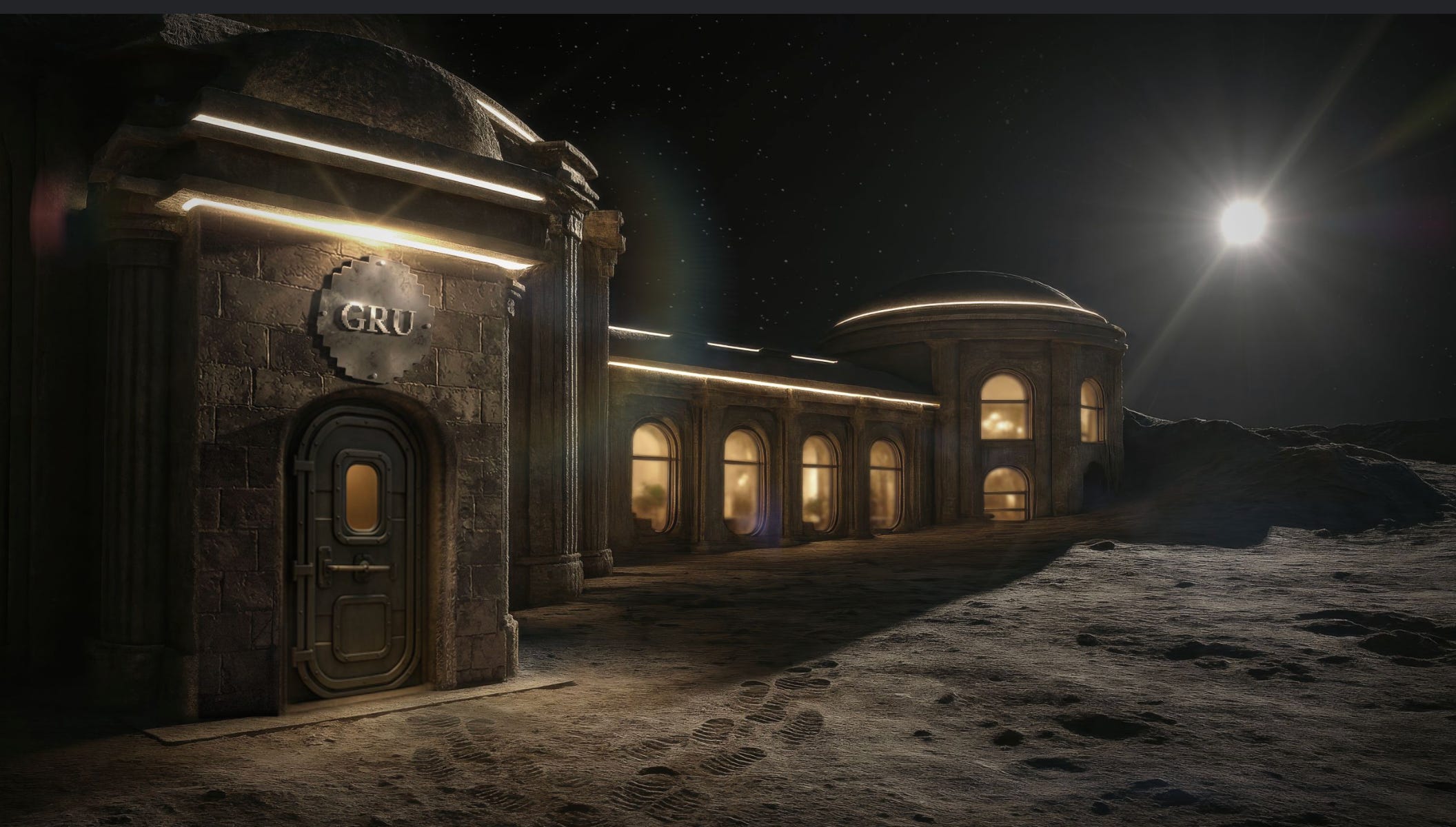
San Francisco-based startup Galactic Resources Utilization (GRU) Space announced this week that it is accepting applications from potential lunar tourists - along with a deposit between $250,000 - $1,000,000 - to reserve accommodations in its proposed lunar hotel. Prospective guests should anticipate a waiting period, as the facility is projected to commence operations in 2032.
GRU Space, established in 2025 by Skyler Chan, a University of California, Berkeley graduate, is part of Y-Combinator’s 2026 Winter Cohort. The startup, which as of December 2025 had just one employee, has attracted investments from stakeholders associated with SpaceX and Anduril, and was selected for Nvidia’s “Inception Program for Startups.”
Chan initially wanted to become an astronaut, though this goal evolved. “I realized I was born in this time where we can actually become interplanetary, and that is probably the singular most impactful thing one person could do with their time,” Chan said. “So I charged towards building the systems necessary and technology to enable that future. That’s actually what led me to go to Berkeley to study electrical engineering and computer science.”
During his studies, Chan gained valuable experience through internships and projects, including developing vehicle software at Tesla and participating in a NASA-funded initiative to build a 3D printer launched into space. It was at this stage that he observed a notable trend: while many were focused on pioneering lunar technologies, most efforts were fundamentally supported by either the US government or billionaire-backed enterprises. Chan began to question the sustainability of this model, particularly regarding the actual commercial demand for these ventures.
To address this gap, Chan proposed the establishment of a third foundational pillar, the space tourism industry. His vision entails extending established commercial markets to the Moon by constructing its first hotel, then expanding infrastructure such as roads, warehouses, and bases, with eventual replication on Mars. The company’s name, GRU, Galactic Resource Utilization, reflects its long-term ambition of harvesting resources from the Moon, Mars, asteroids, and beyond to support human expansion in space.
GRU Space intends to realize the first part of Chan’s vision with an ambitious plan to construct a lunar hotel shortly after the Trump administration’s 2030 target for NASA’s first lunar base development. The initiative comprises three primary missions, each designed to validate essential technologies and initiate construction of the hotel:
Mission 1, slated for 2029, will see GRU Space deliver an approximately 10 kg payload to the Moon using a CLPS lander to test two pivotal technologies: first, an inflatable structure that features an airtight bladder, structural fabric, micrometeoroid shielding, and an exterior thermal/UV cover, demonstrating the advanced materials intended for the initial hotel design; second, in-space resource utilization (ISRU), with a focus on converting lunar regolith into “Moon bricks” using geopolymers, which are planned to eventually reinforce the hotel and improve its resilience against the Moon’s harsh environment.
For Mission 2, scheduled for 2031, GRU Space plans to send a much larger payload to the Moon using advanced CLPS-class landers. During this mission, the company will deploy a subscale inflatable structure within a “lunar pit,” a site selected for its potentially more stable subsurface temperatures. Additionally, this mission will test a state-of-the-art in-situ resource utilization (ISRU) system to further validate technologies essential for the eventual construction of the lunar hotel.
For Mission 3, targeted for 2032, GRU Space intends to launch the first version of its lunar hotel. This initial facility will be fully constructed on Earth and then transported to the Moon using a heavy-lift lunar lander. Designed with advanced life-support systems, the hotel is engineered to operate for up to ten years on the lunar surface and will accommodate four guests at a time.
After initial deployment, GRU Space intends to enlarge the hotel and employ ISRU technology to construct a rigid Beaux-Arts-style external shell around the inflatable core, thereby enhancing guest safety and optimizing material usage. The hotel’s design is reportedly inspired by the Palace of the Fine Arts in San Francisco.
While GRU Space anticipates a promising future for lunar tourism, including activities such as lunar rover excursions and various recreational offerings, the achievement of this vision depends on several external factors. Success hinges on decreased launch costs, consistent and frequent crewed missions to the Moon, a conducive regulatory environment, and progress in supporting technologies such as lunar power generation and communications infrastructure. All of these elements currently remain under development, posing significant risk. “This is a substantial undertaking. We are transparent about the risks and challenges involved, and take pride in our efforts,” Chan remarked. “If successful, this project could represent one of the most significant milestones in human history.”
“SpaceX is building the FedEx to get us there, right?” Chan added. “But there has to be a destination worthy to stay in. Obviously, there is all kinds of debate around this, and what the future is going to be like. But our conviction is that the fundamental problem we have to solve, to advance humans toward the Moon and Mars, is off-world habitation. We can’t keep everyone living on that first ship that sailed to North America, right? We have to build the roads and structures and offices that we live in today.”